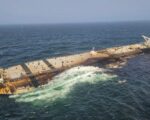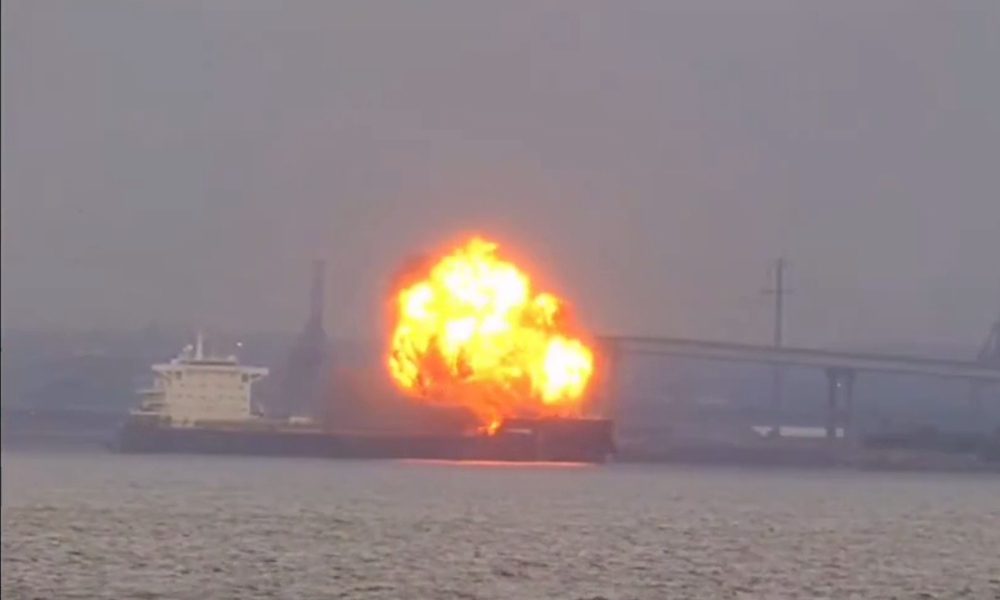
Baltimore is once again facing hard questions about port safety after a coal-laden bulk carrier erupted in an explosion Monday evening on the Patapsco River, just downstream from the demolition site of the fallen Francis Scott Key Bridge.
The Liberian-flagged W Sapphire, stretching 751 feet, had only just left CSX’s Curtis Bay terminal with a cargo bound for Mauritius when the blast ripped through the vessel at around 6:30 p.m. Fortunately, all 23 crew members survived unharmed, and local officials quickly reported the incident was under control. Firefighters responded by land and water, while tugboats helped stabilize the ship and guide it to a safe anchorage.
The U.S. Coast Guard has opened an investigation, but the incident once again exposes Baltimore’s limited capacity to handle maritime crises. Unlike major U.S. ports such as New York and Los Angeles, Baltimore still has no Vessel Traffic Service (essentially “air traffic control” for ships) a gap that critics argue leaves the city vulnerable to accidents and slows down emergency response.
As gCaptain notes, the incident adds fresh urgency to long-standing concerns about infrastructure, oversight, and preparedness in one of America’s busiest ports.
Picture: X, @AZ_Intel_