Recently we’ve got learned that Norwegian fertilizer company Yara and maritime technology firm Kongsberg Gruppe are teaming up to build the world’s first autonomous and zero-emissions container feeder ship.
The vessel will initially operate as a manned vessel in the latter half of 2018 and is expected to be capable of performing fully-autonomous operations starting in 2020. It is planned that products will be shipped from Yara’s Porsgrunn production plant to the ports of Brevik and Larvik in Norway.
“Every day, more than 100 diesel truck journeys are needed to transport products from YARA’s Porsgrunn plant to the Brevik and Larvik ports where we ship products to customers around the world. With this new autonomous battery-driven container vessel we move transport from road to sea and thereby reduce noise and dust emissions, improve the safety of local roads, and reduce NOx and CO2 emissions,” said Svein Tore Holsether, President and CEO of Yara.
Kongsberg will deliver the technology required for the vessel, including the sensors and integration required for remote and autonomous operations, in addition to the electric drive, battery and propulsion control systems.
The Maritime Telegraph addressed for the world maritime experts’ opinion on this matter.
 Alexander Sagaidak, Head of Olvia Maritime crewing company:
3 years ago I took part in a conference in London where the issues of robotic vessels were discussed. You know that the appearance of such ships is likely in the nearest future. And during the almost two-day conference, only one report was devoted to technical problems in this matter, so, they do not even doubt that this is possible. The main attention was paid to the issues of management, provision of such vessels and legal issues. Attending were representatives of leading shipping companies, and for them there was no question at all regarding if it is technically possible or not. They believe that such vessels are not just possible, they consider them a fait accompli. Rolls-Royce company is already developing such vessels. However, I do not think that our seafarers will be left without work. There are many things that cannot be done without people.
I think that people will work on cruise ships in the future and on mega-yachts to entertain passengers. I also once worked as a cruise administrator, and on cruise ships, too, the work is very heavy and intense, primarily because of the great responsibility. And there are many temptations, but you cannot take part in this celebration of life.
 Erik Nielsen, Vice President, Strategic Planning, Seaspan:
Technological aspect is for sure, it is possible to create a ship that can function without people on board. I think, as a shipowner, not having people on board is something to consider…but carefully. Can you imagine the ship with no crew being hacked?
 Kuba Szymanski, FNI, Member of the Executive Board at The Nautical Institute:
Autonomous ship: Yes indeed there is a lot of hype about them today, and yes they will come probably sooner than we think, but are they really a menace to seafarers? I don’t think so. I would look at them as an opportunity. Owners will always like their assets to be well maintained and sellable, therefore somehow I cannot imagine ships being left to their own devices without someone being there to keep them in good shape. I personally would welcome more automation, especially when it comes to pointless paperwork, repetitive tasks and silly regulations. I strongly believe that first we will need to overcome the law hurdle – responsibility of the ship’s Master, then can you imagine ports accepting humanless ships? I would suggest that we, seafarers do what we are best at – provide resilience and robustness to our ships.
 Rob Grool, Director Fleet Management at Vroon Group:
First: I cannot wait for the day that we have ships without crews, although I shudder to think of the social consequences of the massive reduction in well-paying jobs this will bring to the economies where seafarers’ wages are still far in excess of shore-based wages. But then again: the unmanned ship is not going to take over the shipping world within the next 10 years, so we have a bit of time to re-train seafarers….I hope.
The advantages of the unmanned ship are obvious: no need to spend big money on fitting all the things which are needed to let humans live and work on board, more cargo space in the same ship dimensions, no crew wages and crew-related costs to pay, but above all: take away the human error factor in costly accidents.
However: if we simply take today’s ship and put in clever monitoring and decision-making electronics to automate or make autonomous that conventional ship, then we are automating a manual process. We have to re-think how we design and build ships, not continue to build ships the same way we did 40 years ago. We have made the main engine electronic, we have put in more gadgets and communication equipment, but we still cannot get a large-capacity, reliable data connection going to the ship.
So ok – will the first step be to simplify things on board, take away the crew involvement in running the ship, and find a way to sail the ship like a drone from a control room or control rooms ashore? Maybe. You could think of all-weather drone-like controls. We’ll have to take a good look at some terribly primitive equipment on board such as anchors and mooring winches/mooring lines. And we’ll have to get clean fuel of a guaranteed specification like in the aviation business to take away fuel-related interventions and breakdowns.
LNG is a good option for fuel – as long as it is clean LNG – because you can automate the fuel storage and consumption/use process to a large extent. Methanol has the same energy content as LNG, and it is a liquid and we know how to work with this noxious liquid in normal tanks. But the Oil Majors are not interested in Methanol and so it will not get its chance to develop. LNG can be as dirty on the emissions side as heavy fuel, an oft-forgotten fact, but this aside.
What do we do with the external influence factor – all those vessels which are not driven like the Google car or the next Tesla, all those vessels which are still manned by people and cross our path? I have no idea. Vessel separation zones perhaps or a control mechanism which severely punishes (fines) ships which do not follow the Rules of the Road, because our unmanned autonomous ship will surely follow the rules.
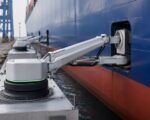
Can we guide unmanned ships into port without human intervention? Perhaps not yet, because ports have been designed with conventional ship movements in mind. So we set up a shore assistance infrastructure, like you see on airports: the plane is taken by a truck to a position from where it can do its own thing.
Think of all the equipment we will no longer need on ships if we make the fuel and propulsion systems simple and reliable (when did we retire the board engineer on airplanes – that’s what I mean) and we are able to take off the crew – in one swipe the engine room is so much simpler. No lighting in passageways and work spaces, no aircon, no sewage system, no walkways and accommodation, no spacious wheelhouse full of things that fail with annoying regularity – Great!