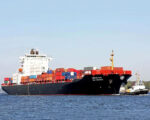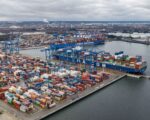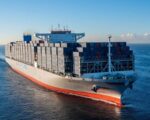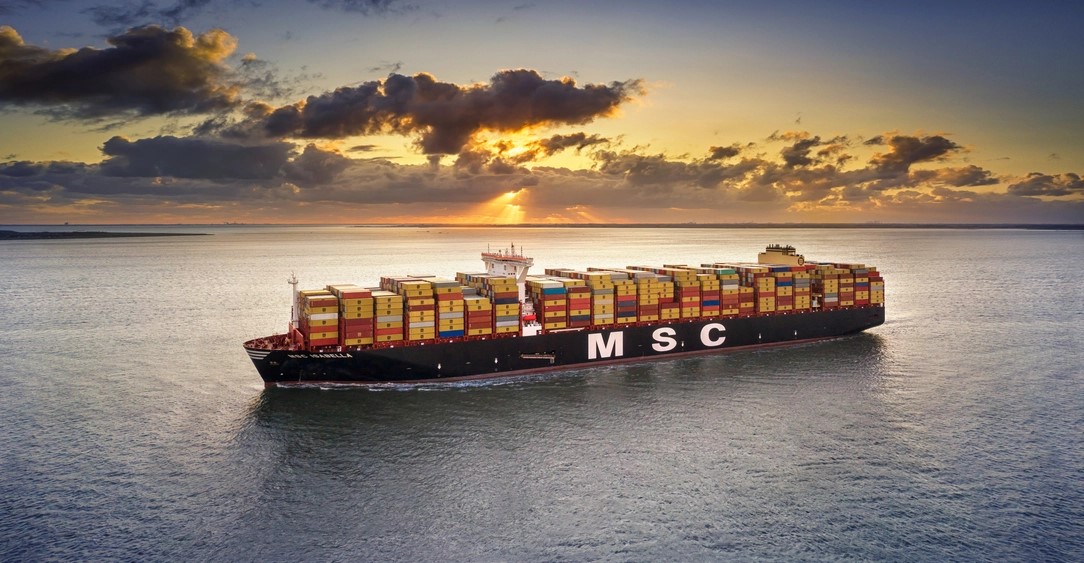
Mediterranean Shipping Company (MSC) has become the first container carrier in history to exceed 21% of global market share, marking a structural shift in the balance of the liner sector.
Alphaliner data for May–June 2026 shows MSC’s fleet reaching approximately 7.33 million TEU, translating into a 21.5–21.6% share of global container capacity. This surpasses the previous benchmark of 19.3% held by A.P. Moller – Maersk in 2018, which had long stood as the peak concentration level for a single liner operator.
MSC’s expansion has been driven by an aggressive fleet growth strategy initiated in 2020, when the carrier began large-scale secondhand vessel acquisitions alongside a rapid newbuilding programme. By 2025 alone, MSC added more than 830,000 TEU of capacity, reinforcing its position as the dominant player in the global liner market.
The carrier’s growth accelerated during and after the pandemic period, when record earnings were reinvested into tonnage acquisition at a pace unmatched by competitors. Since 2020, MSC has acquired hundreds of secondhand vessels and continued to expand its orderbook, steadily widening the gap with rival carriers.
A key structural shift came with the dissolution of the 2M alliance, completed in 2025. Following the split, MSC built a fully independent east–west network, launching 34 service loops across major global trades, including both Suez Canal and Cape of Good Hope routings. The carrier also secured selective slot-exchange agreements to maintain network reach without formal alliance dependency.
Beyond shipping, MSC has expanded its vertical integration across the logistics chain. Through stakes in terminal operator Terminal Investment Limited, acquisition of Brazil’s Log-In Logística, and the purchase of African logistics group Bolloré Africa Logistics (now AGL), the group has strengthened control over port terminals and inland logistics corridors in Europe, Africa, and Latin America. Its minority stake in HHLA further extends its presence in key European gateways.
Industry analysts note that MSC’s strategy contrasts sharply with competitors, which focused on integrated logistics services and alliance-based network stability rather than pure capacity expansion.