May 15-16, the Grand Hall, Sovinyon Resort, Odessa played host to representatives of Seaspan Shipmanagement and a number of seafarers who came to share their experience and improve their knowledge. It is always a great pleasure to see so many seafarers come and attend such a forum. Everything was well organized and thought out. The seafarers had an opportunity to meet their friends or mates they hadn’t seen for a while.
More than 150 seafarers attended the forum so it’s no surprise that Seaspan Shipmanagement is the worldwide leader in independent containership management and ownership.
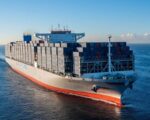
Seapan leads the list of non-operating owners with total current fleet of 103 vessels (797,041 TEU) and 11 ships (123,486 TEU) under construction. The company has a 7.1% share of the market.

Today Seaspan is:
- balance sheet – $6.0B
- contracted future revenue – $5.3B
- fleet size – 114 vessels
- average remaining charter period – 5.8 years
- average vessel size – 7.400 TEU
- average vessel age – 5.1 years
Hemraj Shetty, Director, Fleet Personnel opened the forum with a welcome speech and gave Illia Kudinov, the regional crewing representative the floor. He greeted the audience and explained the housekeeping rules.
Erik Nielsen, Vice President, Strategic Planning, gave the first speech entitled, “2017 State of the Nation.” Mr. Nielsen noted that the theme of the 16th forum was “performance excellence.” “We are growing and successful but we want to be better. We need to continue to develop what we do.” He went on to talk about the industry in general and Seaspan with its place in particular. As a containership lessor, Seaspan, with a fleet of 114 containerships, is an outsource provider of vessels with crew and also enters into fixed-rate long-term contracts.
Mr. Nielsen also mentioned that there was some improvement during PSC in 1Q 2017: – 53 PSC inspections resulting in a total of 44 deficiencies; – 37 inspections which resulted in zero deficiencies; – no vessel detentions this quarter.
Seaspan is safe, reliable and economical provider of choice.
Peter Curtis, Chief Operating Officer presented the speech “CCO State of the Nation” and told that according Alphaliner Seaspan is number one within non-operating owners with 114 vessels and 920,527 TEU. He also mentioned that Seaspan customer’s space is: 1. APM Maersk with 627 vessels; 2. MSC with 502 vessels; 3. CMA CGM with 439 vessels.
The management of Seaspan understands the important role the Company has within their customers service offer, that Seaspan is #1 in leasing and #3 in container operation and what huge investments they have made.
In the opinion of the next speaker Raj Dewan, Director, Fleet Management, the main key elements for operational excellence are: – safety; – reliability; – economical operation.
Tony Baker, Director (Loss Prevention), the North of England P&I Association Limited presented his speech “P&I Claims Experience”. “We are dealing with P&I insurance and a shipowner such as Seaspan has insurance to protect its responsibility to others should something go wrong.” The risks covered: – personal injury; – cargo loss; – loss to ships; – others. “If someone is injured that person can make a claim and Seaspan will be compensate that injured party while the insurance covers a lot of that cost. If something goes wrong with the cargo, cargo owners can make a claim for the lost cargo and P&I insurance covers the cost. If the ship causes some damage to itself or another ship the P&I insurance will cover all parts of that”, noted Mr. Baker.
«All the claims we deal with result from trying to take short cuts or to make things quicker and easier which often results in things going wrong. That means expense, which results the insurance claims, delays for the ship which result in a diminished reputation for the company”, added Tony Baker.
Mr. Baker also reported that the larger factors resulting in claims, are: – crew injury (inadequate risk assessment); – ship claims (inadequate bridge resource, poor navigational practice); – cargo claims (not following best practices – not following CSM); seafarer standards. What determines standards? – seafarer competence (knowledge and experience, attitude and application); – system interaction (soft-safety management system, hard technology); – human\system factors, safety culture. Mr. Baker presented recent views which have been expressed in the industry: – human element – the new substandard? – watch-keepers now have more equipment and less ability; – we have collectively allowed navigation to become unimportant; – STCW 95 has reduced required sea time and experience, leading to too much theory and not enough practice.
Raj Dewan, spoke in the next part of the forum on “Budget Management”. He noted that 2017 vessel’s budget included:
- crew expenses;
- training;
- victuals;
- stores;
- lubricants;
- spares;
- repairs;
- insurance;
- other expenses;
- dry dock.
30% of vessel’s budget is controlled by the seafarers.
He also emphasized purchase-order priorities:
Priority A: Where without this particular spare part, there is an imminent danger of a breakdown, stoppage, delay or safety risk.
Priority B: there is a possibility in near future of a breakdown, stoppage, delay or safety risk. The spares are required not before the next convenient port, preferred a maximum of 14 days after arrival at the warehouse.
And he noted that before ordering, an inventory check should be carried out.

Nishit Kapoor, Sr. Vice President, ECM Maritime Services, told about criminal MARPOL prosecution and Environmental Compliance Programs (ECPs) and North American regulatory update. He noted that there were 55 companies that have been criminally prosecuted for violations with 164 whistleblowers involved in those cases. At total of $27,300,000 was paid out to those whistleblowers.
Mr. Kapoor also emphasized that it was very important to understand whom you need to protect. Whistleblowers are key to prosecution efforts. More than half of all MARPOL cases occur as a result of crewmembers alerting US authorities about illegal discharge of false records. In the United States, according to a special provision in the Act to Prevent Pollution from Ships, individuals involved in reporting a violation that leads to a conviction are eligible to receive up to half of the fine incurred by the company. Successful prosecution usually results in a Plea Agreement, which usually includes: – a financial penalty and – an Environmental Compliance Program\Plan (ECP) or – the defendant’s vessels being prohibited from calling at US ports for a specified period of time. In most cases, the defendant company is required to implement an ECP, in addition to paying a fine. The ECP requires the following entities to be appointed: – Corporate Compliance Manager (CCM); – Independent Consultant (IC), External Audit Group (EAG) or Third Party Auditor (TPA); – Court Appointed Monitor (CAM).
Then Mr. Kapoor spoke about Western Alaska Alternative Planning Criteria (APC). Vessels operating in or through the Western Alaska COPT zone must be covered by an Approved APC: – vessels operating within 200nm of the shoreline and not in innocent passage, must comply; – limiting latitude 470 50’ N; – there are currently 3 USCG approved APCs for Western Alaska. He went on to point out that on Southbound Santa Barbara Channel transit & Port Hueneme calls, MSRC no longer provides coverage. As of October 1, 2016 NRC is the only coverage provider and the NRC’s Authorization to Proceed (ATP) form is required 24 hours prior to transit. Then he briefly discussed California Ballast Water Compliance, noting that the updated Ballast Water Management Report in PDF format, must be submitted to California State Lands Commission 24 hours prior to arrival. Effective July 1, 2017, the California State Lands Commission can issue fines for ballast water violations. Fines are substantial and range from to $5,000 for each minor violation to $27,500 for a major violation. He also noted that illegal discharges from separate tanks are considered separate violations. Then he spoke about the Panama Canal update and remarked that in accordance with ACP Advisories A-04-2017 and A-15-2017, all vessels transiting the Panama Canal are required to use only light distillate fuels (MGO/MDO) or low-Sulfur hybrid fuels (IFO), with a maximum Sulfur content of 3,5% M/M. The regulations are already in effect and apply only to canal transits, not calls to other ports in Panama. Changeover to be completed at least two hours prior POB.
By the end of the first day of the forum there had been speeches presented by Erik Nielsen and Hemraj Shetty with summary and closing remarks.

On the second day all the seafarers were divided into “Machinery” and “Nautical” groups and had different observations of important updates and incidents relating to each part of their job at sea.
The seafarers gathered in one hall to let the speakers continue with that day’s program – Nishit Kapoor with “The Seaspan Voluntary ECP: Implementation, Monitoring and Enhancement” and Patrick C.H. Tso, General Manager/Ship Safety Branch, Hong Kong Marine Department, HKSAR with a speech entitled “Port State Control”.

As before, the forum concluded with remarks by Erik Nielsen.
At the conclusion of the day, there was a family dinner where seafarers with their wives had a great opportunity to relax and communicate with colleagues and management.

“It has been quite nice to be back here and meet up with all the crew members we have. I’m really happy about the dialog that is going on here, they are not just sitting back and listening. It was a great forum and the seafarers were very engaging and with many challenging and extremely relevant points – good that we have these open constructive dialogues to improve our company. This year we have five such forums – in Mumbai, Philippines, Sri Lanka, China and here in Odessa. Usually 150 seafarers attend our forums.”, commented Erik Nielsen, Vice President, Strategic Planning.

“This is a very important part of our managing of people, this is a platform where the seafarers become our ambassadors, and they take the message from the highest management to all of the colleagues on board. Here we have to listen to them tell us what challenges and work issues they have and at the same time they get an opportunity to meet other seafarers and company personnel and share experiences. It is quite a good investment.”, said Hemraj Shetty, Director, Fleet Personnel.
The seafarers shared their impressions of the forum with the newspaper:
Alexander Trufanov, Captain: “I like that the company organizes such meetings, because there is an exchange of experiences at such conferences. The level of competence of the crew is different, since everyone is present here, from the cadets to the Chief Engineers and Captains, and those who are more experienced can share their knowledge with those who are less experienced. You can discuss those issues that are not clear with company management, discuss weaknesses and so on. If the management has a complaint, then you can also talk about it and correct the situation. The feeling of one family is created during such meetings. This is very important for the company.”
Andrey Malchenko, Chief Officer: “Such events are very useful, especially for new people who have come to the company. There are many cadets here too, who can learn a lot of new things. I really liked the report of the representative of the P & I club with information on ECDIS. There were many useful examples, because when you are at home, not all the information reaches you. Also, you can talk face-to-face with management.”
Andrey Yashchenko, Second Engineer: “This is my first seminar with this company. I believe such events are necessary, since this give you exposure to top management of the company. It’s good that you can not only see them in their magazine, but also have the opportunity to communicate personally and hear them.”
Stepan Pavlov, Chief Officer: “I like that you can ask the top management questions directly and solve all the nuances arising in the work on board the ship – you don’t need to write e-mails.”
Vladimir Privalov, Chief Officer: “During such meetings you gain a lot of useful information. I have been working for more than 6 years in the company. I have attended such events many times and there is ordinary information, commercial, intra-company – it’s more for broadening my horizons, but most of all I’m interested in the invited guests from various international organizations that are very useful – for example, from P & I Club and Mr. Kapoor from the USA, who spoke about local nuances.”