The European Maritime Safety Agency (EMSA) is an agency of the European Union, which purpose is to reduce the risk of marine accidents, the level of pollution in marine environment, the number of injuries and deaths at sea. The company’s headquarters is situated in Lisbon. There are about 200 people working in organization. Markku Mylly from Finland has been held the post of executive director since 2012.
The decentralized agency of the EU has some certain responsibilities.
First, it helps the Commission in the preparation of EU legislation on maritime safety and the prevention of pollution by ships.
Secondly, EMSA acts as a regulator of the Commission in monitoring compliance with EU maritime safety legislation. For example, to administrate the functioning of the EU state control regime. Also the European Maritime Safety Agency organizes training events, develops technical solutions and provides technical assistance related to the implementation of EU legislation.
The organization inculcates a common methodology for investigating marine accidents. It is also the direct responsibility of the EMSA to collect data related to safety at sea, pollution of the environment and the world ocean. The organization is engaged in the determination of ships polluting the planet.
EMSA’s activities connect closely with maritime services of member states.
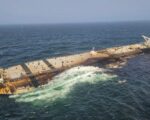
The impetus for the creation of the EMSA was a series of marine accidents in European waters, for example, oil spills after the crash of Erika and Prestige tankers. These incidents led to enormous environmental and economic damage to the coasts of Spain and France. In 2002, the EU adopted laws relating to maritime safety in connection with these major catastrophes. It was decided that compliance with legislation should be monitored. A specialized agency EMSA was created for these purposes.

Markku Mylly told The Maritime Telegraph the most interesting and also urgent issues about EMSA and safety at sea.
MT: Why does the head office of EMSA base in Lisbon?
We have today in EU 32 relocated EU Agencies and locating an Agency is always a political process, where Member States offer their willingness to have an Agency located in their territory. The final decision is always made in Brussels between the politicians and Commission. In the case of EMSA Portugal was willing to host EMSA and the government of Portugal offered to build premises to the Agency in Lisbon.
MT: What are the main issues/mission of EMSA today?
The mission of EMSA has been unchanged from the very beginning and role is to enhance maritime safety, maritime security and environmental protection on European waters. To achieve these goals we work closely with the Commission and Member States as well as with the industry today. We are technical and scientific advisor to the Commission and Member States.
MT: Does EMSA cooperate with similar organizations around the world?
EMSA is quite unique organization and similar kind of structures does not exist anywhere in the world. Of course, IMO is a global actor and we have a lot of collaboration with IMO. In addition to this we work closely with several classification societies, with different type of shipping interest groups and other EU Agencies like FRONTEX, EFCA, EUROPOL, ESA, SATCEN etc.
MT: What are your relations with IMO?
As said before we work closely with IMO and we have one EMSA person sitting permanently in London in IMO premises and following the work of IMO. We also participate actively to different type of IMO working groups and correspondence groups.
MT: Does EMSA activity extend only in EU countries? Do you have or expect to have some cooperation with Ukraine?
EMSA is working also in the political area of European neighborhood policy and this policy area we are working with two long term projects at the moment. The first one is SafeMed IV, which is targeting the North African Countries and the other one is Black and Caspian Sea project, where Ukraine is also a beneficiary country. We are working with those countries authorities in the area of maritime safety, maritime security and environmental protection and EMSA’s role is to enhance and train the authorities of those beneficiaries.
MT: In your opinion, is it necessary to revision COLREGs, that remains unchanged since 1972, due to increasing of marine traffic within last years?
The COLREG rules in principal are working well and no changes in short term is needed. The situation may change in the future when autonomy is increasing in maritime.
MT: How does EMSA consider interrelation between safety in shipping and increased workload with paperwork and numerous inspections on the ship’s crew today?
We should not increase the workload onboard the vessels by increasing physical inspections and adding paper workload to the officers and crew. We must have more targeted inspection to eliminate substandard ships and crews from the seas.
MT: EMSA is going to audit 5 Ukrainian maritime institutions (the Inspectorate for Training and Certification of Seafarer, National University “Odessa Maritime Academy”, Kherson State Maritime Institute, “Kherson Maritime Specialized Training Centre”, Educational-training complex “Admiral”) in April 2018. Why these 5 institutions were chosen for checking?
The objective of the EMSA inspection is not to audit individual maritime education and training institutions. The task of EMSA originates from Regulation I/10 of the STCW Convention, which establishes that when a Country, Party to the Convention, intends to recognize the maritime education, training and certification system of another Country, also Party to the Convention, it should conduct an evaluation of this Party system, which may include inspection of facilities and procedures. Under the requirements of the STCW Convention, the recognition is necessary to allow officers from one country to be employed on board vessels holding the flag of another country.
EMSA is doing the inspection on behalf of the European Commission and the 28 EU Member States (plus Norway and Iceland), as part of such evaluation. Although the Ukrainian system is already recognised at EU level, it has not been inspected since the 2010 amendments to the STCW Convention (known as the Manila amendments) entered into force. The inspection focus on the system and such requires inspection to entities responsible for the implementation of the obligations of the State as Party to the STCW Convention. The most important entity that is to be inspected is the maritime administration, which in the case of Ukraine is the Inspectorate for Training and Certification of Seafarers, located in Kiev. In the inspectorate, the EMSA inspectors will verify how the STCW requirements are implemented verifying procedures, legislation, documentation and some practical aspects related to the issue of certificates to seafarers. The maritime education and training institutions are chosen as a sample of the system, in agreement with the maritime administration of the country, and the EMSA inspectors will verify in those MET institutions how in practice the education and training is conducted in the country. It should be emphasised again that this is not an audit of maritime education and training institutions but an inspection of the system in line with Regulation I/10 of the STCW Convention.
MT: How often does EMSA audit the national training and certification of seafarer?
In line with the requirements established in EU Law (Directive 2008/106/EC), non-EU countries recognised at EU level and EU Member States (plus Norway and Iceland, which are bound by the EU Directive), should be visited every five years. However, not always is possible to comply with the five year period due to the high number of countries involved (around 80) and the need to manage the resources available, consequently priority criteria is used to decide when a country system should be verified.
MT: What criteria does EMSA take into consideration at time of the audit?
The only criterion used is the STCW Convention. EMSA staff members verify whether the country system is complying with the STCW requirements. The European Commission and the 28 EU Member States have the final decision on the recognition or not.