Life at sea has always come with risks – some obvious, others hidden in plain sight. Among the most underestimated dangers on any ship is entry into enclosed spaces. These are areas not meant for continuous human occupancy (cargo holds, ballast tanks, fuel or water tanks, chain lockers, and cofferdams) where the atmosphere can turn deadly in seconds. A lack of oxygen, the presence of toxic gases, or even a spark igniting flammable vapors – each of these can kill before anyone has time to react.
So, what makes enclosed spaces so treacherous, and how can seafarers stay safe? The answer lies in discipline, strict adherence to shipboard safety procedures that have been written in blood over the decades.
Never enter alone
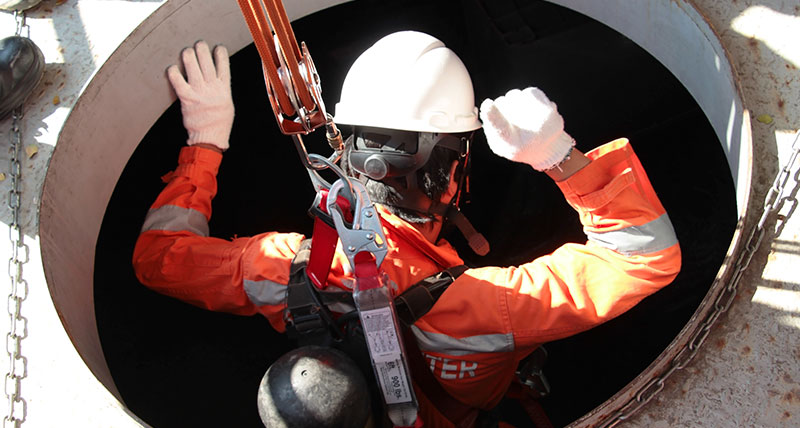
No matter how urgent the situation, never enter an enclosed space on your own. If something goes wrong, the first step is not to rush in. It’s to raise the alarm and activate the ship’s emergency response plan. A single unprotected entry has cost many lives, often those of rescuers themselves.
The permit to work
No entry, no matter how routine, should take place without a valid Permit to Work (PTW). This document must be issued and signed by a responsible officer and clearly state the location, nature of work, and names of those involved. It must remain on board and visible until the task is complete. If there’s no properly signed PTW, entry is strictly forbidden!
Protective gear saves lives
Before setting foot inside, the crew must be properly equipped: a multi-gas detector (for at least four gases), self-contained breathing apparatus if required, lifeline and safety harness, helmet, gloves, coveralls, and safety boots. These are not optional accessories. They are the thin line between a safe return and tragedy.
Team briefing before entry
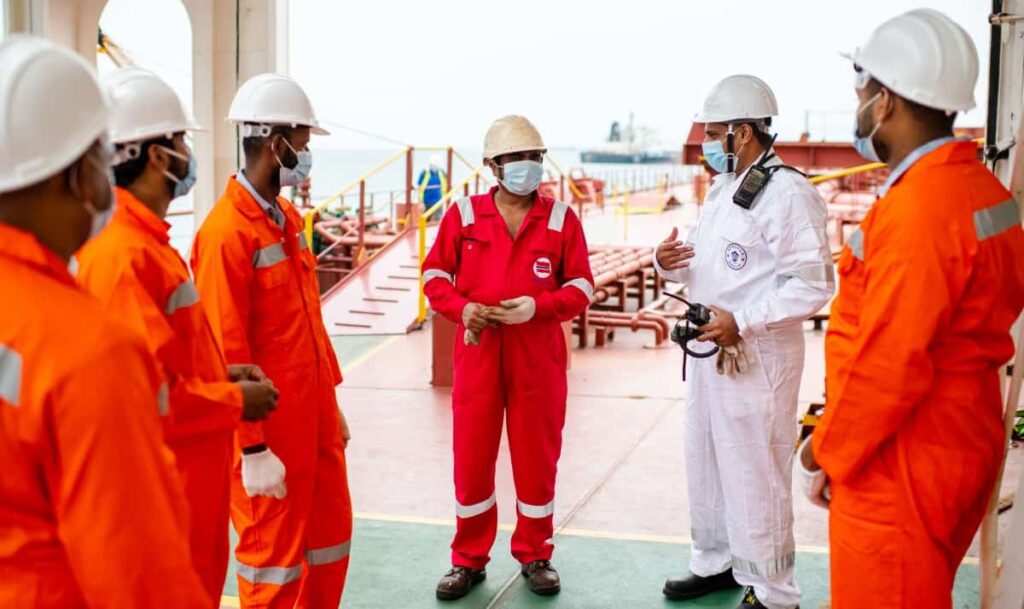
Before the job starts, hold a toolbox talk or short safety briefing. Everyone must understand their role, the work scope, and the emergency procedures. The responsible officer must confirm that all participants are fully aware of their duties. The briefing is recorded in the enclosed space entry log and signed by the team.
The watch on the outside
At least one person must always stay outside the space and maintain constant watch. Their duty is not just to monitor, but to communicate, time the entry, and be ready to sound the alarm. If something goes wrong, they must not attempt a rescue alone – instead, call for assistance and activate the emergency plan. The attendant must know the alarm signals, how to use communications equipment, and how to notify the officer on watch and the Master.
Monitoring the air you breathe
Before anyone enters, the atmosphere inside must be tested at several levels. Check oxygen concentration, flammable gases (such as methane), carbon monoxide, hydrogen sulfide, and any volatile vapors. Normal oxygen content is 20.9%. Anything below 19.5% is unsafe; above 23.5% – an explosion risk. Atmospheric monitoring must continue throughout the work – gases can shift unpredictably.
Keep the air flowing
Ventilation must be started well in advance (at least 15 minutes before entry) and kept running the entire time. Proper air circulation is your first defense against suffocation or explosion.
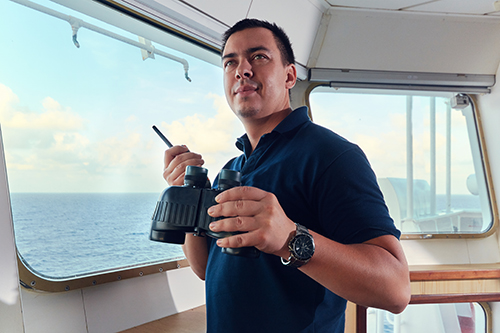
Communication is lifeline
Maintain open communication at all times via radio or other reliable means. If contact is lost, stop work immediately and raise the alarm. In confined space operations, silence can be fatal.
Risk assessment and emergency preparedness
Before entering, carry out a thorough risk assessment. Identify hazards such as toxic vapors, oxygen deficiency, or flammable residues. Ensure that rescue equipment (breathing sets, stretchers, first aid kits) is ready and nearby. All crew involved must know the emergency plan, which should be posted outside the space. Only trained personnel with protective gear are allowed to perform rescue operations. Untrained entry is strictly prohibited.
Continuous training saves lives
Drills for enclosed space entry are required at least once every two months under SOLAS Regulation III/19. During prolonged work inside a space, crew rotation, rest breaks, and strict time limits must be observed. Fatigue and complacency are as dangerous as any toxic gas.
Every enclosed space on a ship is a potential trap – invisible, silent, and unforgiving. But with discipline, vigilance, and respect for the rules, seafarers can ensure that no one’s life is lost to the air they breathe.