In recent years, the global seafaring job market has shifted dramatically. Just last year, 112,000 Filipino seafarers lost their positions in the world fleet. As competition intensified, crews from other Asian nations began to edge out the Philippines. This opened the way for Vietnam to emerge as one of the most promising maritime countries. Increasingly, European and American shipowners are turning their attention to Vietnam.
So, could Vietnamese seafarers soon represent a significant share of the world’s maritime workforce? Let’s take a closer look. For those unfamiliar, Vietnam is the easternmost country on the Indochina Peninsula, a place where getting there costs more than living there. Tourism is still developing, and foreign visitors, especially light-skinned ones, often attract the curious eyes of local children.
Today, Vietnam has about 45,000 seafarers working in the global fleet. That’s a modest figure for a nation of over 90 million people, but it’s expected to grow steadily in the coming years. More and more foreign shipowners are arriving in Vietnam to hire local seafarers as a cost-effective alternative.

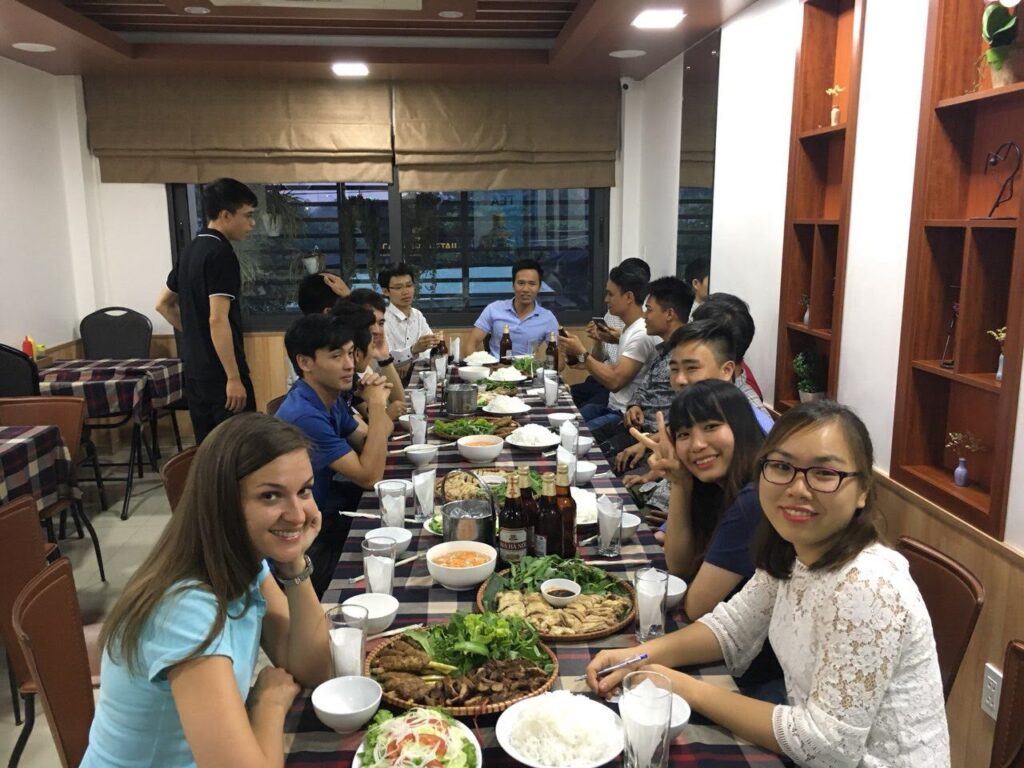
Credit: Inna Stolyar
One of the first to explore this market was the German company Zeaborn Ship Management, which teamed up with Alpha Navigation Crew Management in 2016. Together, they set their sights on recruiting Vietnamese seafarers. Both companies saw Vietnam as an untapped and highly promising labor market.
The first thing that attracts foreign employers, of course, is the competitive wage level. Yet, this was not the main reason Alpha Navigation became interested in Vietnamese seafarers. Unlike Filipino crews, who have long dominated the maritime labor scene, Vietnamese seafarers are only beginning to integrate into the world fleet. And they are eager to prove their skills.
“We spent a lot of time exploring Vietnam remotely, but to make the final step, we decided to go there in person,” recalled Yuliya Makarova, General Manager of Alpha Navigation. “After arriving in Vietnam, we interviewed about 150 ratings and officers. Along with experience, English proficiency was a key selection criterion.”
“Looking at the Vietnamese seafarers reminded me of us Ukrainians in the 1990s,” said Captain Yevhen Sapronov, Quality Manager at Alpha Navigation. “Back then, after the collapse of the Soviet Union, Ukrainian seafarers were just starting to enter the international fleet. Their English was limited, but their professionalism was outstanding. The Vietnamese had that same spark. Their eyes were full of enthusiasm and a real desire to work.”

Out of 150 candidates, 20 were selected. All could explain their duties in English; only five could freely converse with foreign employers. Why these five? Simply because they had previously worked for European shipping companies and gained experience in mixed crews. That’s the interesting thing about Vietnamese seafarers – they learn English remarkably fast from their crewmates. If there are native or fluent English speakers onboard, Vietnamese seafarers quickly pick up the language during their contracts.
Besides language skills, the second key criterion for employment was professional experience.
Zeaborn’s Managing Director Heiko Nies and Senior Vice President of Fleet Personnel Ronald Schnitter were looking for skilled officers and ratings for Zeaborn’s fleet, including container ships. However, almost every Vietnamese applicant had experience on tankers, bulk carriers, or general cargo vessels. For years, Asian shipowners have tended to employ Vietnamese on those ship types – a kind of tradition that became a stereotype.
Nonetheless, Zeaborn and Alpha Navigation decided to break the pattern and bring them aboard their own fleet. Today, Vietnamese seafarers work on nine Zeaborn vessels, seven of them container ships. More importantly, the number of employed Vietnamese seafarers has doubled. A similar trend can now be seen across other European shipping companies. In fact, European fleets today employ more Vietnamese seafarers than the global fleet did two years ago.
“For our ongoing cooperation, we discovered another Vietnamese advantage,” noted Captain Sapronov. “For the past two decades, Japanese shipowners have been Vietnam’s main employers. As a result, Vietnamese seafarers have extensive experience working on the most advanced, high-tech vessels. They’re unfazed by brand-new equipment, complex software, or electronic engines.”
Through their collaboration with Alpha Navigation and Zeaborn, Vietnamese seafarers have earned a reputation for diligence and reliability. The standard contract duration is 8±1 months.
Of course, the best way to understand people is to experience their country. During their stay in Vietnam, the Alpha Navigation team visited not only maritime training centers but also explored local life and culture.
“I was deeply impressed by the openness and sincerity of the Vietnamese,” said Inna Stolyar, Crew Manager at Alpha Navigation. “I had never experienced such a warm welcome from people who barely knew me. It’s so easy to make friends there! Vietnam is a place where you can simply sit in the street, sip sugarcane juice, and feel peaceful and happy. Their cuisine also became one of my favorites! I even brought home a few recipes from Vietnamese friends.”
Her time in Vietnam helped her better understand the people who now work alongside the company.
So, can Vietnam become one of the leading maritime nations on the global stage? Only time will tell. But all the conditions are there. Every year, around 5,000 Vietnamese cadets join the world fleet. Many aim to find employment in the European or American sectors. It seems only a matter of time before Vietnam earns a reputation as a key supplier of skilled and motivated seafarers.