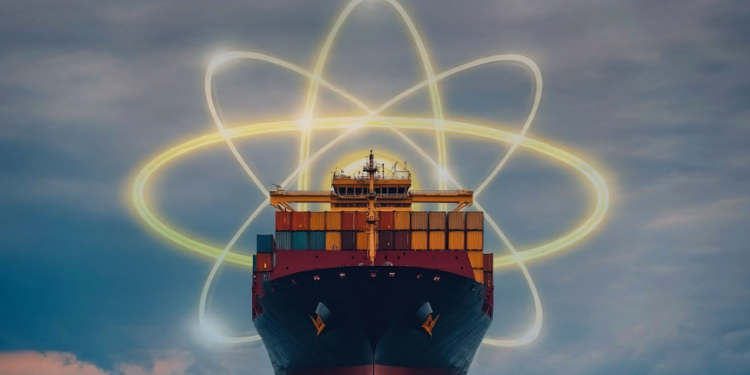
Classification society ABS and South Korea’s HD Hyundai shipbuilding group have launched a joint development project to explore the feasibility of nuclear-powered propulsion for large containerships, marking another step in the industry’s search for zero-carbon propulsion technologies.
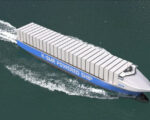
The initiative will examine the conceptual design of a nuclear-powered electric propulsion system for a 16,000-TEU containership, combining nuclear energy with an electric propulsion architecture suitable for next-generation ultra-large container vessels.
The agreement brings together ABS, HD Korea Shipbuilding & Offshore Engineering (HD KSOE), and HD Hyundai Samho Heavy Industries (HD HSHI). Under the project, the Korean shipbuilders will develop the vessel’s basic design, electrical component specifications, and system arrangement plans tailored to a nuclear-powered containership concept.
According to ABS, the study will evaluate how nuclear energy could be integrated into modern propulsion systems to support safer operations while potentially reducing emissions.
The collaboration aims to assess technologies that could enable “safer, more efficient and lower-emission operations” for future container vessels.
HD Hyundai officials noted that interest in carbon-free propulsion solutions is increasing as shipowners face mounting pressure to meet international decarbonization targets. The company said it is expanding research into electric propulsion systems powered by nuclear energy to strengthen its competitiveness in advanced ship technologies.
The project forms part of a growing number of maritime initiatives exploring nuclear technology and small modular reactors (SMRs) for shipping and offshore energy.
In September 2025, the Korea Atomic Energy Research Institute (KAERI) and Samsung Heavy Industries received Approval in Principle (AiP) from ABS and the Liberian flag state for a nuclear-powered LNG carrier concept using a 100 MW thermal molten salt reactor.
Earlier in June 2025, ABS also granted AiP to HD Hyundai Heavy Industries and HD KSOE for a floating SMR power module designed to generate electricity offshore for ports, coastal grids and industrial facilities.
Despite the growing momentum, nuclear propulsion for commercial shipping remains at an early stage of development.
Significant challenges remain before such vessels could enter service, including the creation of regulatory frameworks, port acceptance policies, insurance arrangements, and specialized crew training for nuclear operations.
For now, the ABS–HD Hyundai project remains focused on conceptual design and feasibility, but it highlights the increasing role nuclear energy may play in long-term discussions about maritime decarbonization.