The world’s first ammonia bunkering operation for a commercial vessel has been completed in South Korea, marking a significant milestone in the development of zero-carbon fuels for deep-sea shipping.
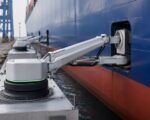
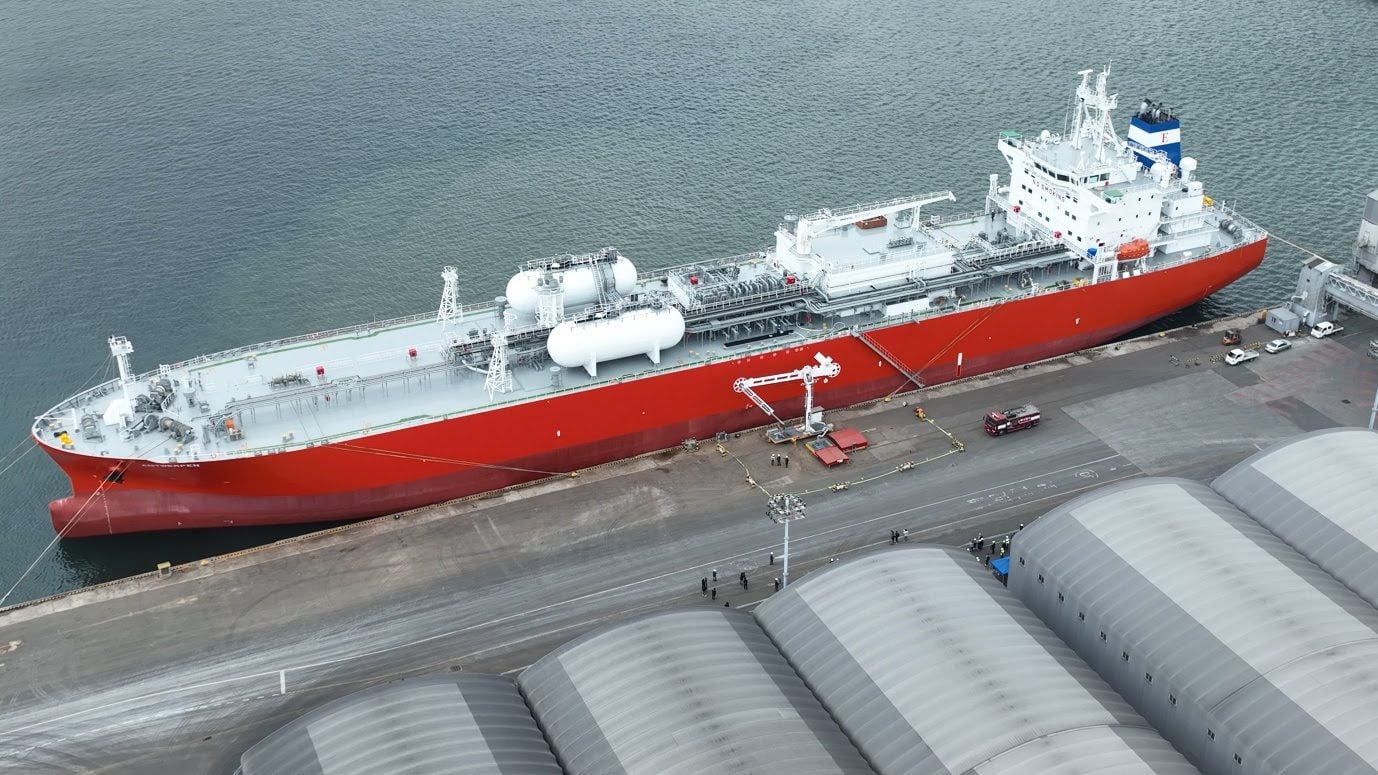
The operation took place on April 23 at Ulsan Main Port, where approximately 600 metric tons of clean ammonia were supplied via a port-to-ship (PTS) transfer. The receiving vessel was the 45,000-cubic-metre ammonia dual-fuel gas carrier MV Antwerpen, recently built by HD Hyundai Heavy Industries for Belgian operator Exmar.
The bunkering was carried out at Pier 2 by Lotte Fine Chemical, designated as the demonstration fuel supplier. The operation represents the first full-scale transfer of ammonia fuel to an ocean-going commercial vessel, moving beyond earlier small-scale trials and pilot projects.
MV Antwerpen, measuring approximately 190 metres in length with a cargo capacity of about 46,000 cubic metres, is designed to transport liquefied gases including ammonia and LPG. Crucially, the vessel is also capable of using ammonia cargo as fuel, positioning it at the forefront of next-generation propulsion technology. The vessel remains alongside in Ulsan following the operation, while her sister ship MV Arlon is undergoing sea trials ahead of delivery.
The milestone follows more than two years of coordinated preparation. A memorandum of understanding signed in January 2024 brought together key stakeholders across the ammonia value chain, including classification society Korean Register, shipbuilder HD Hyundai Heavy Industries, operator HMM, and fuel supplier Lotte Fine Chemical. The collaboration focused on regulatory compliance, safety procedures, fuel logistics, and vessel readiness.
Authorities, including the Ministry of Oceans and Fisheries and local emergency response services, oversaw the operation to ensure safe handling of ammonia, a fuel widely recognized for its toxicity and associated operational risks.
The ammonia used in the bunkering was sourced from recently imported “green ammonia,” produced using renewable energy at a large-scale facility in Inner Mongolia, China. This reflects growing efforts to establish a carbon-free fuel supply chain, with ammonia also being explored as a hydrogen carrier and for power generation.
While ammonia is increasingly viewed as a promising long-term marine fuel due to its zero-carbon combustion profile, its commercial adoption remains at an early stage. Key challenges include safety regulations, crew training, fuel infrastructure, and the development of reliable engine technology.
Ulsan Port has positioned itself as a testbed for alternative marine fuels, having previously conducted LNG bunkering and methanol fuel demonstrations. The latest operation reinforces a broader industry trend: rather than committing to a single fuel pathway, shipowners and ports are developing capabilities across multiple options.
Earlier ammonia bunkering efforts have been limited in scale. In 2024, a small quantity of ammonia was supplied in Singapore to a converted offshore vessel for demonstration purposes. In Japan, ammonia has also been tested on tugboats using truck-to-ship supply methods.