Bulk carriers are designed to transport large quantities of unpackaged dry cargo, including iron ore, coal, grain, fertilisers and bauxite. While they all serve the same basic purpose, their size and design can vary depending on the cargo they carry, the trade they operate in and the ports they need to call at.
From smaller Handysize vessels to the largest Valemax ore carriers, there are many different types of bulk carriers. Let’s take a closer look at how they differ.
What do bulk carriers carry?
Bulk carriers transport a wide range of dry cargo, usually divided into major and minor bulks. The main major bulk commodities are iron ore, coal and grain, while other common cargoes include bauxite, fertilisers, cement, salt, sugar, timber products and minerals.
The type of cargo can affect how a vessel is designed and operated. Iron ore, for example, is much denser than grain, so a hold can reach its weight limit while there is still space left. Grain, on the other hand, can fill most of the available space before the ship reaches its maximum deadweight. This is one of the reasons bulk carriers are built for different cargoes and trades.
Bulk carriers by size
The usual size categories are widely used in shipping. However, they are market classifications rather than strict technical standards, so the ranges can overlap. Size classifications such as Handysize, Supramax, Ultramax, Panamax and Capesize are based on a combination of vessel dimensions, cargo capacity, port restrictions and trading patterns. Some, including Panamax, Kamsarmax and Newcastlemax, are linked directly to the dimensions of specific canals or ports.
Handysize
Handysize bulk carriers generally range from around 20,000 to 35,000 DWT. Their relatively small size allows them to serve a wide range of ports, including those with draft or infrastructure restrictions. They are often geared and can carry both major and minor bulk cargoes.
Handymax
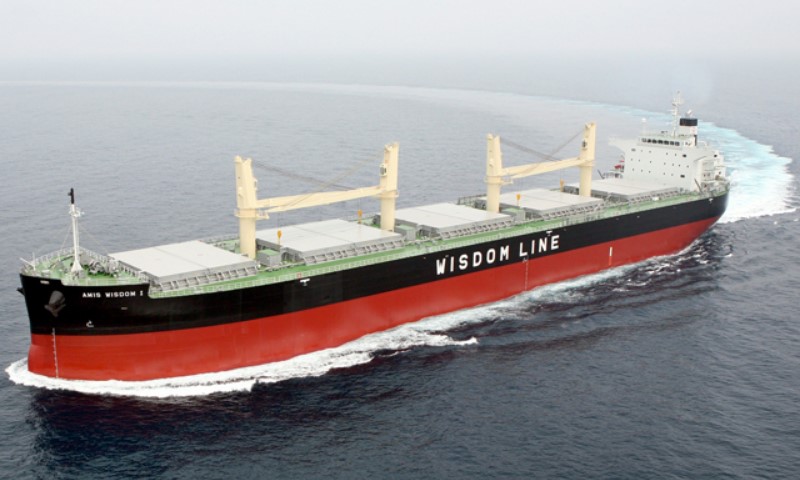
Handymax generally refers to vessels of around 36,000-49,000 DWT. The term is an older market classification that overlaps with the newer Supramax and Ultramax categories.
Supramax
Supramax bulk carriers generally range from 50,000 to 60,000 DWT. They are typically geared and are used for a wide range of cargoes, including coal, grain, fertilisers, minerals and steel products.
Ultramax
Ultramax vessels generally range from around 60,000 to 66,000 DWT. They are a larger and more modern development of the geared Supramax, offering greater cargo capacity and better economies of scale. Supramax and Ultramax are often treated as a single market segment.
Panamax
Panamax bulk carriers generally range from around 65,000 to 82,000 DWT. The name refers to the dimensions of the original Panama Canal locks. They are usually gearless and widely used in major coal and grain trades.
Kamsarmax
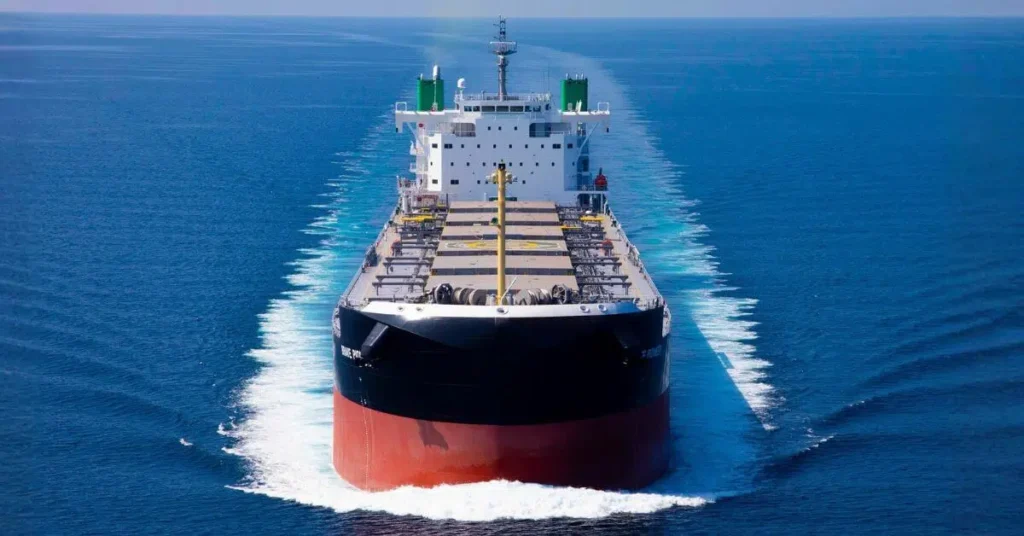
Kamsarmax vessels generally reach around 80,000-82,500 DWT. The term comes from the Port of Kamsar in Guinea and refers to a larger Panamax-type vessel designed to meet the port’s dimensional limits. Kamsarmaxes are normally gearless and widely used for grain, coal and other major bulk commodities.
Post-Panamax / Mini-Capesize
This broad market segment covers vessels of roughly 87,000-120,000 DWT. They are too large for traditional Panamax dimensions but smaller than conventional Capesizes, offering greater cargo capacity while retaining access to more ports.
Capesize
Capesize bulk carriers generally range from around 120,000 to 200,000 DWT. These large, gearless vessels are mainly used for high-volume trades, particularly iron ore and coal, and typically operate between major deep-water terminals. The largest dry bulk trade routes are therefore dominated by these vessels.
The name comes from the traditional routes around the Cape of Good Hope or Cape Horn taken by ships too large for the Panama Canal.
Newcastlemax
Newcastlemax is a port-related designation rather than a fixed DWT class. The term refers to vessels designed to meet the dimensional limits of Australia’s Port of Newcastle. Modern Newcastlemax bulkers are typically around 200,000-210,000 DWT.
VLOC / Valemax
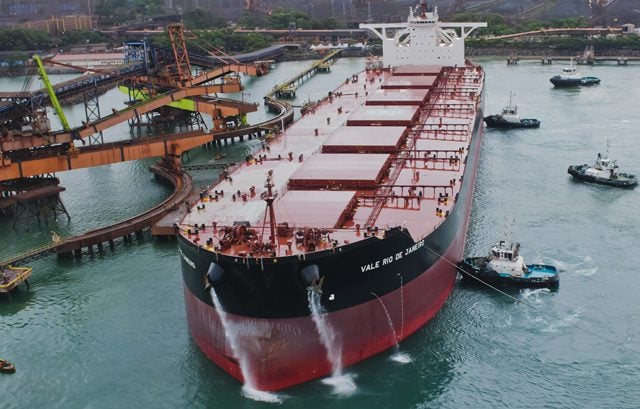
Very Large Ore Carriers (VLOCs) are generally above 200,000 DWT and are designed mainly for long-distance iron ore trades between major deep-water terminals. The largest vessels in this segment include Valemax ships, developed for Vale’s iron ore trades.
The term Valemax refers to a specific group of ultra-large ore carriers developed for Vale’s iron ore trades, while VLOC is the broader term for this type of vessel. Some Valemax ships approach 400,000 DWT.
There are also size designations based on specific dimensional restrictions rather than DWT, including Seawaymax, Dunkirkmax, Malaccamax and Chinamax.
For this reason, bulk carriers are also classified by the cargo they are designed to carry, their cargo-handling equipment, and their overall design and trading environment.
Bulk carriers by cargo
Bulk carriers can also be classified by the cargoes they are designed to carry. However, this classification is less straightforward than size classification, as many bulkers can carry different commodities during their trading lives.
Cargo characteristics such as density, moisture content and potential hazards can affect how a vessel is loaded and operated.
General-purpose bulk carriers
Most bulk carriers are designed to carry a wide range of dry bulk commodities, including coal, grain, fertilisers, bauxite, cement, minerals, salt and sugar. Smaller geared bulkers are particularly flexible and may carry different types of cargo from one voyage to the next.
Ore carriers
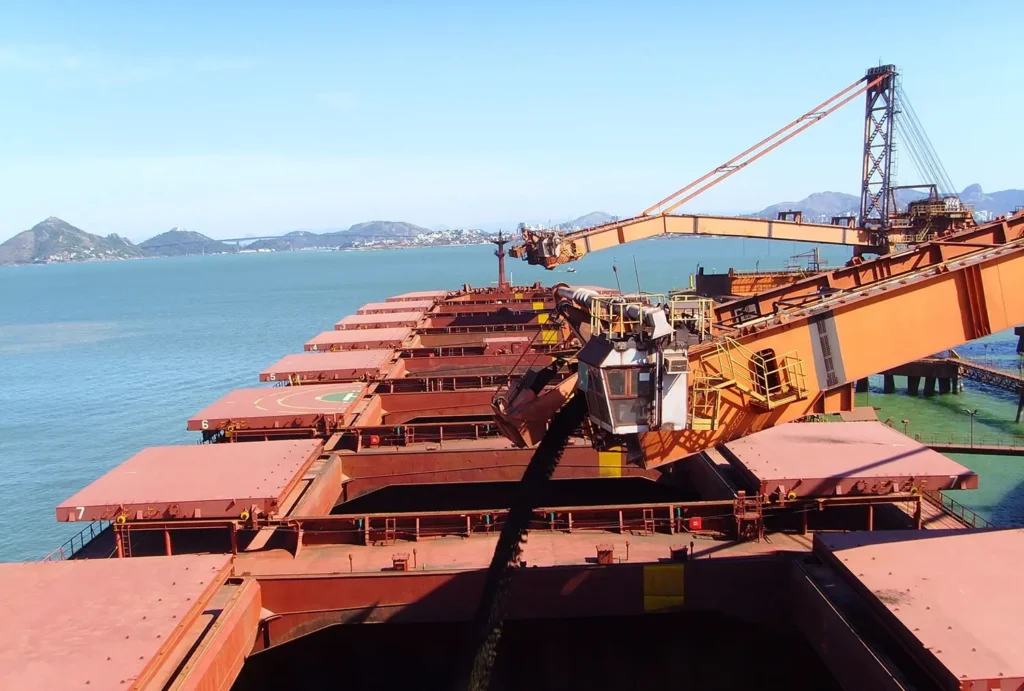
Ore carriers are specialised bulkers designed mainly for dense cargoes such as iron ore. Because ore is heavy, a vessel can reach its permitted deadweight before its holds are full, making cargo distribution and structural strength especially important. These vessels are generally used on dedicated, high-volume trades between major mining and industrial ports.
Grain carriers
Grain is a relatively low-density cargo, so cargo volume is particularly important. Ships carrying grain must also account for the risk of cargo shifting and its effect on stability. A grain carrier is not necessarily a permanently dedicated vessel. Many conventional bulkers carry grain as one of several cargoes, provided the ship and loading condition meet the applicable requirements.
Specialised bulk carriers
Some bulk carriers are designed around a particular cargo or cargo-handling pattern. Examples include woodchip carriers, which are optimised for high-volume, lightweight cargoes, and open-hatch bulk carriers, which can carry bulk cargo as well as unitised cargoes such as timber, wood pulp and steel products.
Bulk Carriers by Cargo-Handling Equipment
Another important distinction is whether a bulk carrier has its own cargo-handling equipment. This affects the ports where it can operate.
Geared bulk carriers
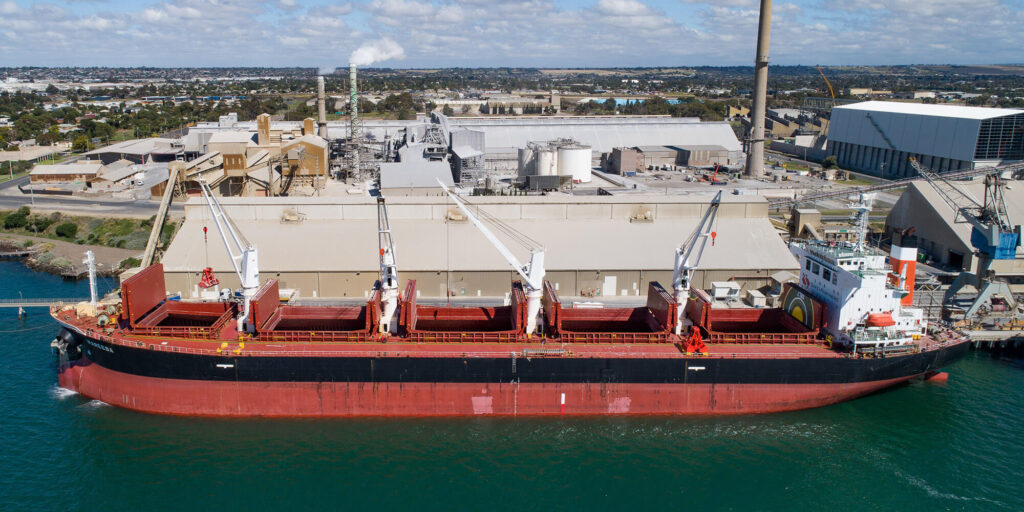
Geared bulk carriers are fitted with their own deck cranes, usually used with grabs to handle dry bulk cargoes. This gives them greater flexibility, allowing them to serve ports with limited shore-based equipment. Geared vessels are particularly common in the Handysize, Handymax, Supramax and Ultramax segments.
Gearless bulk carriers
Gearless bulk carriers do not have their own cargo cranes and rely on shore-based equipment. They are common among larger vessels, including Panamax, Kamsarmax, Capesize and VLOCs, which typically operate between major terminals with specialised cargo-handling facilities. The absence of cranes reduces equipment weight and maintenance requirements, but means the vessel needs suitable cargo-handling infrastructure at its ports of call.
Self-discharging bulk carriers
Self-discharging bulk carriers are fitted with integrated systems, typically including conveyors and a discharge boom, to move cargo from the holds to shore. This allows them to operate with less reliance on shore-side equipment and can reduce discharge times. Such vessels are particularly useful where port infrastructure is limited or rapid discharge is important.
Bulk Carriers by Design and Trade
Some bulk carriers are better distinguished by their overall design and intended trading environment rather than by size or cargo alone.
Open-hatch bulk carriers
Open-hatch bulk carriers have particularly wide cargo-hold openings, making them suitable for large or unitised cargoes. They are commonly used for forest products such as timber and wood pulp, but can also carry steel products and bulk commodities. Their design gives them greater flexibility than conventional bulkers focused mainly on homogeneous bulk cargoes.
Combination carriers
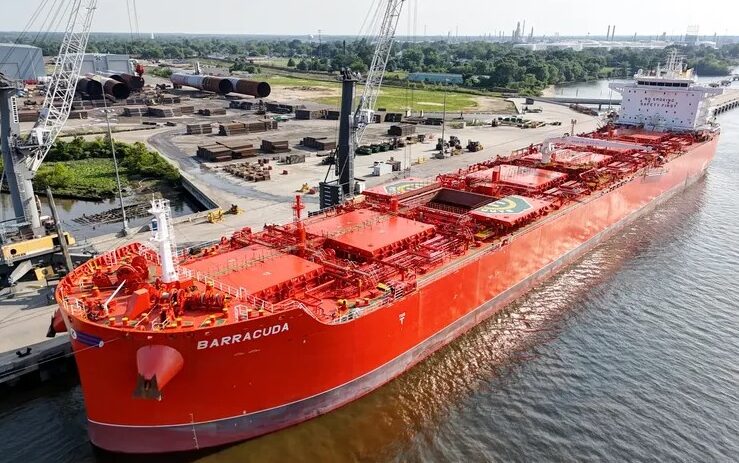
Combination carriers are designed to carry both dry and liquid cargoes, normally on separate voyages. One example is the OBO (Ore-Bulk-Oil) carrier, which can carry oil or dry bulk cargoes such as ore. These vessels were developed to provide greater trading flexibility and reduce ballast voyages, but their specialised design makes them more complex to operate.
Lakers
Lakers are bulk carriers designed to operate on the Great Lakes and the St. Lawrence Seaway. Their dimensions and equipment are adapted to the locks, channels and terminals of the system. Many are self-unloading vessels, allowing them to discharge cargo directly at Great Lakes terminals.
Port- and waterway-constrained bulk carriers
Some bulk carrier designations are based on the dimensional limits of particular ports or waterways rather than DWT alone.
Examples include:
- Newcastlemax – associated with the Port of Newcastle in Australia;
- Seawaymax – sized to use the locks of the St. Lawrence Seaway;
- Dunkirkmax – referring to restrictions at the Port of Dunkirk;
- Malaccamax – associated with draft and passage restrictions in the Strait of Malacca;
- Chinamax – used for very large vessels designed around the dimensions and infrastructure of major Chinese ports.
These terms show why DWT alone does not determine where a bulk carrier can trade. Length, beam, draft and other dimensions can also limit port access.
One ship, several classifications
These categories are not mutually exclusive. A single vessel can be a Supramax, geared bulk carrier, grain carrier and open-hatch vessel at the same time. Another may be a Capesize, gearless bulk carrier and specialised ore carrier.
In practice, bulk carriers are often described using several characteristics: size, cargo type, cargo-handling equipment, design and trading area.