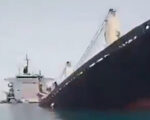
Chinese authorities have issued their first-ever penalty against a foreign vessel for operating the satellite internet service Starlink in territorial waters without authorization. The vessel’s name and the size of the fine were not disclosed.
The violation was detected during a routine port inspection in Ningbo, where maritime officials identified a Starlink terminal installed on the vessel’s upper deck. Authorities confirmed that the low-Earth orbit satellite system continued transmitting data after the ship entered Chinese waters, breaching national telecommunications regulations.
Starlink has never been licensed to operate in China. Under Chinese law, all radio equipment and frequency use must receive prior approval, and data traffic must pass through state-controlled networks. Starlink’s direct satellite links bypass domestic infrastructure, which Beijing views as a risk to communication security and data sovereignty.
Starlink has never been licensed to operate in China. Under Chinese law, all radio equipment and frequency use must receive prior approval, and data traffic must pass through state-controlled networks. Starlink’s direct satellite links bypass domestic infrastructure, which Beijing views as a risk to communication security and data sovereignty.
Regulatory oversight was further tightened in June 2025, when new rules governing direct-to-device satellite services came into force, closing potential loopholes for foreign satellite operators.
The Ningbo Maritime Safety Administration said the case marks a turning point in enforcement. Officials warned that inspections targeting illegal satellite communications will intensify across Chinese ports.
For ship operators, the requirement is clear: Starlink terminals must be switched off before entering China’s territorial waters, generally defined as within 12 nautical miles of the coast. Failure to comply may result in fines, equipment seizure, vessel detention, and operational delays.
With Ningbo-Zhoushan ranking among the world’s busiest ports, the enforcement action is expected to have broad implications for international shipping, where Starlink has become widely used for operational communications and crew welfare.