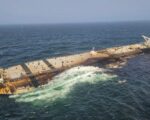
On 19 July 2024, a collision occurred in the South China Sea between the Singapore-registered oil/chemical tanker Hafnia Nile and the São Tomé and Príncipe-registered tanker Ceres I. The accident led to structural damage on both vessels, a fire, the loss of bunker fuel and naphtha cargo, serious burn injuries to two shore workers and one fatality. The final investigation report published by Singapore’s Transport Safety Investigation Bureau (TSIB) in December 2025 documented the sequence of events and the factors that contributed to the accident.
Facts and sequence of events
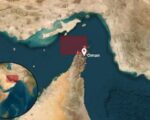
At about 0602 hours on 19 July 2024, Hafnia Nile was underway on a northeast-bound passage in the South China Sea, east of Malaysia. Ceres I was at anchor in the same area. Weather conditions were fair, with good visibility, winds of 15–25 knots, and a north-westerly current of 2–4 knots.
Hafnia Nile attempted to pass between Ceres I and another southwest-bound vessel that were about 0.7 nautical miles apart.
During the approach, the Officer of the Watch (HN-2M) left the wheelhouse to prepare IFC and AMVER reports in the chartroom, which was separated by curtains during hours of darkness. An Able Seafarer Deck (HN-ASD2) remained alone in the wheelhouse.
On Ceres I, the bridge team detected Hafnia Nile at a distance of about 6.4–6.5 nautical miles and initially assessed the situation as non-critical. Visual and sound signals were reportedly used by Ceres I to warn Hafnia Nile, but no VHF communication was attempted as the situation developed into close quarters.
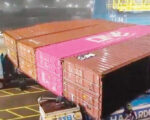
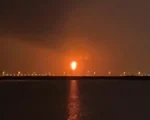
The vessels collided, causing structural damage to both ships, loss of bunker fuel and naphtha from one of Hafnia Nile’s cargo tanks, and fires on both vessels. Two shore workers onboard Ceres I sustained serious burns; one later died in hospital.
Singapore authorities later charged two crew members from Hafnia Nile under the Merchant Shipping Act, including the officer in charge for failing to properly assess risk and maintain situational awareness.
Contributing factors identified in the investigation
Bridge manning and watchkeeping on Hafnia Nile
- During a developing close-quarters situation, HN-2M left the wheelhouse to prepare administrative reports that were not time-critical.
- This left only one able seafarer on the bridge and reduced situational awareness, contrary to the Safety Management System (SMS) expectation that navigation should not be disrupted by non-operational tasks.
- An incidental observation noted that the Bridge Manning Level (BML) of Hafnia Nile did not meet company SMS requirements during departure from Singapore and while transiting the Traffic Separation Scheme, although it did meet requirements at the time of the collision.
Fatigue of the officer of the watch
- HN-2M joined the vessel after overnight international travel from Colombo via Kuala Lumpur and immediately assumed duties upon boarding.
- He had less than two hours of uninterrupted rest over a 38.5-hour period before commencing the 0000–0600 watch, with rest further disrupted by an unannounced fire alarm test.
- The investigation concluded that HN-2M was likely experiencing fatigue, which may have reduced alertness and affected performance and judgement during the developing situation.
- The report also noted that another crew member (HN-ASD1), who joined the same day after overnight travel, also undertook duties shortly after arrival, reflecting a broader risk associated with insufficient recovery time for newly joined personnel.
Radar alarms and technical safeguards
- On Hafnia Nile, the S-band radar CPA/TCPA alarms were silenced, and the X-band radar alarms were deactivated.
- The absence of active alarms removed an important safeguard that could have assisted in detecting the reducing closest point of approach (CPA), increasing reliance on visual and manual monitoring.
Actions on board Ceres I
- The bridge team on Ceres I initially assessed the approaching vessel as non-critical and did not take early preparatory measures.
- Although sound signals and an Aldis lamp were reportedly used to warn Hafnia Nile, these were not acknowledged, and VHF radio was not used as an additional means of communication.
- Ceres I’s SMS required bridge teams to warn approaching ships but did not specify the methods to be used. In the absence of procedural guidance, the team relied solely on visual and sound signals, limiting available response options.
- The investigation stated that no human-element issues were identified on Ceres I, but the lack of procedural clarity contributed to limited use of available resources.
Findings and safety lessons from the investigation
- Administrative tasks were prioritised over navigation during a developing traffic situation, contrary to company SMS expectations.
- Insufficient rest and fatigue were identified as contributing factors affecting alertness, judgement, and performance.
- Disabled radar alarms removed a key layer of protection that could have provided early warning of a developing close-quarters situation.
- On Ceres I, the absence of clear SMS procedures on communication methods in close-quarters situations led to reliance on visual and sound signals alone, with VHF not used despite escalating risk.
- The investigation noted that the shore workers’ ability to follow emergency instructions indicated that the safety briefing was effective in preparing them for emergency response.
Safety recommendations
For Hafnia Nile’s company
- Ensure that CPA/TCPA alarms remain active throughout navigational watches, with systematic review of alarm settings during passage planning and watch handovers.
- Reinforce adherence to bridge manning levels prescribed in the SMS during departure and other high-risk navigational phases, and ensure any justified deviations are documented by the Master.
For Ceres I’s company
- Provide clear guidance in SMS procedures on the use of communication tools – including sound signals, light signals, and VHF radio – when responding to developing or time-critical close-quarters situations.