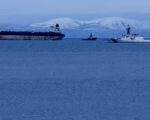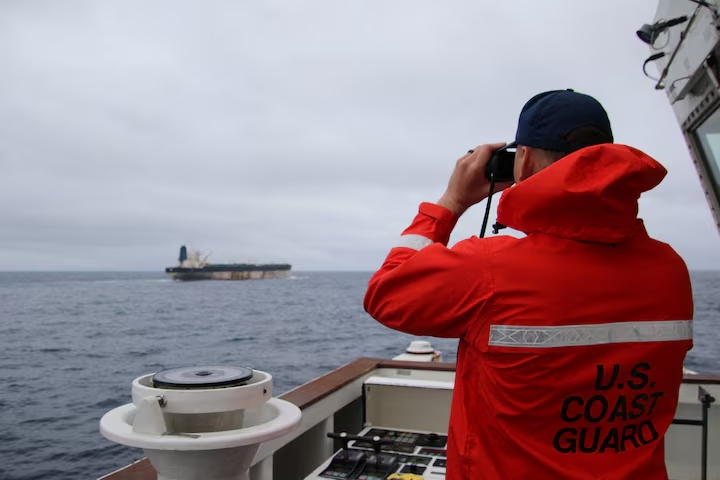
The U.S. Coast Guard has seized the tanker Bella 1 in international waters near the Faroe Islands after a prolonged pursuit across the North Atlantic. The crew is now under investigation and may face criminal charges for refusing to comply with U.S. boarding orders.
The vessel, also known as Marinera (IMO 9230880), is described by U.S. authorities as part of the “shadow fleet” involved in transporting sanctioned oil. In late December, Bella 1 was sailing in ballast from Iran toward Venezuela when U.S. forces attempted to carry out an interdiction. According to American officials, the master denied permission to board, after which the ship reversed course and headed into the North Atlantic.
During the chase, the vessel’s unidentified owner attempted to transfer the tanker to the Russian flag and rename her. Despite this, U.S. authorities consider the ship stateless and therefore subject to seizure under U.S. sanctions enforcement. Russian officials, however, insist that the reflagging was completed before the boarding and have called the operation a violation of international law.
Moscow confirmed that Russian nationals were on board and has demanded their humane treatment and repatriation.
Harsh winter conditions reportedly prevented at least one earlier boarding attempt, but U.S. forces ultimately took control of the vessel on January 7. The tanker is expected to be escorted under U.S. control for further legal proceedings.
Criminal liability for the crew
U.S. officials say the seizure was carried out under a judicial order and that crew members of Bella 1 may be prosecuted for failing to obey Coast Guard instructions. According to statements from the White House and the Department of Justice, mariners involved in such incidents may be subject to investigation and criminal charges under U.S. federal law and, if required, brought to the United States for prosecution.
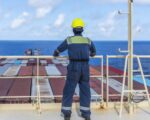
For seafarers, this case highlights a significant risk: enforcement actions are no longer limited to ships and cargoes. Crew members working on sanctioned or “dark fleet” vessels may face personal legal consequences if a vessel does not comply with lawful orders at sea.
Part of a wider campaign
The seizure of Bella 1 is part of a broader U.S. effort to block what it describes as illicit Venezuelan oil exports. On the same day, U.S. forces also captured another tanker, Sophia (also known as Varada Blessing, IMO 9289477), reportedly laden with approximately 1.8 million barrels of Venezuelan crude.
Analysts note that all tankers seized so far have previously been linked to sanctioned Iranian oil trades. Monitoring groups warn that crews serving on such vessels face increasing exposure to detention, investigation, and possible prosecution as enforcement actions intensify worldwide.
TankerTrackers reports that its current watchlist includes 1,306 tankers, plus 64 inactive units, that have been sanctioned or flagged by governments and non-governmental organizations for involvement in restricted or illicit oil trades.
Seafarers are advised to exercise extreme caution when accepting contracts on such vessels, to verify a ship’s ownership and trading history where possible, and to be aware that compliance failures by owners or masters could place individual crew members at personal legal risk.