A new wind-assisted propulsion system will be tested on the FPSO GranMorgu during its delivery voyage from China to Suriname, as project partners explore ways to reduce fuel consumption and emissions in offshore operations.
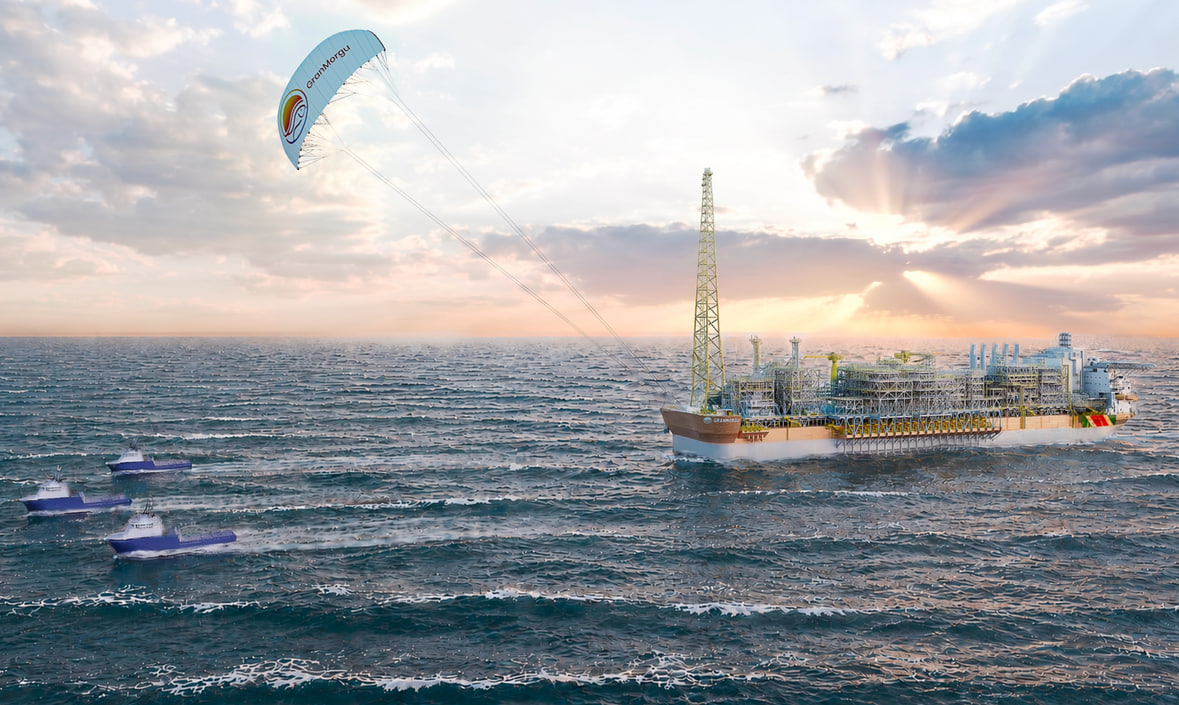
SBM Offshore, Technip Energies Joint Venture (STS JV), TotalEnergies EP Suriname and French technology company Beyond the Sea have agreed to develop and test a Wind Assisted Towing System (WATS) for the vessel.
The system will use Beyond the Sea’s SeaKite 2400, an automated kite designed to generate additional towing force by harnessing wind energy. The technology will be installed while the FPSO is transported from the construction yard in China to its future offshore location in Suriname, with the aim of reducing towing time and fuel use.
The 9,000-nautical-mile voyage will provide a real-world test of kite propulsion technology on a large offshore vessel. Before deployment, the project team will complete technical assessments, safety checks and land-based testing to prepare the system for operation.
The GranMorgu will become Suriname’s first large-scale deepwater oil production facility. The vessel will have storage capacity for around 1.6 million barrels of crude oil and will process approximately 500 million cubic feet of associated gas per day. The 275-metre FPSO will operate at the GranMorgu field, about 150 kilometres offshore Suriname.
Beyond the Sea said the trial will provide data on the performance and reliability of kite towing technology, including the launch and recovery system and its integration with the vessel’s towing arrangements.
The GranMorgu project will be one of the first attempts to apply automated kite traction technology to an FPSO-scale offshore asset.
The partners said the next stages of the project will depend on successful technical and safety evaluations, with the goal of assessing whether wind-assisted towing can become a practical solution for reducing emissions during offshore transportation.