During Walk-to-Work operations on a Service Operation Vessel (SOV) at an offshore windfarm, a gangway operator suffered a compound fracture of his right foot. The case, described in one of the Marine Safety Forum alerts, highlights the risks of unsafe positioning on telescopic gangways, which every seafarer working with this equipment should be aware of.
Incident Overview
The vessel was positioned port side to the Wind Turbine Generator (WTG), with waves reaching 3 m and swell of 2.8 m – conditions considered acceptable for the operation.
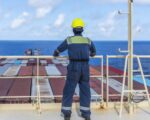
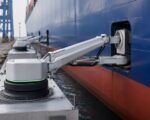
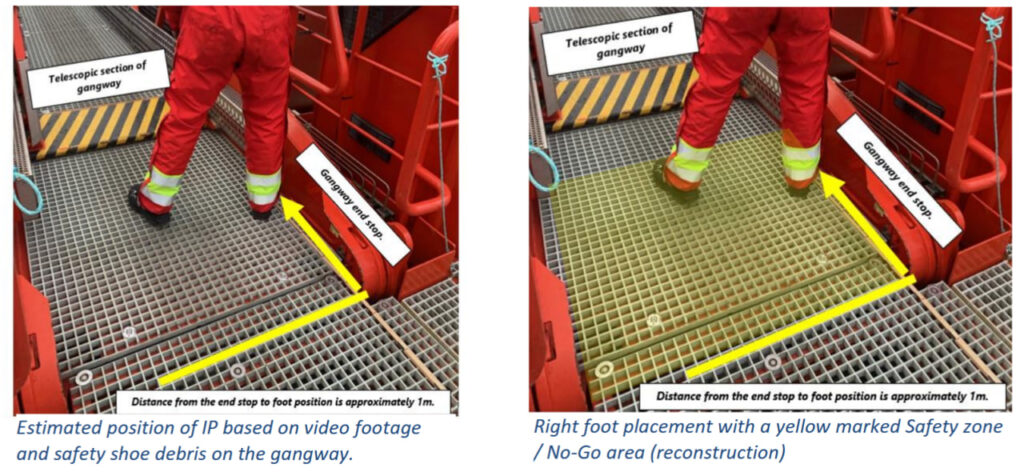
The operator, standing at the base of the telescopic access bridge, used a mobile remote control to connect the gangway to the WTG. Due to vessel movement, he was unable to secure the gangway on the first attempt and retracted it to reassess the situation. On the second attempt, the connection again failed. During retraction, the telescopic section of the gangway frame slid over his right foot, trapping it between the frame and the gangway floor, causing a severe compound fracture. The automatic motion compensation of the gangway system added to the movement, pushing the frame further than the operator anticipated.
Causes of the incident
The investigation identified several contributing factors:
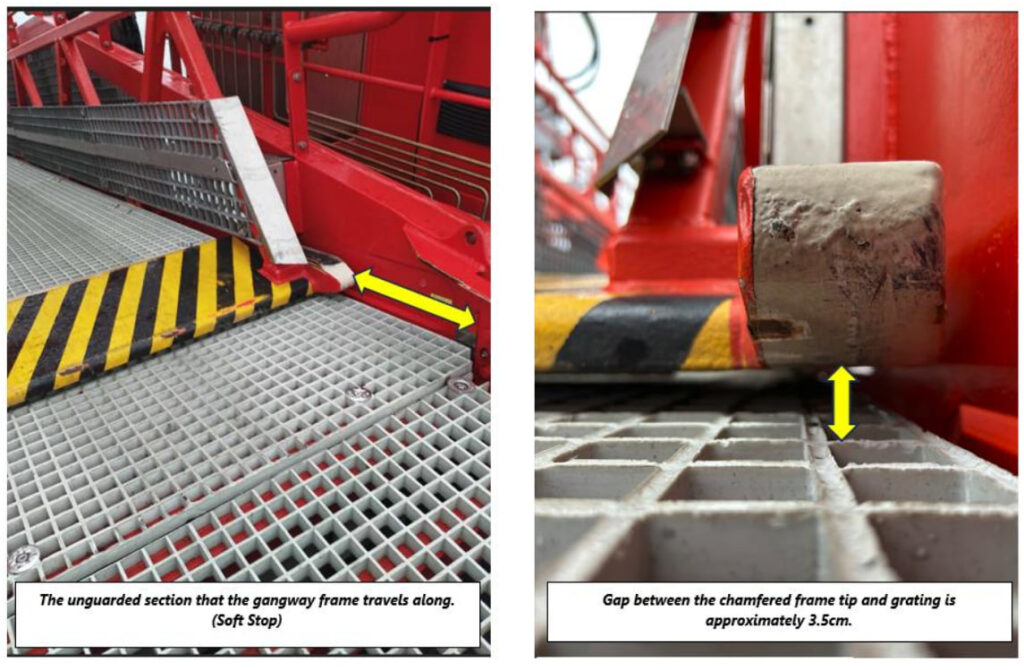
- Design hazard: The telescopic gangway frame has a chamfered end with a gap between the frame and the floor, creating a zone where a foot can easily be trapped.
- Ungarded travel path: The final section of the gangway’s travel (soft stop) was unprotected, allowing the frame to pass over the operator’s foot without obstruction.
- Normalised unsafe practice: Operator training had reinforced standing on the Telescope Access Bridge platform or in the operator cabin during connection attempts. Over time, operators had become accustomed to positioning themselves in areas where, under certain vessel movements, entrapment could occur.
- Situational factors: The operator was highly focused on connecting the gangway under challenging sea conditions, which reduced awareness of his exact foot placement.
- Risk assessment gaps: The vessel’s risk assessment for Walk-to-Work operations did not specifically identify the foot entrapment hazard, nor did it provide guidance to avoid it.
Lessons learned
The incident highlighted several critical lessons for safe gangway operations, combining findings from the investigation and safety alerts:
- Engineering controls are essential: Guarding along the soft stop and physical barriers at the base of the telescopic section prevent operators from entering hazard zones.
- Training must be focused on real risks: Operator programs should emphasise entrapment and shearing hazards, define no-go areas, and include hands-on assessments.
- Operational limits support decision-making: Clear sea state and vessel movement limits enable operators to decide when to pause or stop gangway operations, independent of vessel station-keeping.
- Fleet-wide hazard awareness is crucial: All SOVs should conduct targeted hazard identification for gangways and update Walk-to-Work risk assessments to record shear and entrapment hazards.
- Competency assessments reinforce safe practices: Regular refresher programs help maintain operator skill levels, transfer lessons learned, and correct unsafe habits.
- Design and layout matter: Operator cabins and control areas should be reviewed to improve usability and minimise exposure to hazard zones.