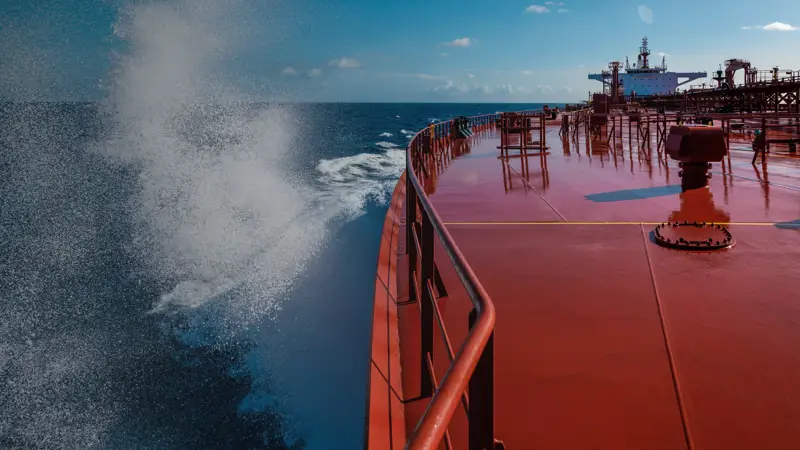
The global shipbuilding orderbook has reached a 17-year peakas new orders accelerate across key segments, with crude oil tankers leading the latest wave of contracting, industry group BIMCO reported.
Newbuilding contracting in the first quarter of 2026 rose 40% year-on-year to 17.6 million compensated gross tonnes (CGT), bringing the global orderbook to 191 million CGT, equivalent to 17% of the world fleet – the highest ratio since 2011.
BIMCO noted that tanker orders have tripled compared to previous periods, marking a significant shift in market momentum after years of relatively subdued activity in the sector. Tankers now account for 32% of total contracting, the highest share since 2017, reflecting what analysts describe as a renewed tanker upcycle.
Container shipping and LNG segments also remain heavily ordered, with orderbook-to-fleet ratios reaching 37% and 40% respectively. Crude tanker orders stand at 22%, supported by ageing tonnage, with over one-fifth of global crude and product tanker fleets now exceeding 20 years of age.
However, BIMCO also pointed to signs of cooling in some segments, with quarterly contracting down 17% due to weaker dry bulk orders after a surge late in 2025.
China continues to dominate global shipbuilding, accounting for around 70% of new orders in the first quarter of 2026, while South Korea retained a 20% share, largely driven by LNG vessel demand. Japanese shipyards saw a steep decline to just 1% of global orders amid capacity constraints and competitiveness pressures.
The industry group also highlighted structural uncertainties affecting long-term contracting decisions, including geopolitical risks linked to the Red Sea and Strait of Hormuz, as well as fuel transition challenges and extended shipyard delivery timelines, with more than half of new orders now scheduled for delivery after 2028.