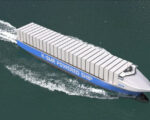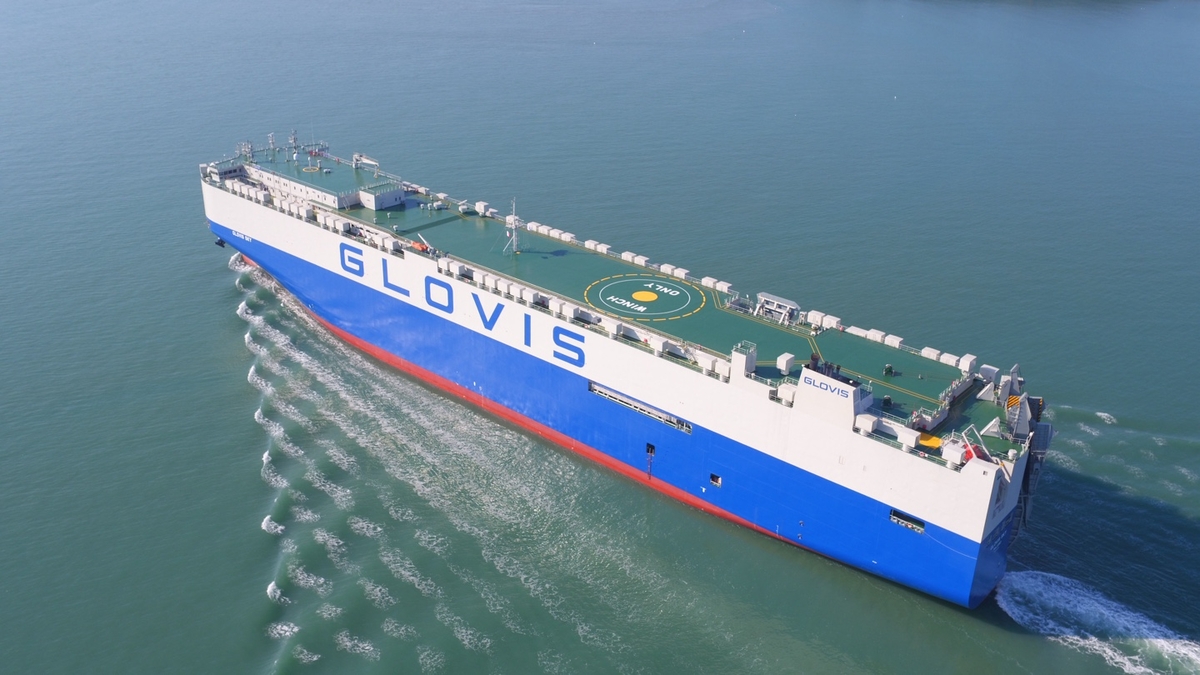
South Korea’s HD Hyundai has expanded its nuclear-powered vessel programme beyond container shipping, unveiling a large pure car and truck carrier (PCTC) concept powered by a molten salt reactor (MSR).
The design recently received Approval in Principle (AiP) from Lloyd’s Register, marking an important milestone in the development of nuclear propulsion technology for commercial shipping.
The project was developed through cooperation between several industry and research partners. HD Hyundai Heavy Industries and HD Korea Shipbuilding & Offshore Engineering led the vessel design and technical evaluation, while Hyundai Glovis contributed operational expertise based on its extensive car carrier fleet experience. Ship management specialist G-Marine Service reviewed operational aspects of the design, and the Korea Atomic Energy Research Institute assessed the reactor technology.
The proposed vessel would be powered by a molten salt reactor, a form of small modular reactor (SMR) that uses molten salt as both fuel carrier and coolant. The technology is widely regarded as one of the more promising nuclear concepts for maritime applications due to its passive safety characteristics, high thermal efficiency and reduced risk of reactor overheating.
Unlike conventional vessels that rely on fossil fuels or alternative fuels such as LNG, methanol or ammonia, a nuclear-powered car carrier could operate without producing carbon dioxide emissions during voyages while maintaining high power output over extended periods without refuelling.
The latest approval builds on HD Hyundai’s earlier work on nuclear-powered container ship concepts and reflects growing interest in nuclear propulsion as the maritime industry searches for long-term decarbonisation solutions.
The timing coincides with continued growth in the vehicle carrier sector. Industry forecasts project the global PCTC market to expand at an average annual rate of 3.8% through 2030, supported by increasing vehicle exports, rising volumes of electric vehicles and demand for lower-emission shipping services.
Despite the technology’s potential, significant regulatory and operational hurdles remain. The European Maritime Safety Agency has previously noted that nuclear propulsion could contribute to shipping’s decarbonisation goals, but warned that issues including reactor safety, security, crew training, liability frameworks, port acceptance and insurance arrangements must be addressed before commercial deployment becomes feasible.
Nuclear propulsion has periodically attracted interest within the maritime sector for decades, but commercial adoption has remained limited. Advances in small modular reactor technology are now prompting shipbuilders, classification societies and shipowners to revisit the concept as pressure mounts to achieve net-zero emissions targets.
HD Hyundai said it intends to continue investing in advanced propulsion technologies and sees nuclear-powered vessels as a potential component of the industry’s future carbon-neutral fleet.