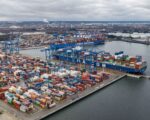
Illegal migration has long become a stumbling block for the shipping industry and ranks among the seven maritime risks alongside piracy and smuggling. Today, this issue is especially relevant in West Africa, Central America, Colombia, Venezuela, and the Dominican Republic. People seeking a better life, even abroad, create significant problems for seafarers, shipowners, port authorities, and EU governments. The reasons for fleeing can vary. If the country where a vessel calls is rife with political or economic troubles, one must always consider the possibility of stowaways on board. Criminal motives should also not be dismissed.
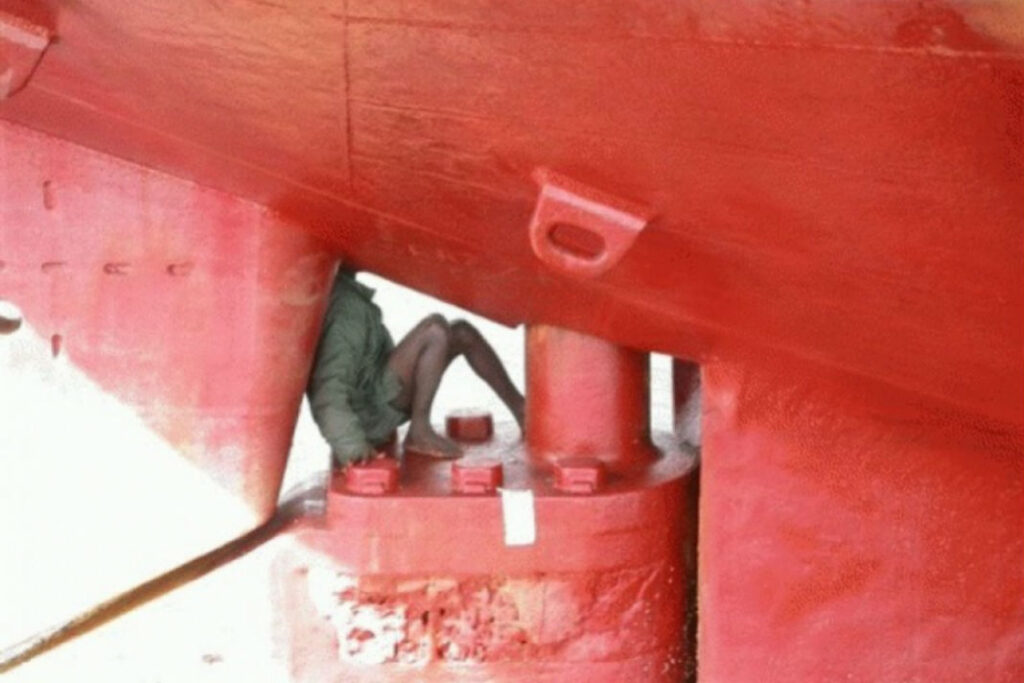
Most migrants are found on bulk carriers, general cargo vessels, and container ships. Ro-Ro vessels are also among their preferred ships. Beyond cargo holds and containers, migrants often choose the propeller shaft tunnel, chain locker, underdeck spaces, steering compartment, and even the engine room as hiding places.
To get on board, they use various methods: bribes, hiding in containers, using small craft or swimming, hiding near the helm pipe, or posing as stevedores. They may climb along mooring lines, through hawse pipes, or with the help of hooks.
Migrants on board are always a serious headache for the captain. Not all masters have encountered stowaways, but those who have remember it for a long time. Captain Yuriy Vistyak recalls:
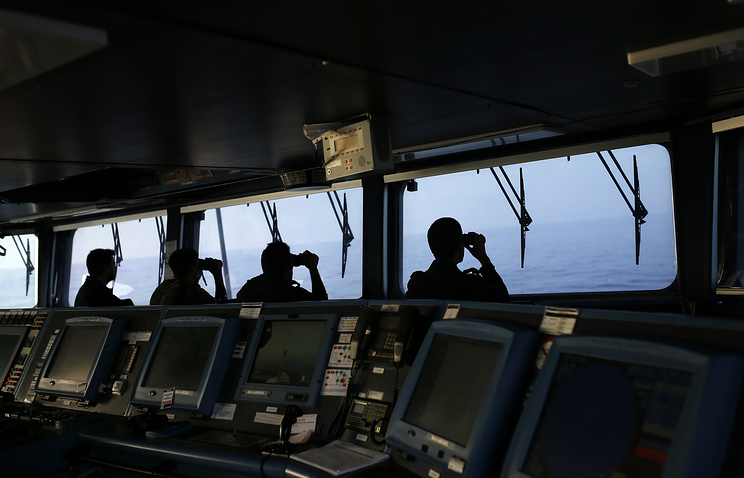
— A notable encounter with illegal migrants occurred around the mid-1990s, before ISPS and ISM. I was serving as the second officer at the time. We discovered illegal migrants on board as the vessel was leaving Mongla port (Bangladesh). Returning would have taken a long time; the Greek captain, a hot-tempered fellow, got nervous and locked them in a cabin. In the morning, he called me to summon local fishermen. He gave them a sack of rice, flour, and other provisions so they could take the migrants on their boat and return them to their homeland. At China Navigation Company, where I work now, sneaking on board is extremely difficult; we have very high vessel inspection standards. Our crew takes their duties very seriously, as no one wants problems…
The main problem contributing to the migration crisis in international shipping is the uncertain legal status of a migrant found on a vessel. They are protected under the 1948 UN Universal Declaration of Human Rights, the 1950 European Convention on Human Rights and Fundamental Freedoms, and the 1965 Maritime Shipping Convention.
Moreover, the whole tangle of issues is compounded not only by the fact of transporting a person but also by how the European community reacts. Upon arrival in an EU port, under refugee protocol, the migrant is asked about treatment on board. If they report being forced to work, poorly fed, denied hygiene, or not allocated a separate cabin, the captain could face serious legal problems.
Currently, when an illegal migrant is found on board, the captain must follow strict IMO procedures. First, all formalities must be observed: document whom you have found, provide passport number, date of birth, and country of residence of the stowaway. Crew members are very fortunate if the refugee speaks English and is willing to provide information about themselves.
The conventions listed above obligate shipowners to ensure that stowaways on board are not subjected to degrading or inhumane treatment and are provided with food, water, clothing, medicine, and basic facilities. As UTC Admiral instructor Borys Savkov explains, repatriation is the most costly procedure. It involves immigration fines, medical checks, travel documents, airfare, and clothing. Sometimes it is more economical for the shipowner to return the vessel to the port where the migrant was picked up, despite the loss of time and fuel.
Costs related to repatriating illegal migrants fall on shipping and insurance companies. Declaring a single illegal refugee costs, on average, USD 100,000, and this figure is rising.
Perhaps the repatriation system is outdated, and a unified maritime refugee law is needed. This problem can only be solved through joint efforts by shipowners and insurers, making the process simpler, faster, and less costly.
— Speaking of refugees, I recall another case, — Captain Vistyak continues. — Illegal migration did not occur, but the encounter left a lasting impression. In 1997, my vessel had an extended stay in Sudan; unloading cement took about a week. On one hot day, I was called from the gangway and told that a stranger was looking for Ukrainian or Russian seafarers. I approached and saw an elderly, even withered but still graceful, woman. She came to ask for help and told her story.
She was a former ballerina of the Bolshoi Theatre, lived in Saint Petersburg, where she met a Sudanese prince who was studying there. He invited her to marry, promised her the world, and brought her to his country. Only then did she discover the prince already had a harem. Eventually, he expelled her. Who knows why – perhaps Slavic stubbornness? Since she married a Sudanese man, she gained local citizenship but could not leave for her homeland. She lived under the care of a priest of the Orthodox mission. She wanted to give us the money earned from her jewelry to help her leave the country. However, bypassing regulations and deceiving the shipowner was impossible for us, the crew.
We tried to help as best we could. Captain Fatsinos, a Greek elder, showed compassion. He collected voluntary donations from the crew, gave them along with some provisions to her. I also delivered her letter and documents to the Russian Embassy in Odessa when I returned home from the voyage. What happened to her afterwards, I have no idea. I can only hope it ended well.
We’ve seen why migrants are extremely undesirable for the entire shipping industry. But what is the main headache for governments?
Most illegal migrants aim for one country – Germany, with its high standard of living and generous refugee support. If a migrant obtains residency there, they will immediately move all relatives as well. It should be noted that most migrants do not wish to assimilate. Being from Afghanistan, Pakistan, or Africa, they want to remain as they are, even after changing countries. They form communities and districts where criminal activity can take root.
Captain Oleksandr Sushko recalls:
— Once, near Casablanca, during a layover, migrants climbed onto my Ro-Ro vessel and hid in the cargo hold, essentially a garage. When we unloaded, our agent found us another cargo, and to load it, we had to shift to another berth. As it turned out, the stowaways were hiding in plain sight: lying on a pile of wooden boards. Imagine, the deck crew lifts pontoon covers and sees peacefully sleeping “stowaways.” Our agent explained from experience how their “own” authorities usually deal with stowaways (mostly African countries). A container ship arrived at the port of Casablanca, customs started unloading the container – first light boxes, then nine people! They were not arrested. Expressing outrage, the security service simply let them go. They climbed the port’s high fence, caught their breath, and settled there. We asked the customs officer, “And this is all your anti-illegal migration measures?” He replied: “What did you expect? We have many unemployed young people, and if they leave, it only benefits the state.”
Indeed, stowaways remain a serious plague for maritime and coastal communities.
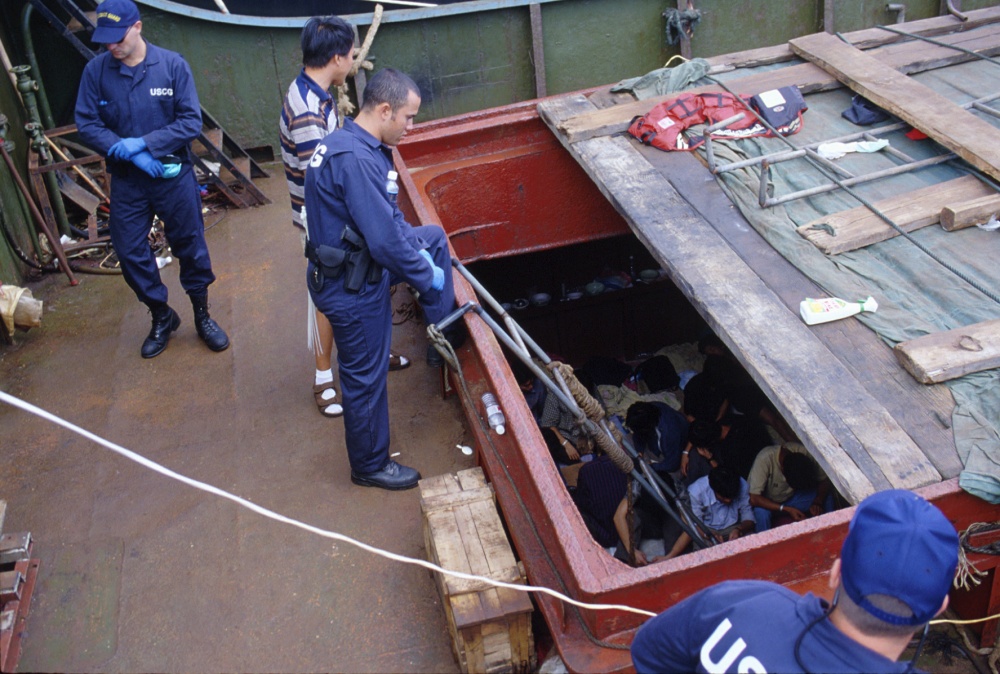
It is not uncommon to see rusty ferries packed with refugees of all ages, not designed for long open-sea voyages. The first storm can cause irreversible tragedy. From the seafarers’ perspective, failing to assist those in distress is a criminal offense. A mariner must help by taking people on board and delivering them to a port of safety. However, once aboard, the vessel may remain in port indefinitely while the migration issue is resolved. All expenses for food and living conditions fall on shipping and insurance companies. A captain who takes illegal migrants on board for any reason becomes the scapegoat. Where is the solution?
Paradoxically, safety procedures must be followed not only for the ship and crew but also for potential migrants. Providing medical care is mandatory for refugees on board. Captain Oleksandr Sushko recalls a case from his practice: two illegal migrants sneaked onto his vessel, taking advantage of a partially open hatch. During a storm, the migrants panicked, came out of hiding onto the deck, and fell from the hatch. One suffered a severe spinal injury and could not move independently; the other had multiple fractures. Upon arrival in Mariupol, the migrants, along with a medical team attending them, were sent back to Algeria. The entire operation, of course, was carried out with the shipowner’s assistance.