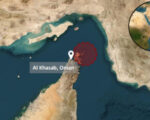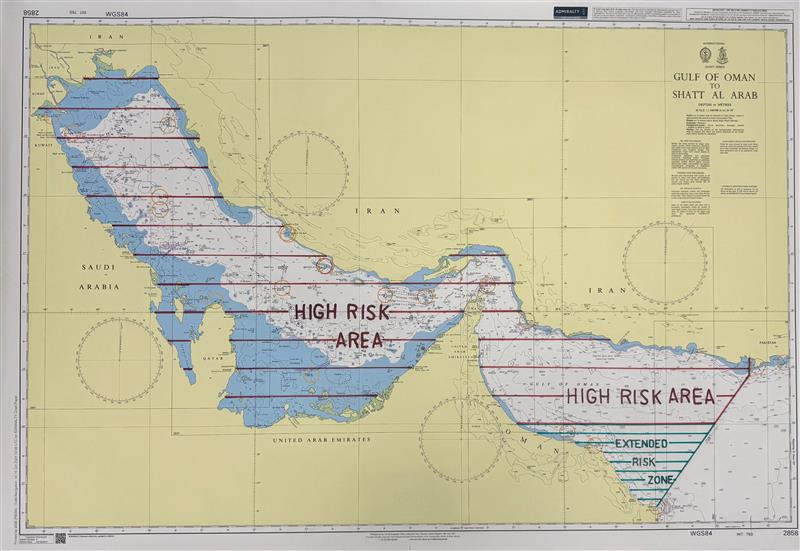
The International Transport Workers’ Federation (ITF) and the Joint Negotiating Group (JNG) have designated the Strait of Hormuz and surrounding waters as a High Risk Area under the International Bargaining Forum (IBF), citing escalating military tensions and confirmed attacks on commercial vessels.
The decision, announced on 2 March, follows a sharp deterioration in the regional security environment involving the United States, Israel and Iran. According to the joint statement, more than 200 vessels are currently anchored in or near the Strait amid uncertainty over safe transit. The International Maritime Organization (IMO) has urged ships to exercise maximum caution and avoid the area where possible.
The High Risk Area designation activates enhanced protections for seafarers covered by IBF agreements. Shipowners and operators are required to conduct strengthened risk assessments before transit, provide clear and timely security information to crews, ensure that all contractual and insurance protections are fully applied, and consult with seafarers and their representatives on voyage planning and mitigation measures.
In HRA zones seafarers are entitled to a bonus equal to 100% of their basic wage for the actual period the vessel remains in or transits through the designated area. The existing conditions also preserve the right to double compensation in the event of death or injury linked to warlike risks.
Crucially, the designation confirms that seafarers have the right to refuse to sail into the area without penalty and request repatriation under existing IBF conditions agreed through the Warlike Operations Area Committee.
Under the IBF framework, High Risk Areas currently include the waters of the Black Sea, the Persian Gulf, the Strait of Hormuz and the Gulf of Oman. , as well as the right to refuse to sail into the area without penalty and request repatriation.
In their statement, the ITF and JNG stressed that seafarers are civilian workers who must not be exposed to military risk or used as leverage in geopolitical conflict, underscoring that safety must take precedence over commercial considerations. The organisations said the situation remains under close review and discussions are ongoing regarding a potential upgrade of the area to a Warlike Operations Area, which would trigger additional contractual protections.
The move was welcomed by Nautilus International, whose General Secretary Mark Dickinson described the designation as a necessary and timely step to strengthen safeguards for crews operating in one of the world’s most strategically sensitive shipping corridors. The union emphasised that meaningful consultation with crews must be central to any decision to trade in the region and said it would continue working through the ITF and IBF frameworks to monitor developments and protect members’ rights and safety.