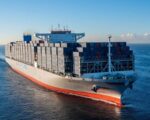
Two seafarers lost their lives while two others sustained injuries after being swept over by heavy waves on board the refrigerated cargo vessel Beluga Reefer. The tragedy, which occurred shortly after the vessel departed Durban in June 2023, has been detailed in a report published by the Bahamas Maritime Authority. The investigation revealed how fatigue, incomplete heavy weather preparations, and insufficient risk assessment combined to create fatal conditions on deck.
Circumstances of the incident
In the early morning hours, the Beluga Reefer departed the port of Durban after loading. The forecast warned of strong winds and increasing swell from the southeast during the passage.
At 04:02, the pilot disembarked. The Master instructed the deck crew to ensure all lines were properly stowed and deck equipment secured for the voyage. Fifteen minutes later, the second officer reported that the aft station was ready, and the bosun confirmed the forward mooring station was secured.
In reality, it was not. Due to a lack of rest, the bosun decided to leave the deck to sleep, intending to finish securing it later that day.
Soon after departure, the vessel encountered increasing swell, causing heavy slamming. The Master, awakened by the impacts, ordered the officer of the watch to reduce speed and alter course to minimize the effect. By midday, wave heights exceeded three metres.
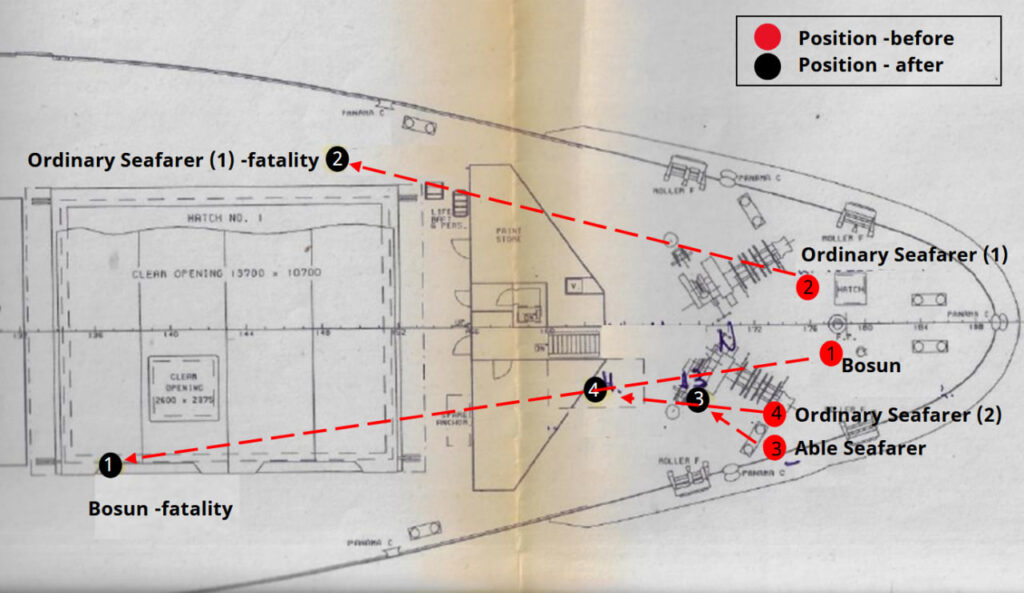
After lunch, the chief officer went on deck for a safety inspection. At the same time, the bosun and deck crew, having rested in the morning, returned to complete the work at the forward mooring station. The vessel was hit by a series of large waves that breached the forecastle and swept the crew off their feet.
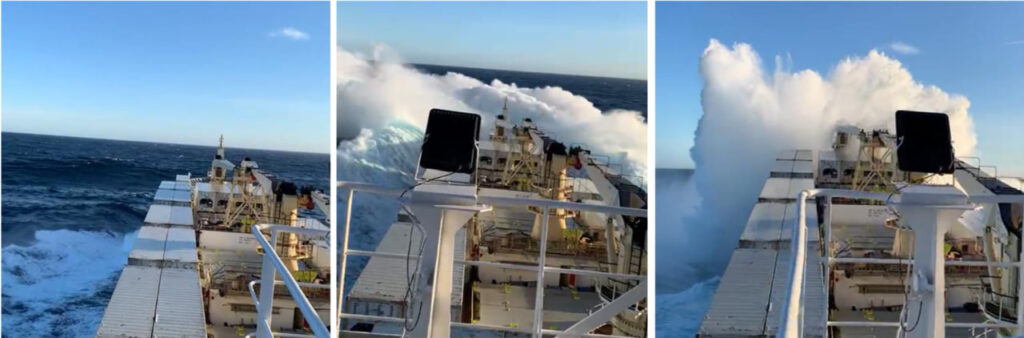
When the chief officer arrived on the forecastle, he found two injured crew members and raised the alarm. Two more injured crew members were discovered further aft. The Master altered course for the nearest port. The injured were transferred to the ship’s hospital, and a medevac request was made, but no helicopter was available. Paramedics boarded the vessel later that evening.
The 52-year-old bosun and 46-year-old ordinary seafarer sustained fatal injuries. Another crew member was transferred to a local hospital for emergency surgery, while a fourth was treated on board for minor injuries.
Findings of the investigation
Incomplete heavy weather preparations
- The vessel was experiencing slamming in the building sea and swell, and although steps had been taken to mitigate, at no point had the officer of the watch or master considered using the company’s heavy weather checklist.
- Access to the deck was not restricted despite the adverse weather forecast.
- The chief officer missed an opportunity to discuss mitigating measures for the forecasted adverse conditions at a shipboard safety meeting the previous day.
Human factors and fatigue
- The deck team left the work unfinished in order to take overdue rest.
- The bosun’s misreporting that the forward mooring station was secure was a situational violation. This decision was influenced by fatigue, brought on by the change in working patterns as the vessel operated along the coast. On the day of the incident, the bosun had just come off his rest period after an eight-hour night shift from 20:00 to 04:00, following eight consecutive days of irregular and extended hours to accommodate loading and discharging operations. The ordinary seafarer had been working the same altered schedule that day.
- Neither the chief officer nor the deck team considered the risk of heavy weather when making their way out on deck. No consideration was given to delaying the work or using personal protective equipment such as flotation devices or lifelines.
Risk mitigation
- Risk assessment templates were completed on the day and upon departing Durban. However, they did not reflect the upcoming passage or the work considered necessary, and therefore did not identify any effective risk mitigation measures.
- The company’s standard checklists (Preparation for Sea, Navigation in Ocean Waters) did not highlight the risks associated with adverse weather or provide guidance on when to employ the company’s Heavy Weather checklist.
Lessons learned
1. Fatigue is a critical factor. The incidentclearly highlights the dangers of crew fatigue. The bosun and deck team had worked extended and irregular shifts for several consecutive days, disrupting normal rest cycles.
Fatigue contributed to critical errors in judgment: the bosun not only misreported the forward mooring station as secured but also delayed completing the task in order to rest.
This demonstrates that even experienced crew members can make hazardous decisions when overly tired, emphasizing the need for proper scheduling, rest periods, and monitoring of crew alertness.
2. Importance of honest reporting and verification. Misreporting the status of essential deck operations can create a false sense of security for the bridge team, with potentially fatal consequences.
All mooring and deck work should be personally verified before departure, especially in heavy weather conditions.
3. Proactive risk mitigation. Crew should be trained to anticipate adverse conditions and follow strict protocols for deck access, personal protective equipment, and the use of company heavy weather checklists.
Delaying non-essential work until conditions improve can prevent unnecessary exposure to danger.
Actions taken by shipowner
- Strengthened safety culture:
Introduced a company-wide programme promoting “Stop-The-Job” interventions and improved risk management practices. - Refresher training:
Required all officers and deck crew involved in open-deck operations to complete updated training on the following procedures:- Navigation under Various Conditions
- Navigation in Ocean Waters
- Navigation in Heavy Weather
- DRA 1 – Navigation in Heavy Weather
- Improved onboard safety signage:
Ordered all vessels in the fleet to display clear warning signs at accommodation exits, prohibiting access to weather decks during adverse conditions.
Recommendations for further improvement
- Comprehensive review of onboard procedures:
Reassess company procedures concerning casualty reporting, sea-readiness verification, deck access, crew movement, task scheduling, and communication. - Update of risk assessments:
Ensure all risk assessment processes accurately reflect real working conditions and comply with the latest industry standards and best practices.