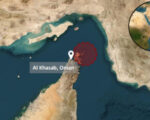
The Strait of Hormuz closed again after Iranian forces opened fire on multiple commercial vessels. According to the UK Maritime Trade Operations (UKMTO), at least three separate incidents were recorded within hours on April 18 near Omani waters.
In the first case, a tanker reported being approached by two gunboats linked to Iran’s Islamic Revolutionary Guard Corps (IRGC), which opened fire without issuing any VHF warning. The vessel and crew were unharmed.
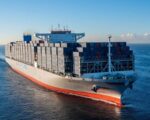
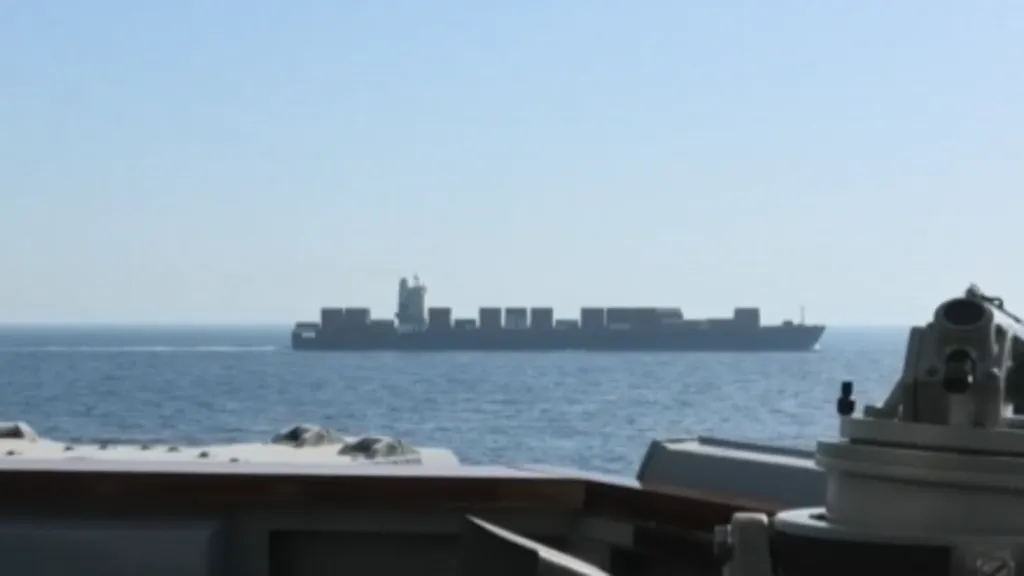
Shortly after, a containership sailing approximately 25 nautical miles northeast of Oman was struck by a projectile, damaging several containers. No fire or pollution was reported, and the crew remained safe.
A third incident involved a cruise ship reporting a “splash” in close proximity-likely a near-miss.
Additional reports indicate that at least two Indian-linked vessels, including a VLCC Sanmar Herald, carrying Iraqi crude, and bulk carrier Jag Arnav, were forced to turn back after encounters with Iranian naval units involving gunfire. This led India to call in Tehran’s ambassador, which was one of the most tense diplomatic exchanges between the two countries since the crisis began.
Maritime sources also confirmed that Iranian forces broadcast radio messages declaring the strait closed and prohibiting passage for vessels of any nationality.
The latest events mark the first confirmed attacks since a brief lull following the April 7 ceasefire. The escalation came just one day after Tehran signaled a limited reopening of the strait under ceasefire conditions. Iranian officials have now reversed that position, citing continued U.S. pressure and blockade measures, and announced that transit would require explicit authorization, routing compliance, and potentially toll payments.
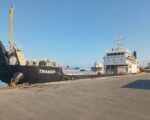
Meanwhile, the United States has escalated enforcement actions under its maritime blockade. U.S. naval forces reportedly used force to stop and seize an Iranian-linked containership Touska attempting to enter a restricted zone near Bandar Abbas.
CENTCOM stated that the warship issued warnings to the crew for six hours and ordered them to evacuate the engine room. Then the destroyer USS Spruance fired several 5-inch MK 45 gun rounds on the vessel, disabling it before U.S. marines boarded and took control.
At the same time, some vessels-particularly empty tankers-have been allowed to proceed, indicating a selective enforcement approach aimed at controlling oil flows without completely halting maritime traffic.
Together, these developments point to the emergence of a new, highly controlled and militarised transit regime in the Strait of Hormuz, creating unprecedented uncertainty for global shipping and energy markets.