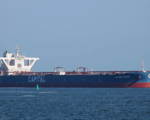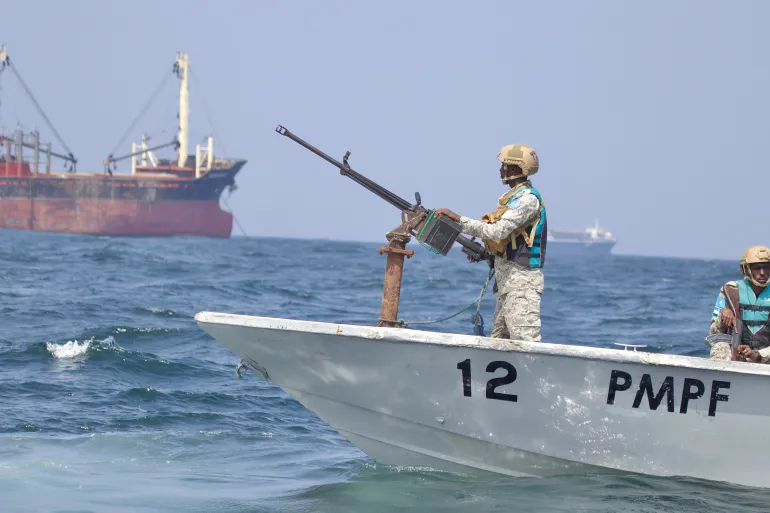
A product tanker Eureka was hijacked off Yemen and redirected toward the Somali coastline, officials reports. According to statements from the Yemeni Coast Guard, armed individuals boarded the Togolese-flagged tanker on May 2 off the coast of Shabwa province, took control of the vessel, and altered its course toward the Gulf of Aden.
Authorities said they had initiated tracking operations and were coordinating with international maritime partners to secure the vessel and ensure the safety of the crew, though no official confirmation of crew condition has yet been released.
Voyage data indicates that MV Eureka, an 88-metre coastal product tanker managed by UAE-linked interests, had departed Sharjah in February, loaded cargo in Fujairah, and recently called at the oil terminal of Qana in Yemen before sailing eastbound on April 30. The vessel remained off the Shabwa coastline for several days prior to the boarding.
Maritime security reporting from UK Maritime Trade Operations (UKMTO) adds further context, noting two suspicious approaches in the same area on May 1 and 2. In one case, a bulk carrier was approached by a skiff operating in coordination with a larger fishing vessel; in another, a separate vessel reported seven armed men closing in by small craft. Both incidents occurred within the Maritime Security Transit Corridor (MSTC), highlighting the deteriorating security environment along key shipping routes.
Tracking data and regional assessments suggest that MV Eureka is being directed toward Qandala in Puntland, a known piracy hub lacking formal port infrastructure, where hijacked vessels are typically held offshore. Analysts note that such relocations are consistent with previous Somali piracy patterns.
The incident follows a series of pirate incidents in recent weeks. On April 21, the tanker Honour 25 was seized, followed by the capture of the cargo vessel Sward on April 26. European Union Naval Force (EU NAVFOR) Operation Atalanta has confirmed it is monitoring at least one of the hijacked vessels, with a frigate deployed in the vicinity.
Security analysts and regional authorities point to a combination of factors behind the surge in piracy activity. The diversion of naval resources toward the Red Sea and the Strait of Hormuz, along with reduced coastal oversight in parts of the Gulf of Aden, has created what EU naval officials have described as a “window of opportunity” for pirate groups to reassert operations.
The broader geopolitical context is also playing a role. Ongoing tensions in the Middle East and disruptions to established shipping routes have increased traffic density along alternative corridors such as the MSTC, making vessels more predictable and vulnerable to attack.
UKMTO has raised its threat advisory for the region, while the Joint Maritime Information Center (JMIC) has classified the risk level as “substantial,” urging vessels to maintain maximum vigilance and adhere strictly to Best Management Practices (BMP).
For crews operating in the area, the latest hijacking highlights a renewed exposure to piracy risks once thought largely contained. With multiple vessels now under pirate control and the status of their crews unclear, concerns are growing over seafarer safety, prolonged detention scenarios, and the ability of regional forces to respond effectively.