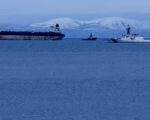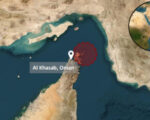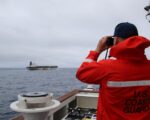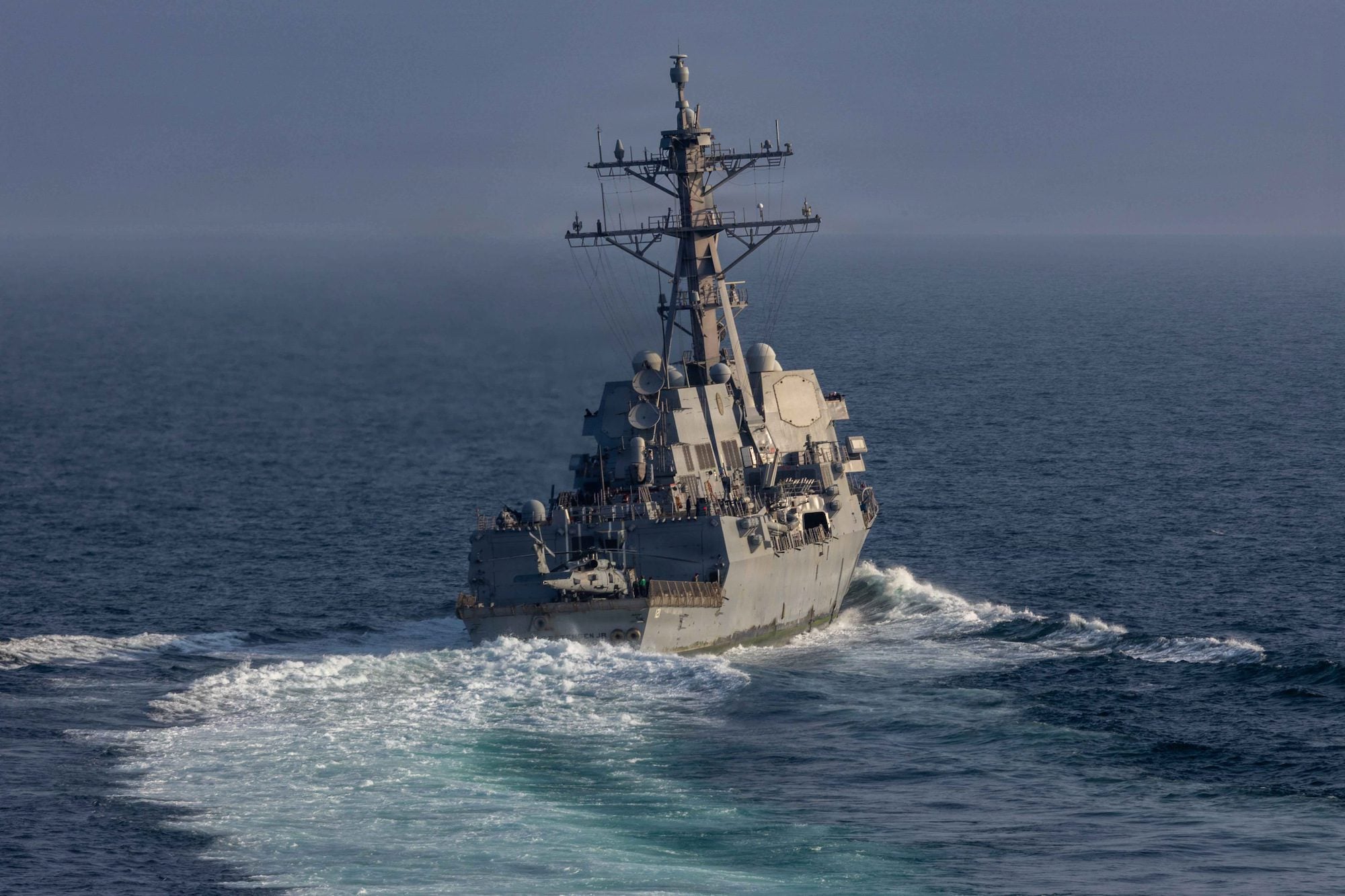
The United States has begun enforcing a naval blockade affecting traffic to and from Iranian ports in the Strait of Hormuz. The operation took effect on April 13 at 10:00 Eastern Time (18:00 local), with more than 15 U.S. Navy warships deployed to implement the cordon.
According to U.S. Central Command (CENTCOM), the measures apply to all vessels entering or departing Iranian ports and coastal areas, including those in both the Persian Gulf and the Gulf of Oman.
Additional guidance from UK Maritime Trade Operations (UKMTO) confirms that access restrictions are now actively enforced across Iranian waters, covering ports, oil terminals and coastal infrastructure “without distinction” to vessels of any flag. The restrictions effectively create a maritime boundary around Iranian trade rather than closing the strait itself, leaving transit to non-Iranian destinations technically open but operationally complex.
Commercial traffic bound for non-Iranian ports is not subject to direct interdiction, but vessels have been warned to expect a heavy military presence, bridge-to-bridge communications, and possible right-of-visit boardings during passage. Mariners are advised to maintain contact on VHF Channel 16 and follow forthcoming Notices to Mariners detailing routing and compliance procedures.
The move comes amid already constrained traffic flows through the strait, which normally handles around 20% of global oil supply. The blockade adds further uncertainty for shipowners and operators, with early data showing immediate behavioral changes in the market.
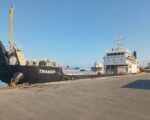
At least two tankers reversed course near the Strait shortly after enforcement began. The laden tanker MV Rich Starry turned back minutes after approaching the chokepoint, while another vessel, MV Ostria, also altered course under similar circumstances. Both ships are reportedly linked to questionable flag registrations, highlighting ongoing concerns over “shadow fleet” operations and sanctions evasion.
Further anomalies have been observed in AIS data. Monitoring groups reported a tanker departing Iran’s Kharg Island while broadcasting a false origin. Another sanctioned vessel, MV Elpis, was tracked underway after departing Bushehr, Iran, with a history of transporting Iranian petroleum products under sanctions.
From a security standpoint, the risk environment remains elevated. While Iran’s larger naval units may be degraded, the threat from fast attack craft, drones and missiles persists. U.S. forces are expected to integrate interception, inspection and defensive measures into the operation, with a focus on controlling escalation while maintaining enforcement.
Parallel to the blockade, preparations are underway for mine countermeasure operations in the strait, amid continued concerns over potential naval mines in traditional traffic lanes and shifting routing patterns near key islands such as Larak and Qeshm.
Iran has signaled it may respond asymmetrically. State media warned of potential strikes on port infrastructure across Gulf states, raising the risk of wider regional disruption beyond the strait itself.
For the maritime industry, the situation remains highly fluid. Even where transit is technically permitted, operators face a complex mix of security exposure, compliance uncertainty, AIS scrutiny and potential delays. As a result, many shipowners and charterers are expected to adopt a cautious, wait-and-see approach before resuming normal operations in one of the world’s most critical energy corridors.