A tragic fatality during routine cargo operations on a Ro-Ro vessel serves as a stark reminder of how quickly things can go wrong – even when standard procedures are in place. The incident highlights the risks of guiding trailer movements on board and the critical importance of maintaining discipline, communication, and situational awareness during loading operations.
The incident
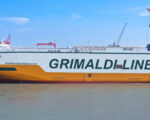
The Ro-Ro ferry was alongside terminal, port side to the quay, with loading operations taking place over the stern ramp. Cargo was being moved up from Deck 3 to Deck 5 via the port-side internal ramp.
A Terberg Tugmaster, a four-wheel-drive Ro-Ro tractor unit, was used to move a fully laden 40-foot refrigerated trailer into position on Deck 5. The Tugmaster allows the operator to rotate the driver’s seat 180 degrees to face the direction of travel, enabling the tractor to drive both forward and astern without turning.
A crew member was assigned as guide to direct the driver during reversing. Communication between them relied on whistle signals, as the driver’s rearward view was severely limited by the size of the trailer. According to the vessel’s safety procedures, the guide was required to stand on the starboard side of the trailer, within a designated safety zone beside a ventilation shaft – an area chosen to keep personnel clear of moving loads.
However, something caused the guide, an experienced seafarer, to step directly behind the trailer while it was still moving astern. The driver of the tractor had to place his head out of the side window to improve visibility. His seat was rotated to face aft and he reported that he did not hear the whistle telling him to stop. Moments later, the crew member was crushed between the trailer and the ship’s structure. He was found unconscious at the rear of a trailer.
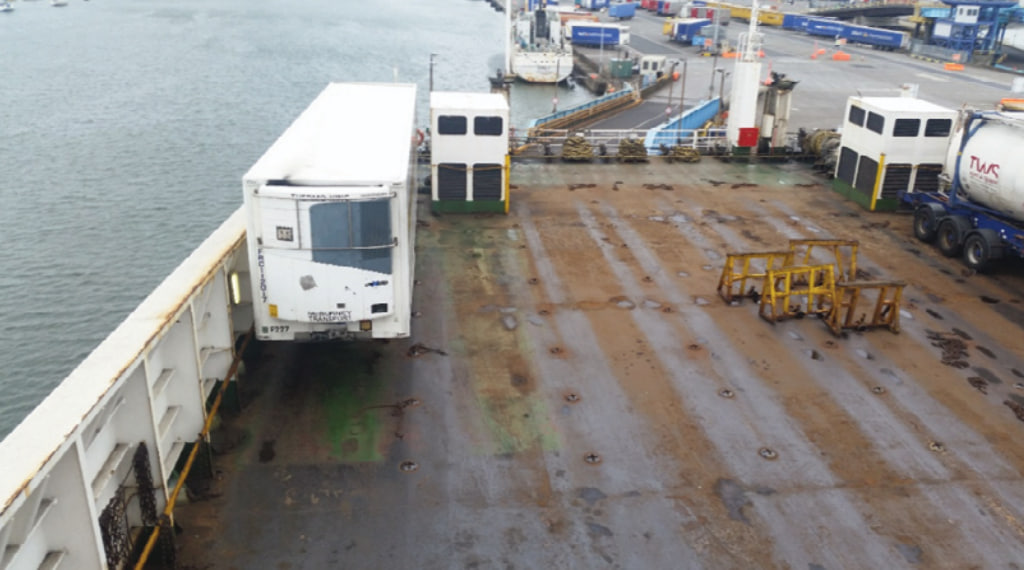
At approximately 13:30, the Chief Officer received an urgent call from the Bosun requesting immediate medical assistance on Deck 5. The trailer had to be moved forward to access the casualty.
First aid was administered on scene before emergency services arrived – including ambulance, paramedics, fire and rescue teams, and local police.
The response took around 15 minutes. The injured seafarer was transported to hospital by ambulance, but despite extensive resuscitation efforts, he was pronounced dead shortly after arrival.
An autopsy later determined the cause of death as severe abdominal and thoracic blunt force trauma. Toxicology results revealed a significant blood alcohol concentration, exceeding the limits set out under the IMO STCW Convention.
Investigation findings
No one witnessed the precise moment when the fatal accident occurred. Investigators concluded that, for unknown reasons, the guide moved out of the safety zone and into the danger area behind the trailer.
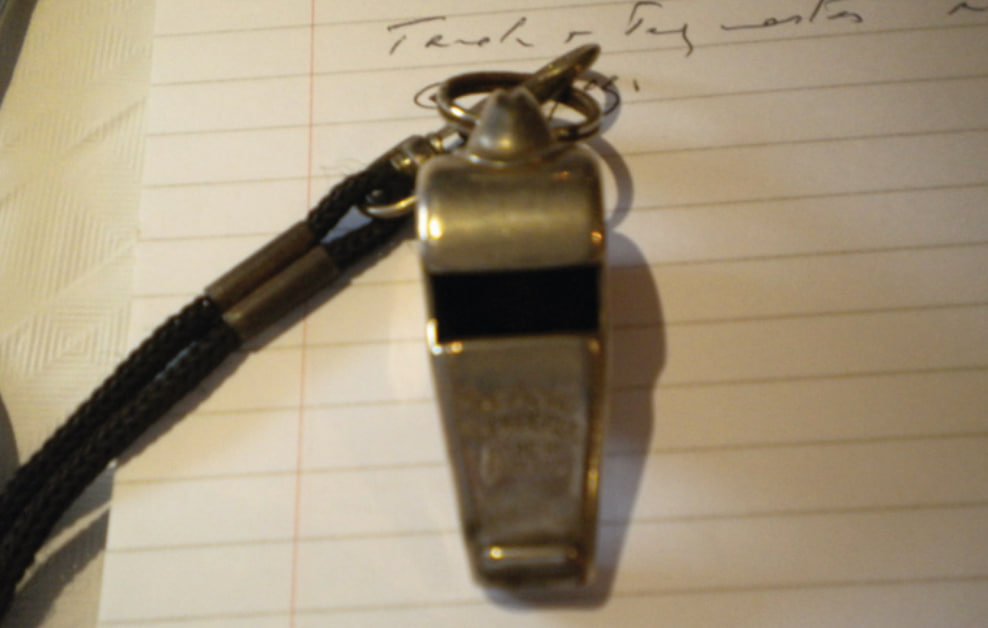
It was also confirmed that the whistle system failed as an effective means of communication – either because the signal was not heard by the driver or because the guide was no longer able to blow the whistle at the critical moment.
Crucially, the investigation found that the deceased had a notable level of alcohol in his bloodstream, which would have impaired judgment, coordination, and reaction time. In the context of heavy cargo operations, such impairment proved fatal.
Lessons learned
Loading and positioning trailers on Ro-Ro decks is inherently high-risk work. Even with clear procedures and trained personnel, a momentary lapse in attention or deviation from safety zones can have irreversible consequences.
Several fatal accidents have occurred in similar circumstances on Ro-Ro vessels, especially during guiding operations. In this case, alcohol consumption directly undermined both safety and professional responsibility.
Key takeaways for crews and operators:
- Stay within designated safety zones when guiding or observing cargo movements.
- Maintain clear and reliable communication with vehicle operators – whistle signals alone may not be sufficient in noisy environments.
- Never work under the influence of alcohol or any substance that can impair judgment.
- Ensure tug and guide coordination procedures are well understood and strictly enforced before each cargo operation.
- Conduct toolbox talks and safety briefings prior to loading unaccompanied trailers.
Recommendations
Following the investigation, the report issued recommendations to the vessel’s operating company to:
- Review its system of work for loading and securing unaccompanied trailer units to ensure safe practices are consistently applied.
- Review and enforce its drug and alcohol policy to ensure it is effective, clearly communicated, and strictly implemented across all crews and ports.
This case underscores a simple but vital principle: on board a vessel, there is no margin for error when people and heavy machinery share the same deck. Discipline, communication, and personal responsibility remain the best – and often the only – protection seafarers have against preventable tragedies.