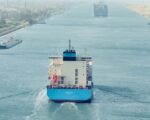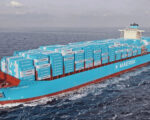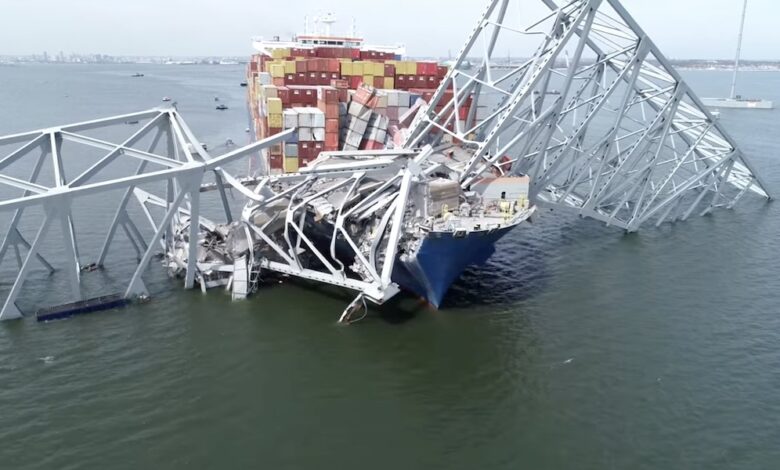
The U.S. Department of Justice has unsealed a federal indictment against the operators of MV Dali and one of the vessel’s technical supervisors, accusing them of multiple criminal violations linked to the 2024 collapse of Baltimore’s Francis Scott Key Bridge.
The indictment names Singapore-based Synergy Marine Pte Ltd, India-based Synergy Maritime Pte Ltd, and technical superintendent Radhakrishnan Karthik Nair. Prosecutors allege the defendants knowingly operated the containership with unsafe modifications and later obstructed the official casualty investigation.
According to the indictment, the companies and Nair face charges including conspiracy, obstruction of an agency proceeding, false statements, and failure to immediately notify the U.S. Coast Guard of a known hazardous condition aboard the vessel. The corporate defendants also face environmental misdemeanor charges related to pollution released into the Patapsco River following the casualty.
MV Dali struck the Francis Scott Key Bridge on 26 March 2024 after suffering two major electrical blackouts while departing Baltimore. The allision caused the collapse of the bridge and killed six road workers who were carrying out overnight maintenance operations.
Federal prosecutors claim that after an initial power failure, the vessel lost propulsion again because operators had modified the generator fuel supply arrangement and relied on a flushing pump not designed to automatically restart after a blackout. According to the indictment, the arrangement prevented fuel from reaching two generators after the first outage, contributing to the second blackout shortly before impact.
The U.S. National Transportation Safety Board previously identified the flushing pump arrangement as inappropriate during its investigation into the casualty. Investigators also linked the initial blackout to a loose wire inside a high-voltage switchboard.
The indictment further alleges that references to the flushing pump were removed from documents provided to investigators and that false statements were made during interviews with the NTSB regarding knowledge of the system configuration.
Prosecutors estimate the economic impact of the disaster at more than $5 billion, including bridge reconstruction costs, port disruption, cargo delays, and wider economic losses tied to the temporary closure of Baltimore Harbor.
In response to the charges, Synergy Marine rejected the allegations and stated that the casualty resulted from a latent electrical defect rather than operational misconduct. The company said the blackout sequence was unavoidable once the loose wire failure occurred and pledged to contest the case in court.
The criminal proceedings add to extensive civil litigation already underway following the casualty. Claims have been filed by the families of the victims, local authorities, cargo interests, and businesses affected by the bridge collapse and port shutdown.
The collapse of the Francis Scott Key Bridge triggered renewed scrutiny across the maritime industry over electrical redundancy, vessel maintenance standards, emergency preparedness, and the vulnerability of critical infrastructure to large vessel casualties.