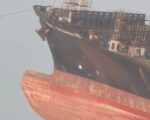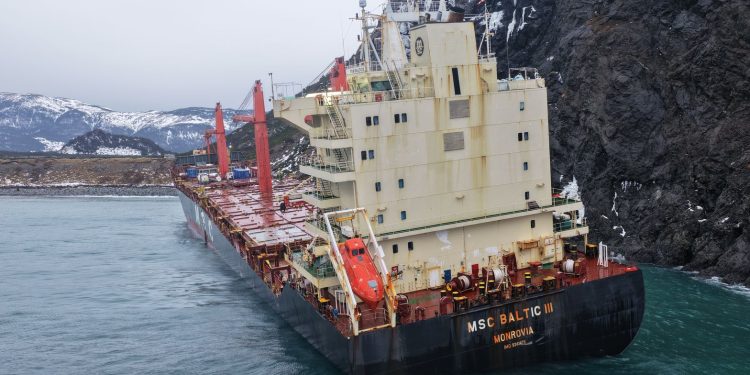
The wrecked containership MV MSC Baltic III will be cut into sections and pulled ashore for recycling as part of a large-scale salvage operation now entering its next phase in Newfoundland, Canada.
The vessel has remained stranded in Cedar Cove since February 2025 after suffering a power failure and running aground along the remote Atlantic coastline. After months of assessment, salvors concluded that dismantling the ship in place would present the safest and most practical removal method given the vessel’s deteriorating condition and the harsh marine environment.
MSC Mediterranean Shipping Company and its insurers awarded the second phase of the operation to Resolve Marine following a tender process. The company officially assumed control of the project in early May after earlier fuel and cargo removal work had been carried out by T&T Salvage.
According to the Canadian Coast Guard and Resolve Marine, the vessel remains structurally unstable, with significant hull damage, worsening deck cracks, and deformation along both sides of the ship after enduring winter storms on the Newfoundland coast.
The salvage plan calls for the bow section to be separated near an existing fracture point before being hauled further ashore using heavy chain-pulling systems. Crews will then cut the hull into approximately 10-ton sections for transport and recycling.
The operation will begin with the removal of the remaining 63 containers still onboard. Salvors said most of the containers are damaged and waterlogged after months exposed to severe weather conditions. Earlier phases of the response removed 409 of the vessel’s 472 containers, including units carrying hazardous cargo.
Resolve Marine also plans to use a 450-ton crane barge and specialized workboats during the dismantling process, although the remote location and difficult waterside access continue to complicate operations.
Once the forward section has been secured ashore, specialist teams will continue remediation work inside remaining fuel tanks and progressively dismantle additional sections of the hull. Salvors may later divide the stern into separate sections depending on structural conditions and the extent of rock penetration into the hull.
Canadian authorities said approximately 1,700 metric tonnes of fuel had already been removed before winter conditions worsened last year, helping to limit environmental impact. Officials reported only minor pollution incidents, including small tar balls and localized staining, during the winter months.
The salvage campaign is expected to continue through the current working season, though some phases may extend into 2027 depending on weather conditions and the pace of removal operations.