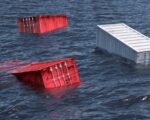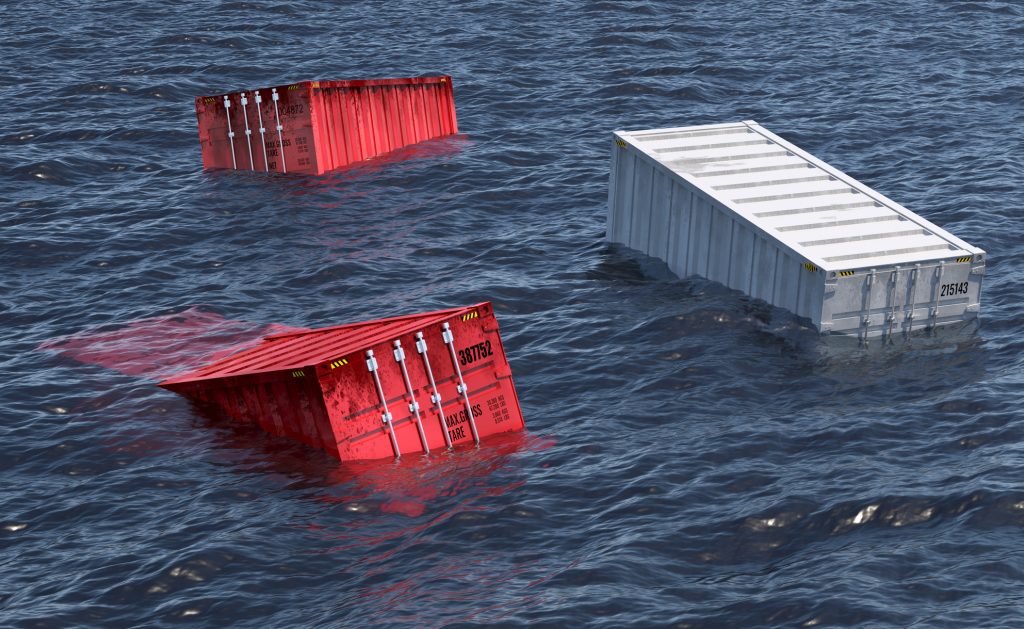
The number of containers lost at sea more than doubled in 2025, with the global total reaching 1,478 containers, according to the latest annual report from the World Shipping Council (WSC). Despite the increase, losses represented only 0.0005% of the approximately 280 million containers transported worldwide during the year.
The sharp rise follows a particularly low figure of 576 containers lost in 2024 and the record low of 221 containers in 2023. However, WSC noted that the latest result remains within the range of historical fluctuations and is still far below the industry’s worst years.
A single casualty had a major impact on the 2025 figures. The sinking of the MSC Elsa 3 off the coast of India in May 2025 resulted in the loss of 640 containers, accounting for approximately 43% of all containers reported lost worldwide during the year.
According to the report, annual container loss statistics are often heavily influenced by one or two major incidents. The highest level ever recorded by WSC was in 2013, when 5,578 containers were lost, largely due to the breakup of the container ship MOL Comfort in the Indian Ocean. Other significant peaks occurred in 2020, when a series of casualties included the ONE Apus losing 1,816 containers in the North Pacific, and in 2021, when several vessels encountered severe weather while the X-Press Pearl caught fire and sank off Sri Lanka.
The report identified severe weather and ocean conditions as the primary contributors to container losses. Although the total number of storms worldwide was not unusually high, 2025 was marked by warmer-than-normal ocean temperatures, stronger wave activity and less predictable weather patterns, particularly in the North Atlantic and North Pacific. WSC also highlighted fire incidents, cargo shifts, stack collapses, groundings and total vessel losses as significant contributing factors.
The report also pointed to ongoing industry initiatives aimed at reducing container losses. These include efforts to tackle the misdeclaration of dangerous goods, improvements in stowage and lashing practices, and updates to the Code of Practice for Packing Cargo Transport Units (CTU Code). In addition, new IMO reporting requirements for containers lost at sea entered into force on 1 January 2026, while new rules governing the carriage of charcoal as dangerous goods have also been introduced.
WSC emphasized that, despite year-to-year fluctuations, container losses remain extremely rare compared to the scale of global container shipping. The organization said the long-term trend continues to demonstrate that losses at sea represent only a tiny fraction of the hundreds of millions of containers transported annually.