Iran has further advanced its effort to formalize control over shipping in the Strait of Hormuz, publishing a defined “oversight zone” and intensifying requirements for vessel coordination with its newly established Persian Gulf Strait Authority (PGSA).
The move consolidates what industry observers describe as a de facto permission-based transit system across one of the world’s most critical maritime chokepoints, through which roughly one-fifth of global oil and LNG volumes normally pass.
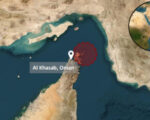
According to a statement from the PGSA, the new “Strait of Hormuz management supervision area” spans a wide maritime corridor between Iranian and UAE coastal reference points, including:
- Eastern boundary: from Kuh-e Mubarak (Iran) to south of Fujairah (UAE)
- Western boundary: from Qeshm Island (Iran) to Umm al-Quwain (UAE)
An accompanying map reportedly extends the claimed oversight area beyond the narrow navigation channel into adjacent waters of the Persian Gulf and Gulf of Oman, overlapping traditional traffic separation schemes used by international shipping.
The PGSA said all vessels operating within the designated area must coordinate with Iranian authorities and obtain prior authorization to transit.
The group stated that vessels using designated communication frequencies inside the zone would be required to:
- Submit voyage and cargo details
- Report crew and flag information
- Obtain a transit permit from the authority before passage
Failure to comply would be treated as unauthorized entry into Iranian-controlled waters, according to the statement.
The announcement builds on earlier PGSA declarations describing itself as the entity responsible for managing transit through Hormuz on behalf of Iran’s armed forces.
In previous guidance, ship operators were reportedly instructed to provide sensitive operational data including cargo valuation, routing history, ownership structure, and previous flag changes as part of clearance procedures.
Industry sources have also indicated that some vessels have been asked to engage in direct coordination with Iranian naval elements to secure passage authorization.
Iran has simultaneously signaled it is working with Oman to develop a structured maritime management framework for the Strait of Hormuz, potentially including a formalized toll or cost-recovery mechanism for transit services.Iranian officials argue such a system would fund navigation safety and security operations, while critics – including senior U.S. officials – have rejected the concept as unlawful and destabilizing for global shipping.