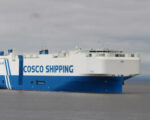
A single loose electrical wire aboard the Singapore-flagged container ship Dali caused a blackout that led to the vessel’s allision with the Francis Scott Key Bridge in Baltimore on 26 March 2024, resulting in six highway worker fatalities, the National Transportation Safety Board (NTSB) concluded in its latest investigation.
The incident highlights vulnerabilities in both modern containership systems and aging U.S. bridge infrastructure, prompting nationwide safety recommendations.
Loose wire triggers catastrophic blackout
The NTSB determined that a labeling band on a single signal wire prevented the wire from being fully inserted into its spring-clamp terminal block. This inadequate connection eventually led to the wire disconnecting, which caused a high-voltage breaker to trip unexpectedly.
“The Dali, at almost 1,000 feet, has miles of wiring and thousands of electrical connections. Locating this single wire was like hunting for a loose rivet on the Eiffel Tower,” said NTSB Chairwoman Jennifer Homendy.
The electrical failure cut power to critical systems, including steering gear pumps, fuel-oil flushing pumps, and main engine cooling water pumps. As a result, the Dali lost propulsion and steering while departing Baltimore Harbor, leaving it adrift and on a collision course with the bridge.
Investigators emphasized that infrared thermal imaging could have detected the loose wire as part of routine preventative maintenance, potentially preventing the blackout.
Bridge allision and loss of life
Following the blackout, the Dali’s heading swung toward Pier 17 of the Francis Scott Key Bridge. Despite efforts by pilots and bridge personnel to alter the vessel’s trajectory, the loss of propulsion rendered corrective maneuvers ineffective.
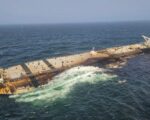
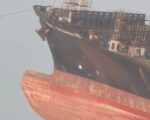
A substantial portion of the bridge’s central span collapsed onto the Dali’s bow and forward container bays. Six members of a seven-person highway maintenance crew died, one worker survived with serious injuries, and the bridge inspector escaped unharmed. One of the 23 crew members aboard the Dali sustained a minor injury.
Quick actions by the Dali’s pilots, shoreside dispatchers, and the Maryland Transportation Authority (MDTA) to halt bridge traffic prevented further casualties.
Contributing factors and systemic vulnerabilities
The NTSB identified several factors that amplified the severity of the incident:
- Improper wire-label band placement: The label on terminal block 381 blocked full wire insertion, creating a poor connection that eventually failed.
- Engine and auxiliary system design: The vessel’s main engine shut down due to low cooling water pressure, a classification-compliant configuration that became a risk when the cooling pump lost power. Diesel generator flushing pumps lacked redundancy, further complicating power restoration.
- Bridge vulnerability: Built in 1977, the Key Bridge was not designed to withstand collisions by modern, ultra-large containerships. The Dali, at 984 feet, was ten times the size of the Blue Nagoya, which had caused minor damage when it struck the bridge in 1980.
The NTSB concluded that the lack of effective countermeasures and emergency communications for highway workers contributed to the collapse and the fatalities.
Nationwide safety implications
In response, the NTSB urged bridge owners across the U.S. to assess structural vulnerability to large vessel strikes. Letters were sent to 30 major bridge owners, emphasizing compliance with AASHTO guidance on vessel-collision design, risk probability calculations, and real-world mitigation measures such as fendering systems, structural reinforcements, and motorist warning protocols.
The investigation has been described as a wake-up call for aging bridges spanning navigable waterways, where vessels have grown significantly larger over recent decades.
Damage and operational impact
- Dali: Estimated damages exceed $18 million; cargo losses are still being assessed.
- Francis Scott Key Bridge: Replacement costs are projected between $4.3 billion and $5.2 billion, with completion anticipated by late 2030.
- Traffic disruption: Over 34,000 vehicles that previously used the bridge daily now face extended detours, including hazardous material transport.
Eight crew members remained in the U.S. to assist investigators, with some permitted to visit their families in early December. The ship’s owner, Grace Ocean, and operator, Synergy Marine Group, expressed gratitude to the NTSB and committed to reviewing the technical findings.
NTSB recommendations
The NTSB issued 18 new safety recommendations targeting multiple stakeholders to prevent incidents similar to the Dali allision. For the vessel operator Synergy Marine Group, the following measures are recommended on board its ships:
- Use thermal imaging in electrical inspections – regularly monitor high-voltage switchboards with infrared cameras to detect loose or faulty wire connections before they cause power loss.
- Review engine configuration – ensure engines, particularly Hyundai-MAN B&W 9S90ME-C9.2 models, are not set to automatically shut down due to low cooling water pressure.
- Follow correct fuel pump procedures – crews should use designated fuel-oil service pumps for diesel generators, avoiding non-redundant flushing pumps.
- Keep breakers in Automatic mode – maintain high-voltage breaker controls in Automatic during normal operations to enable faster power recovery after blackouts.
- Check emergency generator dampers – verify radiator dampers are fully open to ensure reliable automatic generator start in emergencies.
The Dali–Key Bridge incident demonstrates how a seemingly minor electrical oversight on a single vessel can trigger catastrophic consequences. Implementation of the NTSB’s recommendations for ships, bridges, and regulatory authorities is critical to preventing future maritime and infrastructure disasters.