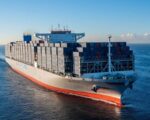
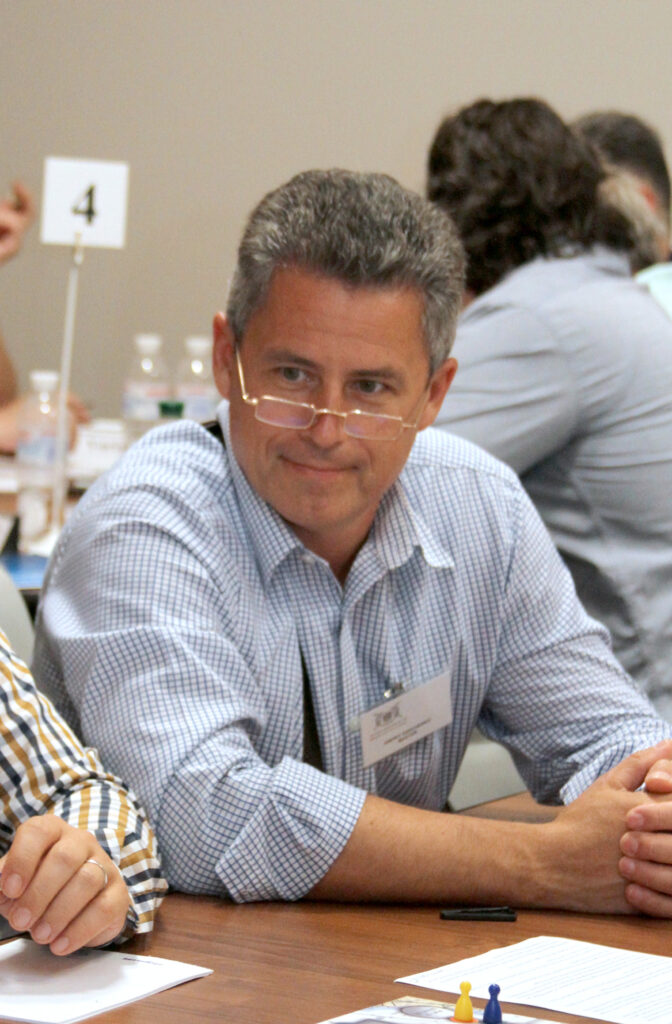
Captain Andrii Savchenko has been part of China Navigation Company since 2004 and has served as a master for 12 years. On August 25, 2017, he was appointed the company’s new Commodore – a title that comes with additional responsibilities and expectations for the next five years.
The Maritime Telegraph spoke with Captain Savchenko about his career, the challenges of commanding a vessel, and what this new role means for him.
Credit: The Maritime Telegraph
MT: How did your career with China Navigation begin?
I joined the company in February 2004 as a Chief Officer, thanks to the support of Alpha Navigation Crewing Company. At that time, I was working with a colleague who invited me to the office for an interview with Captain David Watkins, China Navigation’s representative. The interview went well, and I was offered a position as Chief Officer.
It didn’t take long to become a captain. After just two voyages as Chief Officer, I was sent for leadership and management training, and soon after I was promoted to Master. Before that, I had already spent eight years as a deck officer in other companies. Back then, the China Navigation fleet was small – no more than 15 vessels, mostly multi-purpose (MPP) ships carrying both containerized and general cargo.
MT: You also worked on log carriers that the company acquired recently, right?
Yes, I did one voyage on a log carrier – I took command of the newly built MV Erisort. Loading and securing logs is quite different from handling other cargoes, and the lashing plays a crucial role. We even organized special training on cargo stowage and securing for log carriers.
What’s great about China Navigation is that they never throw people into deep water without proper preparation. Before we took over the vessel, an experienced master with extensive background in log carriers conducted an intensive course, explaining all the details and risks. At that time, only the bosun had any real experience with such ships, but still, we managed well.
MT: What type of vessel are you serving on now? What are working conditions like in the China Navigation fleet?
Currently, I’m on an MPP vessel, carrying containers, bulldozers, wagons, pipes, and steel products. Most companies today act as managers operating ships owned by someone else. But China Navigation is an owner company, which makes things easier. They find employment for their ships through their own chartering arm. Because of this, commercial pressure never overrides safety, and safety standards are top-notch. In recent years, as the fleet expanded, the company invested heavily in safety. I believe they’re one step ahead of many others.
I’m very satisfied with the working conditions. Almost all vessels are new, and cabins are comparable to three-star hotel rooms – wide beds, comfortable accommodation, everything thoughtfully arranged. Life and work at sea have become much more comfortable.
MT: You’ve been appointed Commodore of China Navigation. What does that title mean in practice?
I’ve been appointed Commodore for a term of up to five years. If someone more deserving comes along, I’ll gladly pass the title on. Being Commodore means leading by example – a greater sense of responsibility. The company wants to ensure its ISM Code (International Safety Management Code) is implemented effectively. In this role, I act as a bridge between the crew and the management. There’s no room for error. It’s a challenge, but it makes the job even more interesting.
MT: What moments from your sea life have stayed with you forever?
There was a serious incident in port once. Our main engine failed astern, causing a collision with another vessel. It was a mechanical issue, not human error. Ironically, the ship we hit was also from China Navigation, and I knew its captain. He called me and said, “Andrii, I’m sorry, but I have to file a letter of protest.” I said, “Of course, I understand.” I had already packed my bags, ready to be signed off. But to their credit, the company stood by me. Their loyalty policy has always been fair. The damage was minor but still unpleasant. It was a lesson learned, one I’ll never forget. It was an insurance case that came with plenty of paperwork. And to my surprise, at the end of the fiscal year, I even received a small symbolic bonus – perhaps as moral support. I was genuinely touched. Ironically, five years later, I found myself serving on that very same ship again, this time overseeing her repairs.
Another unforgettable episode happened in the Coral Sea, where we rescued a group of shipwrecked sailors. One day, my Third Officer spotted an orange spot in the distance. It turned out to be a life raft. They had been adrift for a week, citizens of the Solomon Islands, working on a small barge that was lost in a storm. They had run out of food and flares – completely exhausted. We slowed down, maneuvered alongside, picked them up, and returned them safely home. That’s the kind of thing you never forget.
MT: What advice would you give to young seafarers looking to grow professionally?
First of all – learn English. Ukrainian seafarers have been working for foreign shipowners since the late 1980s (almost 30 years now) yet their overall level of English remains low. In the 1990s, Ukrainian-flagged vessels or mixed crews were still common, but in the last 15–17 years, the trend has shifted completely: crews are now multinational. So being fluent in English is essential. Many young seafarers can only say “for me, for you, understand?” – but that’s not enough.
Yes, Filipino and Chinese crews often have poor English too, but that’s no excuse. A modern professional seafarer must speak clearly, correctly, and confidently. It’s half the success in your career. Some can’t even defend their rights or express themselves properly to a Chief Engineer or Master. That’s still a real problem.
MT: The company plans to make Internet available on board. What’s your view on that?
Internet has its pros and cons. It’s necessary, but at first, it might distract the crew from work. In some ports, we already order portable Wi-Fi routers. Whenever I get a few on board, the ship “dies”. Everyone vanishes into social networks. So once Internet access becomes permanent, people will need time to adapt and develop a healthy online culture. Of course, satellite Internet is not like home. The speed is completely different. Another major factor is cybersecurity.
After the recent wave of cyberattacks, the issue has been brought to the IMO. By the end of the year, new cybersecurity requirements will likely become part of the ISM Code – a serious development. During the attacks, major shipping companies’ servers were paralyzed. Maersk, for example, lost around $300 million.
China Navigation is carefully studying all options to provide Internet access for the crew. Likely through leased equipment first. They’ll test it, analyze the pros and cons, and then decide which format works best. Whether it will be free remains unclear. Most companies still charge for crew Internet. Even if seafarers are willing to pay, the service itself costs millions of dollars to install and maintain.
But to the company’s credit, whenever we’re in port, they support Internet access. I rent 4–5 portable routers for the crew, spend about $250–300 for a few days, and no one ever tells me to save. They genuinely care about crew welfare.
MT: What should aspiring seafarers be prepared for?
It’s hard to explain why I love my profession. It’s simply a calling. I come from a seafaring family. My father worked as a ship radio officer. As a child, I spent a lot of time on training ships, eating, sleeping, and learning alongside cadets. I was fascinated by it all. Perhaps that’s what shaped my path.
I graduated from school in 1988 and had no doubt where I’d go next. It was natural for anyone in Odesa back then to enter the Maritime Academy. My father tried to talk me out of it for two days, but on the third, we went to the admissions office together.
Of course, being away from family is hard – especially as the years go by. I have a 15-year-old daughter and a seven-year-old son. Like me as a child, they rarely see their father. Missing birthdays or New Year’s has become routine. The older they grow, the more I miss them, and I try to make up for it whenever I can.
Working in shipping today is stressful – freight rates are extremely low. The crisis that began on land in 2006–2007 has finally reached the maritime industry. This year, the major company Hanjin went bankrupt. A huge shock for the sector.
Over the past six months, shipping companies have focused on risk management and cost reduction – for many, it’s a matter of survival. Falling oil prices have also taken their toll, adding more pressure to captains and senior officers alike.