Founded in 1991 under its original name, the International Ship Managers’ Association (ISMA), InterManager was created to raise management standards across the shipping industry and make ship operations safer, greener, and more efficient. At its core lies the ISMA Ship Management Code of Best Practice, which continues to set benchmarks for quality and reliability in ship management. Today, InterManager counts 43 full members and 44 associate members, including two companies from Ukraine.
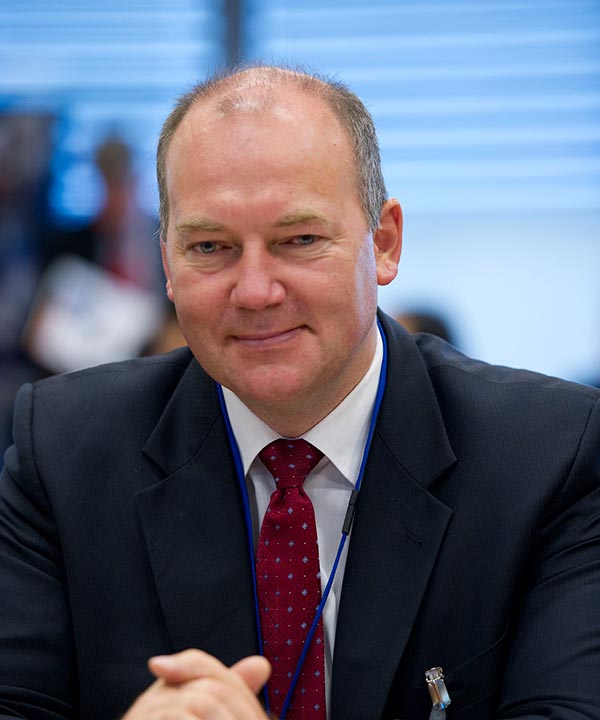
Captain Kuba Szymanski, who joined the organization in 2009, currently serves as its Secretary General. The Maritime Telegraph spoke with him about leadership, challenges in the maritime world, and the philosophy that guides his success.
MT: What innovations has InterManager introduced in ship management recently?
Probably the best-known development in recent years has been our Key Performance Indicators (KPIs) project. Our latest achievement is the completion of Project Martha, a joint study with six international partners focusing on seafarer fatigue.
We also serve as the official data custodian for lifeboat accident statistics. That is crucial for improving safety across the industry.
MT: Aside from the Ship Management Code, what other documents guide InterManager’s work?
All potential and active members must comply with our Cadet Policy. Of course, we have our Constitution and Articles of Association – the backbone of our structure.
MT: Does InterManager offer any programs for knowledge exchange?
Absolutely. We’ve had many joint initiatives over the years. The most influential was the creation of the ISM Code back in 1992. Since then, our focus has expanded to sustainable crewing, cybersecurity, maintenance record standards, and initiatives such as Adopt a Ship and Project Martha.
MT: Do you collaborate with educational institutions?
Yes, we do! Particularly with GlobalMET and a number of maritime universities worldwide. We’re always open to cooperation on all matters of ship management. Many of our members actively support cadet training programs, offering safe berths and mentoring opportunities for young seafarers on board.
MT: Which international regulatory bodies do you work with?
We work closely with the International Maritime Organization (IMO). We are an NGO with permanent representation through Captain Paddy McKnight. We also collaborate with the European Union on projects such as MONALISA and Single Window, and maintain a strong partnership with Paris MoU, particularly in the area of inspector training.
MT: Promoting the maritime profession is one of InterManager’s goals. How do you do that?
Our flagship initiative, Adopt a Ship, connects school students with real vessels so they can learn about life at sea. We also participate in numerous international conferences, where we highlight the positive and vital role of the shipping industry in the global economy.
MT: What are the biggest challenges facing the Association today?
A major concern is the lack of engagement from some shipowners, who often prioritize their assets over the welfare of their crews.
The past decade has illustrated this imbalance well. Between 2008 and 2017, the world fleet doubled from 42,000 to 80,000 vessels, even though seafarers’ wages and ship managers’ fees remained stagnant. We’re working to show owners that sustainable profit comes from long-term investment in people, not short-term gains.
MT: What drew you to a maritime career?
I actually come from a family of journalists. My parents and older brother all worked in the media. I was supposed to follow the same path, but I fell in love with sailing instead. From small boats and yachts to tall ships and later chemical and gas tankers, the sea became my home. It might sound simple, but I truly love being at sea – always have, since childhood.
MT: How does your captain’s experience help you in your current role?
It helps immensely. Being close to the seafaring profession allows me to understand the real voices of seafarers. They are the best auditors and advisors, but only if someone is willing to listen. Leading a crew as a Captain or Chief Engineer teaches you a lot about people. If you learn those lessons well, you can achieve great things on shore too.
MT: What do you enjoy most about your job?
I love working with people, not sitting in an office all day. I enjoy being part of a team dynamic, building something together, and seeing the real world, not just how others portray it.
MT: How do you balance a successful career with family life?
By being honest. Sometimes honesty means saying no to your loved ones – and that can be hard. But setting clear expectations from the start prevents disappointment later. My wife, Ranita, always knew I was a seamen and that travel would be part of my life. We’ve learned to make it work. We’re not heroes, just two people happy with each other and with what we have.
MT: What qualities do you value most in the people you work with?
Honesty and reliability. Shipping has taught me one great lesson – reliability is king. Respecting others and being dependable are the two values that have guided my entire life and career.
MT: Where do you see yourself in ten years?
Hopefully retired, but not idle! I’d love to spend my time sailing, working as an RYA instructor, and helping others discover the sea that gave me so much. And to all the young men and women out there – never give up on your dreams! Hold on to what truly matters, and keep sailing toward it!