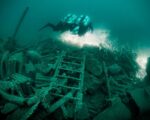
According to UN estimates, nearly three million shipwrecks lie scattered across the world’s oceans. Yet, not all of them are tragic victims of storms or wars. In fact, many were deliberately sunk – not lost to the sea by accident, but offered to it by design. So why do people intentionally send ships to the ocean floor?
One of the most fascinating reasons lies in marine restoration. Around the world, governments and environmental groups have begun sinking decommissioned vessels to create artificial reefs – underwater sanctuaries that breathe life back into damaged ecosystems. These reefs transform barren seabeds into thriving habitats, sheltering fish, corals, and marine plants affected by trawling and pollution. As biodiversity flourishes, these underwater structures also strengthen coastal defenses. They attract diving tourism, turning ecological projects into sustainable local economies.
Let’s look at some of the most famous examples of ships that were purposefully sunk, and are now vibrant marine landmarks.
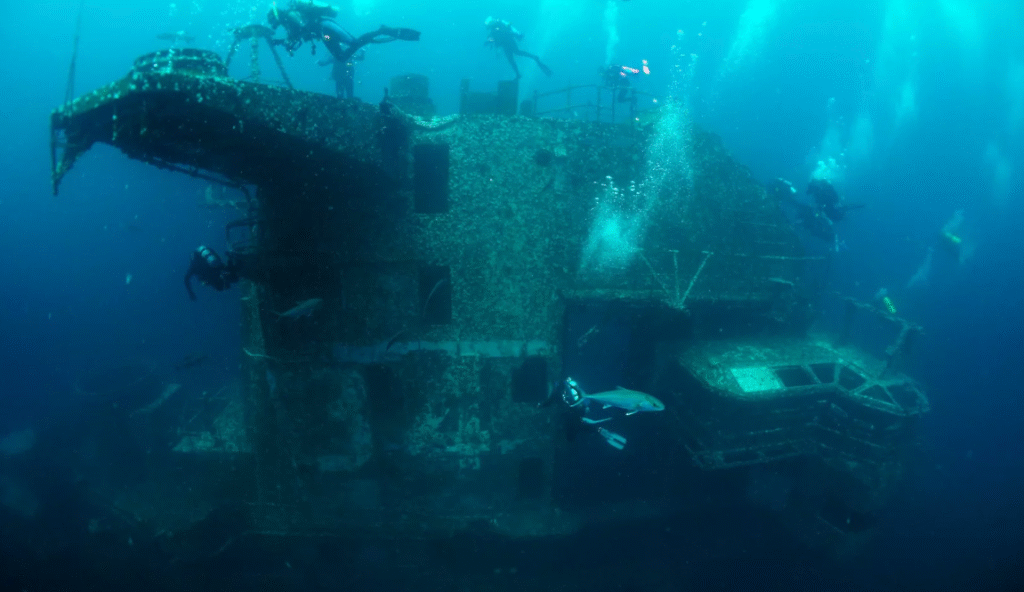
Representative image from online sources
USS Oriskany. The Mighty “Great Carrier Reef”
Launched in 1945, the USS Oriskany served in the Korean and Vietnam Wars before being decommissioned in 1974. Three decades later, the retired aircraft carrier found a second life as an artificial reef off the coast of Florida. In 2006, it was sunk with 225 kilograms of explosives, taking 37 minutes to reach the seafloor, precisely aligned north–south at a depth of 60 meters. Today, “The Mighty O” is one of the most popular dive sites in the world, even listed by The Times among the top underwater attractions.
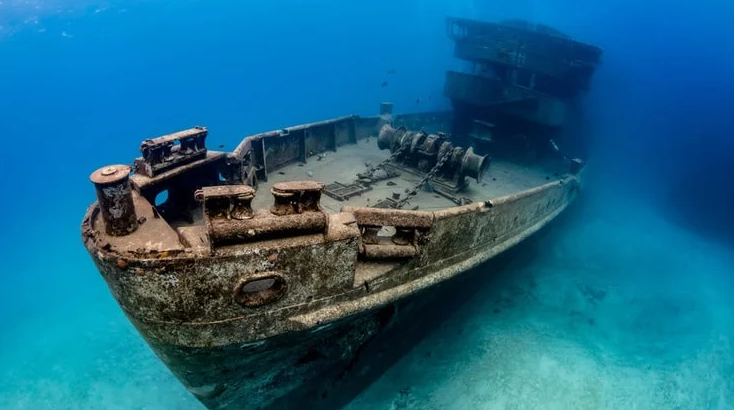
Credit: Richard Whitcombe / Shutterstock
USS Kittiwake. The Cayman Islands’ Underwater Icon
The USS Kittiwake, a U.S. Navy rescue vessel launched near the end of World War II, was retired in 1994 and later purchased by the Cayman Islands government to become an artificial reef. On January 5, 2011, it was sunk off Seven Mile Beach, carefully cleaned and stripped of hazards to ensure a safe habitat for marine life. Today, it stands as a world-class diving destination, drawing visitors from across the globe.
General Hoyt S. Vandenberg. From Rocket Tracker to Reef
Once used to track missiles during the Cold War, the General Hoyt S. Vandenberg was transformed into a reef in the Gulf of Mexico in 2009. Before its sinking, experts removed 10 tons of asbestos and 250,000 meters of wiring, ensuring environmental safety. The vessel now serves both as a marine habitat and as a striking underwater monument to naval engineering.
Prince Albert. Refuge Turned Dive Haven
Near Roatán Island in Honduras, the Prince Albert once carried refugees from Nicaragua. In 1987, it was purchased by the Coco View Resort and intentionally sunk to create a new diving attraction. A poignant transformation from a ship of exile to a symbol of renewal and exploration.
Other Reasons for Sinking Ships
Not all deliberate sinkings serve ecological or tourism purposes. Historically, some were acts of wartime strategy. During the Crimean War of 1855, for instance, the Russian Navy scuttled seven sailing ships in Sevastopol Bay to block the advance of Anglo-French forces. Their masts and hulls formed a defensive barrier that helped protect the port. To this day, the bay holds the remains of around 91 sunken ships, and the Monument to the Sunken Ships, unveiled in 1905, stands as a lasting symbol of the city’s resilience.
Across centuries, the reasons for sinking ships have evolved from defense and destruction to restoration and discovery. What was once a tragic end now often marks a new beginning beneath the waves, where history, ecology, and adventure meet on the ocean floor.