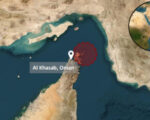
Maritime traffic is gradually resuming in the Strait of Hormuz after Washington and Tehran agreed on a framework intended to end hostilities and restore commercial navigation through one of the world’s most important energy chokepoints.
The 14-point “Islamabad Memorandum of Understanding,” signed electronically by representatives of both countries, provides for an immediate cessation of military operations and the reopening of the strait to commercial shipping. Under the agreement, the United States is to remove its naval blockade within 30 days, while Iran has committed to guaranteeing the safe passage of merchant vessels free of charge for an initial 60-day period.
The memorandum also includes Iranian commitments to conduct mine-clearing operations and remove military and technical obstacles affecting navigation.
While the agreement has been welcomed by shipping markets, vessel movements remain well below normal levels.
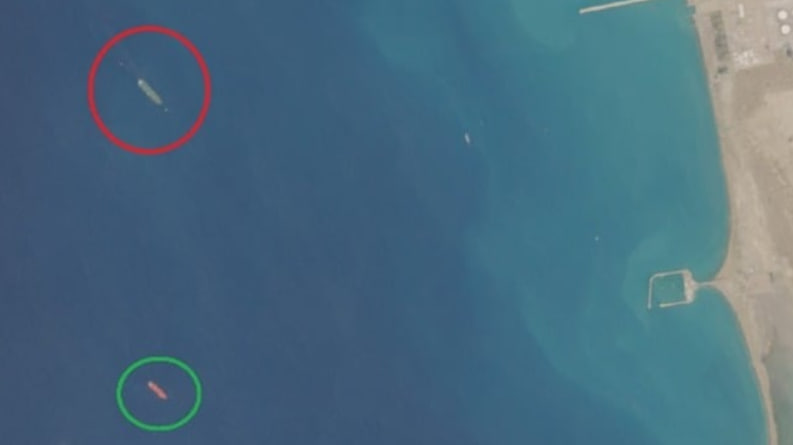
Satellite imagery and AIS data indicate that traffic is slowly returning to the waterway. Several Iranian-owned tankers, including the VLCCs MV Diona and MV Hero2 and the Suezmax tanker MV Sonia I, have departed the eastern side of the former blockade area. However, only limited commercial traffic has been observed elsewhere in the Gulf.
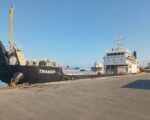
Among the vessels identified underway were the Maltese-flagged bulk carrier MV Thalassini and the LNG carrier MV Disha, both of which completed outward transits with AIS transmissions active. Most other vessels in the region remain at anchor awaiting greater clarity on operational conditions.
Signs of renewed oil export activity have also begun to emerge. An unidentified Aframax tanker was observed loading crude at the Kooh Mobarak Single Point Mooring on Iran’s Jask Peninsula, marking the first tanker loading reported at the facility since early June. However, activity around Iran’s main export hub at Kharg Island remains largely unchanged, with no clear evidence yet of a significant increase in loading operations.
Despite the reopening, shipping companies continue to assess risks associated with the route. Maritime analysts note that the removal of mines, verification of safe navigation corridors and the reduction of insurance-related uncertainties could take weeks before traffic returns to pre-conflict levels.
Another major concern for shipowners is the future regulatory framework governing transits through the strait.
Although the memorandum guarantees free passage during the initial 60-day period, Iranian officials have indicated that commercial vessels may be required to pay transit fees afterward. Iranian Parliament Speaker Mohammad Bagher Ghalibaf stated that the Strait of Hormuz would not return to pre-war conditions and suggested that Iran intends to charge vessels for services provided in the waterway.
Iranian authorities have also floated the idea of jointly administering maritime services in the strait with Oman, potentially creating a new operational regime for vessels entering and leaving the Gulf.
The prospect of transit charges is being closely monitored by tanker owners, charterers and energy traders, as any additional fees could affect voyage economics and freight markets for Gulf exports.
The agreement has already had an immediate impact on energy markets. Oil prices fell nearly five percent after the announcement as traders anticipated the gradual restoration of crude exports and maritime trade flows.
However, uncertainty remains over the final shape of the deal. Reports indicate that negotiations on a permanent settlement are only beginning, while different versions of the memorandum circulating in the media have been disputed by officials involved in the talks.
For now, the maritime industry appears to be taking a wait-and-see approach. Traffic is returning, but operators remain focused on whether the ceasefire holds, how quickly navigational hazards can be removed, and whether future tolls or new routing requirements become a permanent feature of transits through the Strait of Hormuz.