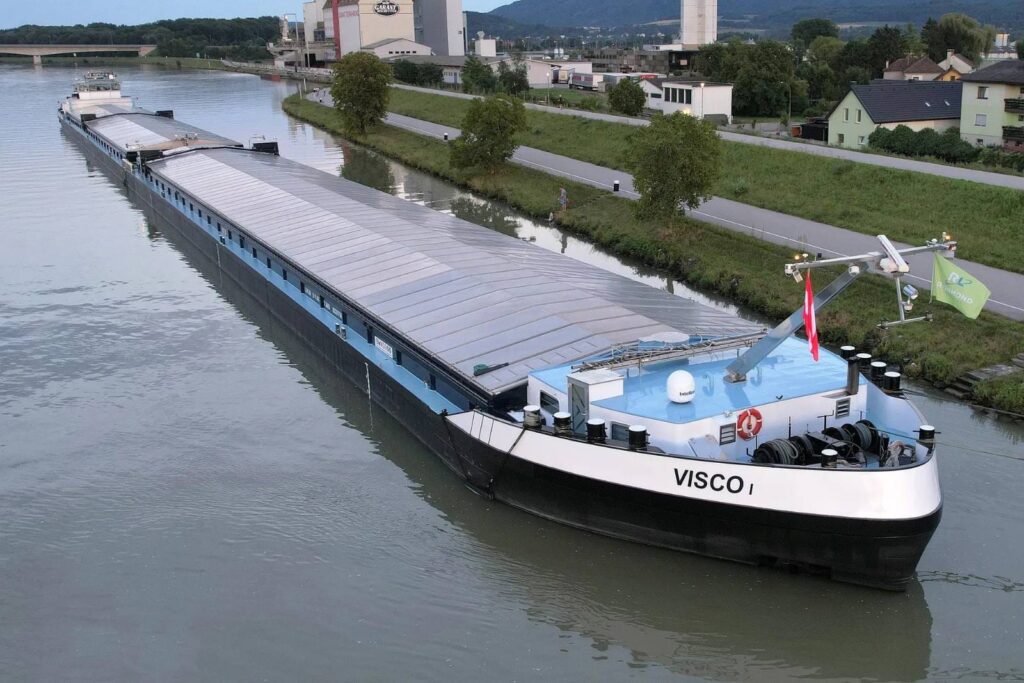
Nearly two years have passed since salaries first stopped arriving. Dozens of inland navigation seafarers working on vessels linked to Trading Line B.V. are still trying to recover their wages through legal action. The case involves 59 Ukrainian crew members employed through the crewing agency Marine Pro Service. They have been seeking payment since spring 2024. That was when salaries first began to fall into arrears. At the same time, the vessels themselves continued operating along the Danube corridor.
Despite a court ruling in the Netherlands ordering payment of outstanding salaries by the formal employer, most of the debt (now amounting to €921,857.99) remains unpaid.
Promises repeated, salaries delayed
According to the crew and their legal representatives, the problems began in May 2024. At first, delayed salaries were presented as temporary difficulties. The seafarers were repeatedly assured that payments would be made the following month. Instead, the arrears continued to accumulate. Some crew members later received partial payments in cash for food allowance. Many others received nothing at all.
Throughout this period, the inland vessels remained in service. For several of the affected seafarers, leaving their posts was not a realistic option. Instead, they continued working while waiting for wages that never arrived.
After months of unsuccessful attempts to resolve the situation directly, the crew initiated legal proceedings in the Netherlands against Trading Line B.V. and Marine Pro Service (MPS), and associated shipowning entities.
Credit: Tradingline
The position of the court itself was stated in unusually direct terms. On 13 January 2025, the Court of Rotterdam confirmed that responsibility for wage payments rests with the formal employer, regardless of any crewing arrangements involving third parties. As the judgment noted:
“Of the claims made, only the back wages are awarded. The claimants entered into an employment contract with MPS. MPS, as a formal employer, is obligated to pay the claimants’ salary. The fact that MPS places its employees at the disposal of a third party does not relieve it of its obligation to pay wages. It does not matter here which law applies to the employment agreements. The one who performs the agreed work, should receive the agreed salary for it. This will be no different under foreign law than under Dutch law.”
Yet despite that decision, the majority of the wages remain outstanding.
One hearing has already taken place as part of ongoing proceedings aimed at recovering the remaining debt, with a second hearing now expected, prolonging the dispute.
What crew members experienced on board
Among the affected seafarers is Single Engineer Vasyl Mannov, who joined Trading Line’s inland fleet in 2023 after years of experience on bulk carriers, Ro-Ro vessels and tugboats.
Credit: Tradingline
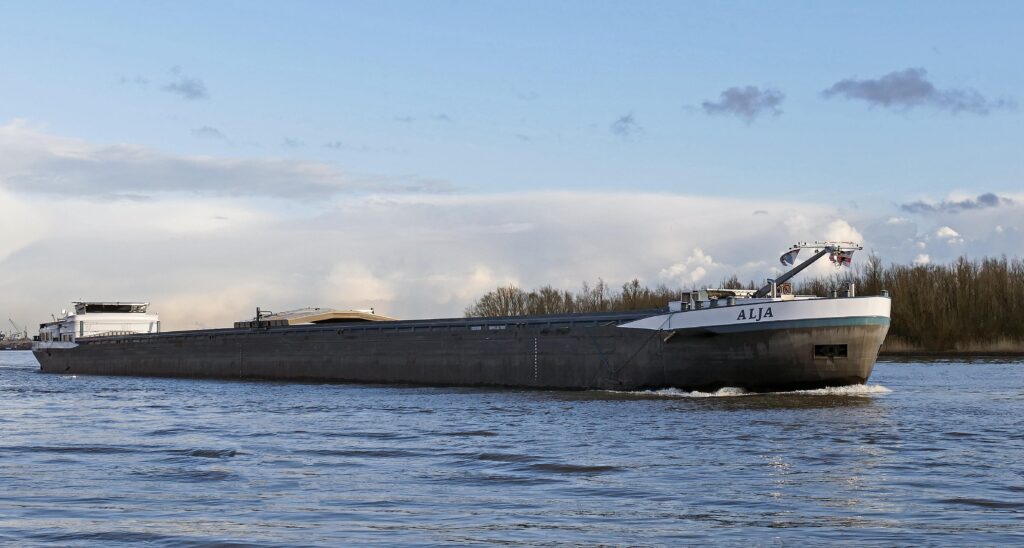
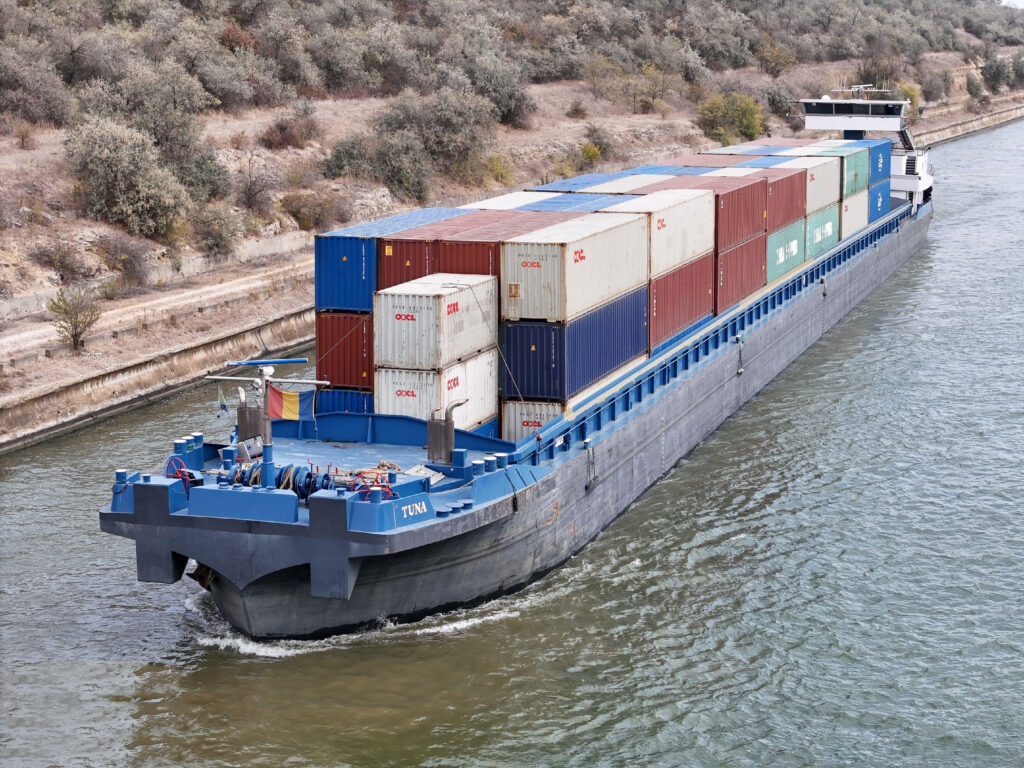
Working aboard the self-propelled barges Servia, Tuna and Alja along the Danube, he became one of dozens of crew members whose wages stopped arriving the following year. Like many others involved in the case, Mannov continued working as the delays mounted.
On shore, he supports four children and carries financial obligations that depend entirely on regular maritime income. Without predictable wages, those obligations quickly became difficult to manage. A situation now shared by many of his colleagues. Many crew members report accumulating debts while continuing to serve aboard operational vessels.
Most of the affected seafarers are Ukrainian nationals working abroad while war continues at home. Lawyers representing the crew say the group believes their circumstances made them particularly vulnerable when payment problems began to emerge. With limited employment alternatives and families dependent on overseas income, many felt they had little choice but to remain on board as arrears continued to grow.
In correspondence prepared on behalf of the crew, the seafarers state that they believe their employer and vessel operator were aware of this vulnerability as the situation developed. While responsibility for wage payment formally rests with the crewing employer, the vessels themselves were operated within the Trading Line group structure.
Credit: Tradingline
The crew members also describe a gradual deterioration in onboard living conditions after salary payments stopped. According to statements shared with lawyers representing the group, supplies of food and essential provisions became irregular on some inland vessels as the financial situation worsened. At the same time, the seafarers say they continued receiving assurances that payment issues would soon be resolved. Instead, the delays continued.
Collective action after months without progress
The dispute has now been unfolding for close to two years. Formal notices were sent to Trading Line in August 2024. A collective wage claim followed in October. Dutch lawyers issued a demand letter in November. Court proceedings began the following month. Yet most of the outstanding wages remain unpaid.
Some individual claims exceed €30,000, a level that represents not just delayed earnings but serious financial disruption for families dependent on maritime employment income. The crew members say their decision to approach maritime media was not taken lightly. It followed months of waiting for progress through legal channels.They hope to draw wider attention to the situation and encourage progress toward a resolution that has already been confirmed in principle by the court but remains unresolved in practice.
The Maritime Telegraph contacted Marine Pro Service seeking comment on the reported wage delays affecting seafarers. However, the company declined to provide details, stating that investigative actions are currently underway and that it is therefore unable to make any public statements at this stage.
For now, dozens of inland navigation seafarers who kept vessels moving along one of Europe’s most important inland transport corridors remain without compensation for work already completed. And with another court hearing still ahead, the outcome of their claims remains unresolved.