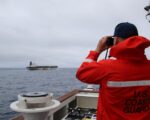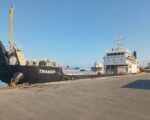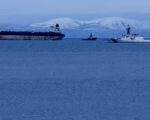
US forces have boarded a tanker linked to Iranian oil shipments in the Indian Ocean, marking another step in Washington’s expanding maritime enforcement campaign beyond the Gulf region.
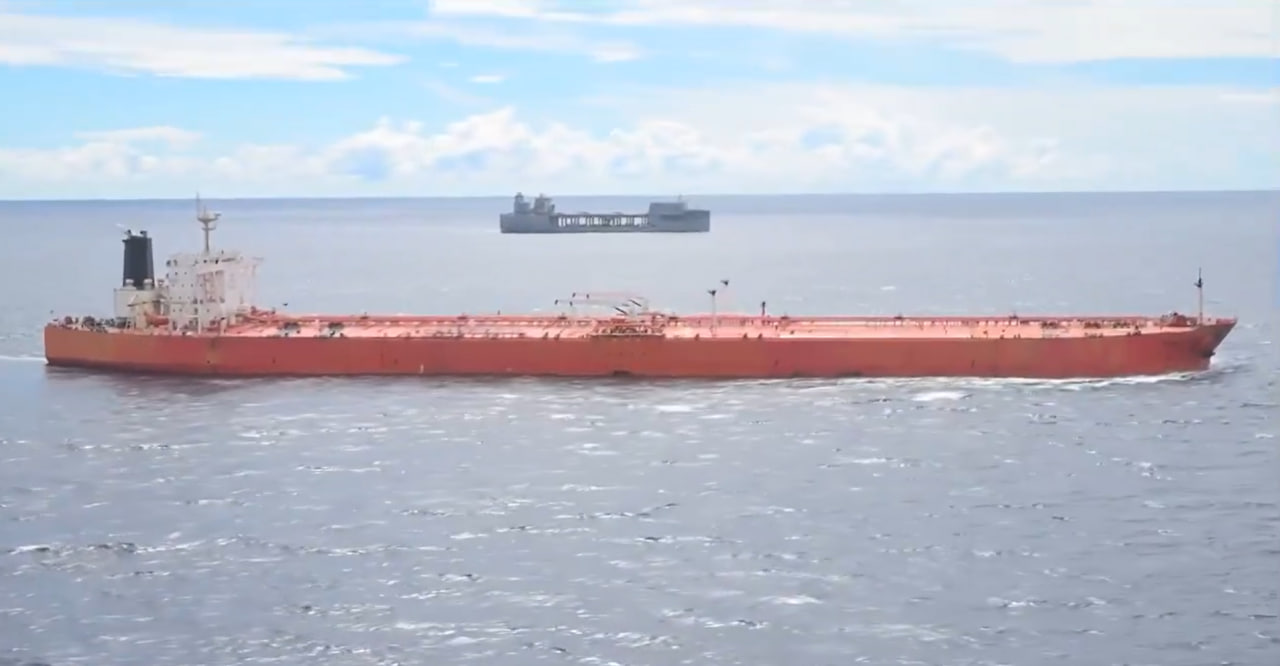
The operation took place on April 21, when US personnel conducted a “right-of-visit” interdiction of the VLCC Tifani while the vessel was transiting international waters between South Asia and Southeast Asia. The boarding was carried out without incident.
According to US Indo-Pacific Command, the tanker was intercepted while en route toward Singapore, in waters between Malaysia and Sri Lanka. The operation was supported by a US Navy expeditionary mobile base.
The MV Tifani, a nearly 300,000 dwt crude carrier built in 2003, has been designated by the Pentagon as a “stateless” vessel, despite operating under the flag of Botswana. US authorities previously sanctioned the tanker in 2025, linking it to ship-to-ship transfers of Iranian oil near Singapore and to broader networks used to move crude despite international restrictions.
US officials said the vessel was likely carrying Iranian oil loaded earlier this month from Kharg Island. A decision on the tanker’s fate – including possible seizure, diversion, or transfer to another jurisdiction – is expected within days.
The interdiction reflects a widening US strategy targeting vessels connected to Iran’s energy trade and logistics networks. Military officials have emphasized that enforcement is no longer limited to the Strait of Hormuz or the Middle East, but now extends globally, including into the Indian Ocean and Indo-Pacific regions.
This is the second such action in recent days. Earlier, US naval forces fired on and boarded an Iranian-linked containership that allegedly attempted to bypass the blockade on Iranian ports.
Washington maintains that the blockade aims to disrupt shipments of oil and other materials that could support Iran’s economy or military capabilities. The scope of enforcement has also been expanded to include a broader definition of contraband, covering goods that could be used in conflict.
Iran has condemned the actions, calling them violations of the ceasefire and international law. Iranian officials have appealed to the United Nations, arguing that boarding and detaining commercial vessels amounts to unlawful interference with maritime navigation.
Legal experts note that the situation remains ambiguous. While blockades and interdictions may be permitted under the law of armed conflict, questions persist over whether the current ceasefire limits the use of force at sea. With no formal agreement defining its terms, both sides continue to interpret the situation differently.
Meanwhile, shipping data suggests that despite enforcement efforts, multiple vessels linked to Iran have continued operating across global routes, highlighting the complexity of policing maritime trade networks.