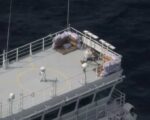
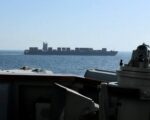
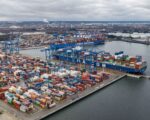
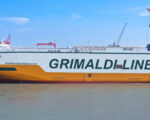
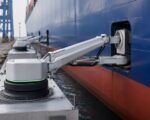
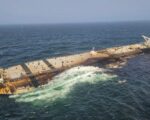
Today, RoRo vessels are widely used all over the world. But how much do we really know about them and their history? Roll-on/roll-off (RORO or ro-ro) ships are designed to transport wheeled cargo. Using built-in ramps, the cargo can be rolled on and off the vessel. Vehicles can drive directly onto the ship under their own power or via platform vehicles. There are several types of RoRo vessels, including cargo ships, ferries, cruise ferries, and barges. They are commonly used to carry both passengers and cargo.
Credit: VollwertBIT / Wikipedia
One of the first RoRo services was a train ferry. This type of vessel was developed in the 19th century. For example, the Firth of Forth ferry in 1851 had rails that could connect to land-based tracks, allowing trains to be rolled on and off the ship.
The first cargo RoRo ships appeared in the early 1960s. They were commissioned by German Volkswagen AG to transport vehicles to the U.S. and Canada. Over the following decade, the number of RoRo ships increased significantly due to high demand for vehicle transportation.
Types of RoRo Vessels:
ROPAX: A RoRo cruise ferry with accommodations and facilities for over 500 passengers.
ConRo: A combination of RoRo and container ship, capable of transporting both vehicles and stacked containers.
RoLo: A hybrid vessel that transports vehicles while other cargo decks are accessible only by crane.
Credit: Matthew Flynn, DNV
RoRo vessels have revolutionized the way we move vehicles and cargo by sea. With a clever system of built-in ramps, cars and lorries can simply drive onto the ship at one port and roll off at another, turning what once took hours into a matter of minutes. Their versatility is equally impressive: ro-ro ships handle not only wheeled cargo but also containers and other types of goods. Customs-sealed units ensure swift and hassle-free border crossings.
Credit: Oleh Tvabutzku1234 – Karya sendiri / Wikipedia
These ships have even left their mark on tourism. Holidaymakers and private car owners can now take their vehicles on ocean voyages, exploring distant countries or continents without leaving their cars behind. A convenience that has opened up new ways to travel by sea.
Of course, no ship is without its challenges. Wheeled cargo cannot be stacked, limiting deck capacity and requiring careful planning to make the most of the available space. Loading and unloading, while faster than traditional methods, still demand precision and time. Vehicles transported on open decks may face the elements, making careful securing and monitoring essential. Yet, despite these minor setbacks, RoRo vessels remain a cornerstone of modern maritime transport, combining speed, efficiency, and adaptability in a way few other ships can match.
Examples of Notable RoRo Vessels:
Credit: DS Tweedie / VesselFinder
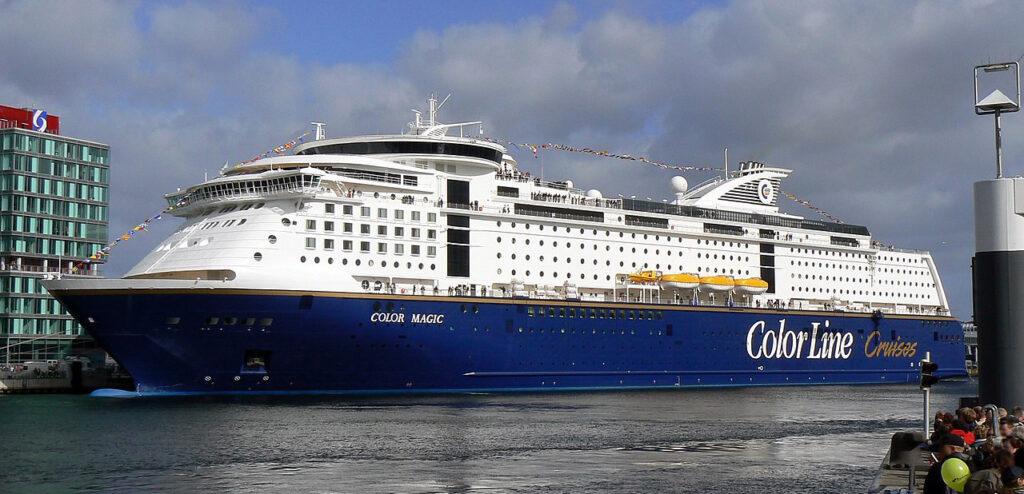
MS Color Magic: One of the largest RoRo passenger ferries, weighing 75,100 GT. Built and launched in September 2007, it is 223.7 m long, 35 m wide, and can carry 550 cars.
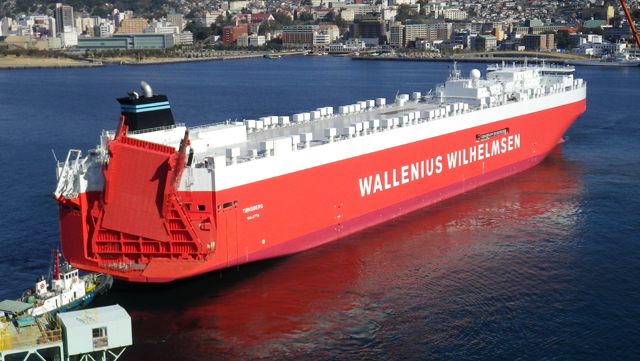
MV Tonsberg: A car carrier owned by Wilhelmsen Shipping Company, first of four “Mark V” ships built in 2010–2011 by Mitsubishi Heavy Industries in Nagasaki, Japan. It has nine cargo decks with a total area of about 50,335 m², length 265 m, width 33 m, and gross tonnage 76,500 GT.
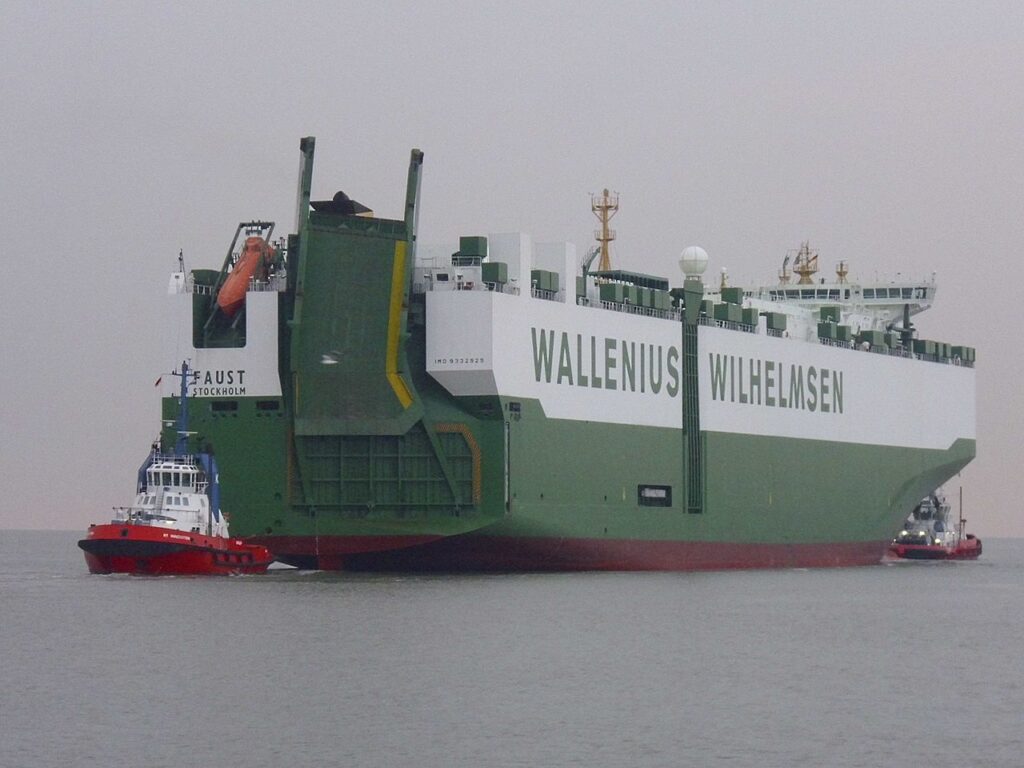
MV Faust: Another Wilhelmsen vessel, built in 2007, 228 m long and 32 m wide, with a gross tonnage of 71,500 GT and a deck space of almost 70,000 m². It can carry up to 8,000 vehicles, including luxury brands such as Jaguar and Rolls-Royce. Loading and unloading typically takes around 8 hours.
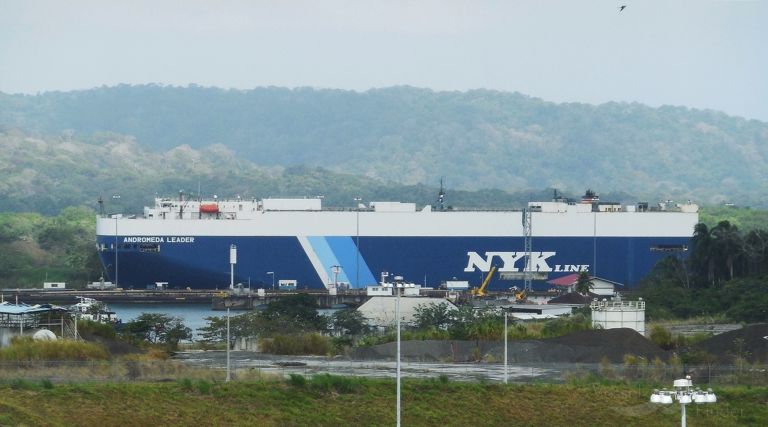
MV Andromeda Leader: Designed by NYK Line and launched in 2004, this car carrier meets the requirements of major automakers. Its cargo capacity is 21,443 GT, width 32 m, and it has safely transported Toyota, Lexus, and Scion vehicles across the Pacific to the United States for many years.