Gender equality has become one of the most talked-about global issues – and the maritime world is no exception. Governments and international organizations are now taking action to ensure that women have equal opportunities at sea. But what does equality look like on board a vessel? How are stereotypes being challenged, and what role does the International Maritime Organization (IMO) play? The Maritime Telegraph takes a deep dive into the issue.
Women in the Maritime Industry
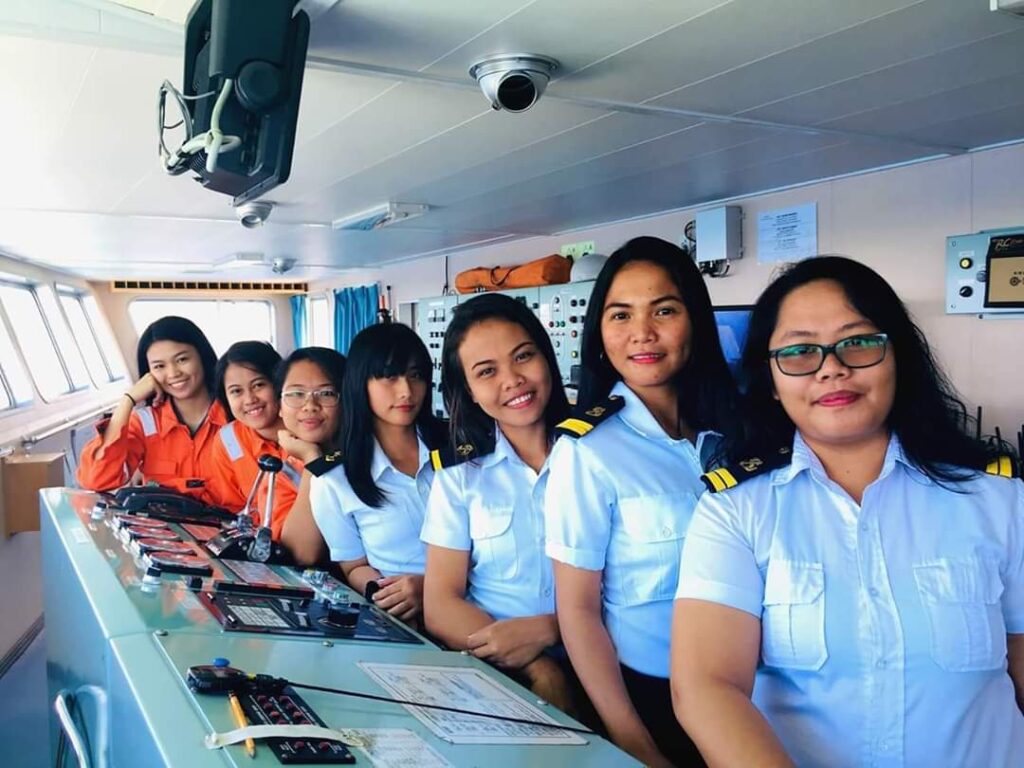
According to the International Transport Workers’ Federation (ITF), women account for only 2% of the global maritime workforce – around 23,000 professionals. Most of them work on cruise and passenger ships (17–18%), with the number slowly increasing each year. Only 6% of women serve as crew members in the merchant fleet.
Maritime work has long been seen as a “man’s job.” For centuries, ship crews were exclusively male – not because women lacked ability, but because of deeply rooted tradition.
Today, however, women are breaking barriers. They serve as deck officers, engineers, and even captains across fleets worldwide.
Statistically, most women in maritime professions come from Western Europe and the U.S. (51.2%), followed by Latin America and Africa (26.3%), East Asia (13.7%), and South Asia (1.7%).
Bridging the Gender Gap
In 2000, the United Nations adopted the Millennium Development Goals, one of which called for promoting gender equality and empowering women. Nearly two decades later, the IMO dedicated the 2019 Day of the Seafarer to the same theme. Secretary-General Kitack Lim urged shipowners to hire more women, noting that by excluding them, companies “narrow their access to a pool of qualified professionals.”
The IMO also created an online platform where maritime workers could share their views and experiences. Among the most popular ideas:
- Anonymous applications to prevent bias during hiring;
- Gender equality training in maritime academies;
- Inclusive HR policies that evaluate skills, not stereotypes.
Participants also stressed the importance of safety, healthcare, and fair maternity leave – areas where women at sea still face inequality.
As Grace Marie Ayaso, Head of R&D at the NMP, explained:
“Experience shows that the presence of women on board actually increases crew productivity. Over time, mixed teams become more disciplined and cooperative.”
What History Remembers About Women at Sea
In 1562, King Frederick II of Denmark decreed that women were forbidden on ships – crews could even throw them overboard. Centuries later, women began officially serving at sea, and by the 20th century, they could pursue equal opportunities with men.
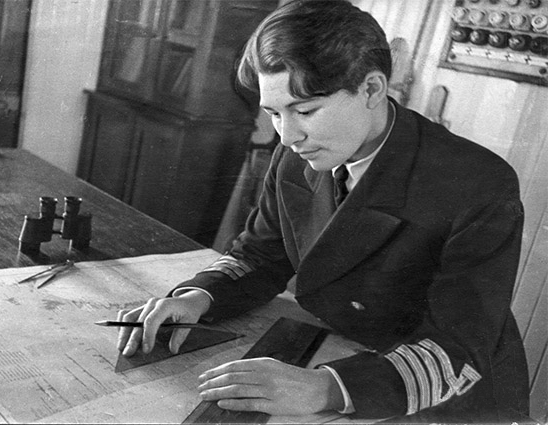
Credit: Vladivostok History Museum Archives, “Real Ladies of Vladivostok’s Past,” Arguments and Facts, March 4, 2014.
The first to make history was Anna Shchetinina, who became the world’s first female captain of an ocean-going vessel. Rising from sailor to captain and later a port director, she successfully commanded the steamer Jean Jaurès. Despite her achievements, Shchetinina admitted she was “an exception rather than an example,” warning that life at sea demands extraordinary strength and character.
In 2007, women officers took command of the U.S. containership Horizon Navigator – a groundbreaking first. And in 2021, India’s Swarna Krishna became the country’s first ship crewed entirely by women.
Ukraine’s own maritime history was marked in 2017, when Captain Tetyana Oliinyk became the nation’s first female long-distance captain. A Merited Worker of Transport of Ukraine and holder of the Order of Princess Olga, she proved her competence through perseverance.
“At first, everyone expected me to fail,” she recalls. “But being a woman turned out to be an advantage – not a weakness.”
IMO’s Role in Promoting Equality
The IMO today runs the Integration of Women in Maritime program, designed to attract more women to seafaring careers. Its initiatives include:
- A Women’s Professional Support Department combating stereotypes and sexism;
- Scholarships and training programs for female seafarers;
- Regional women’s associations across Africa, Asia, Latin America, and the Pacific.
As Kitack Lim emphasizes: “Empowering women in maritime promotes economic growth, strengthens global welfare, and helps us achieve safe, clean, and sustainable shipping.”