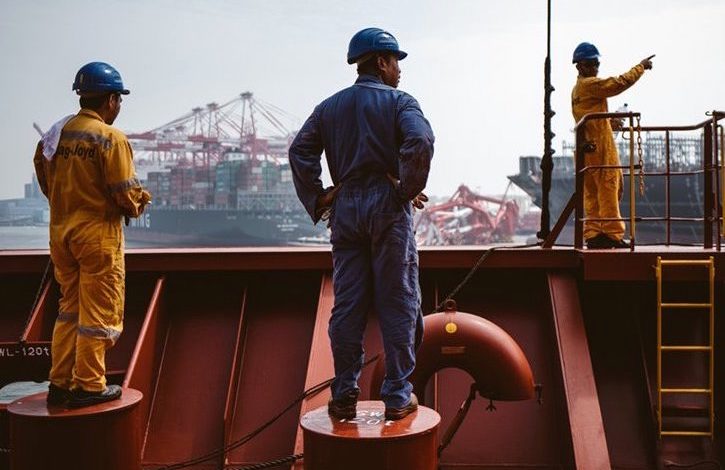
A new World Maritime University (WMU) study has highlighted a worrying picture of life at sea where long hours, limited shore leave and dangerously high stress levels are driving nearly half of mariners to consider leaving the profession within the next five years, raising serious concerns about the future sustainability of the global maritime workforce.
The report “In Search of a Sea-Life Balance in an Adverse Environment”, commissioned by the Officers’ Union of International Seamen (OUIS), drew on responses from 4,372 seafarers representing 99 nationalities, including significant participation from crews from India, the Philippines and the United States.
Survey results show that seafarers work an average of 71.3 hours per week, with U.S. crew reporting around 79 hours, far exceeding safe working-rest hour norms and often without a weekly day off. Nearly 70% of seafarers – including almost half of U.S. respondents – said their schedules prevent adequate rest and recovery, with port time and heavy workloads cited as the main barriers to shore leave.
Around one third of all respondents were assessed as experiencing stress levels considered severe or potentially dangerous while at sea, with U.S. seafarers marginally higher than the global average. The top stressors identified by seafarers – across nationalities – were ship inspections, followed by administrative duties, company communication challenges and port-related activities, rather than traditional operational hazards. Poor mental well-being was closely linked with intentions to quit: among seafarers planning to leave the profession, nearly half reported poor mental health, significantly higher than those planning to stay.
The WMU findings reveal that nearly half of all seafarers surveyed intend to exit seafaring within the next five years, driven by dissatisfaction with working conditions, excessive workloads, restricted shore leave and a deteriorating work-life balance. Among US seafarers, only 40.2% planned to stay at sea, with 65.3% of those preparing to leave reporting poor mental health.
The study also highlights deep frustration with safety management systems: 79% of US respondents said their SMS manuals were too long, 71% felt procedures did not reflect shipboard realities, and two‑thirds described paperwork as excessively time‑consuming.
Such trends pose challenges for crew retention, safety, operational resilience and long-term recruitment across the shipping industry, where experienced mariners are essential to maintaining global trade flows.
Industry experts stress that addressing seafarers’ welfare – including workload management, mental health support, fair rest hours and accessible shore leave opportunities – will be critical to sustaining the maritime workforce and avoiding a recruitment crisis over the coming decade.